
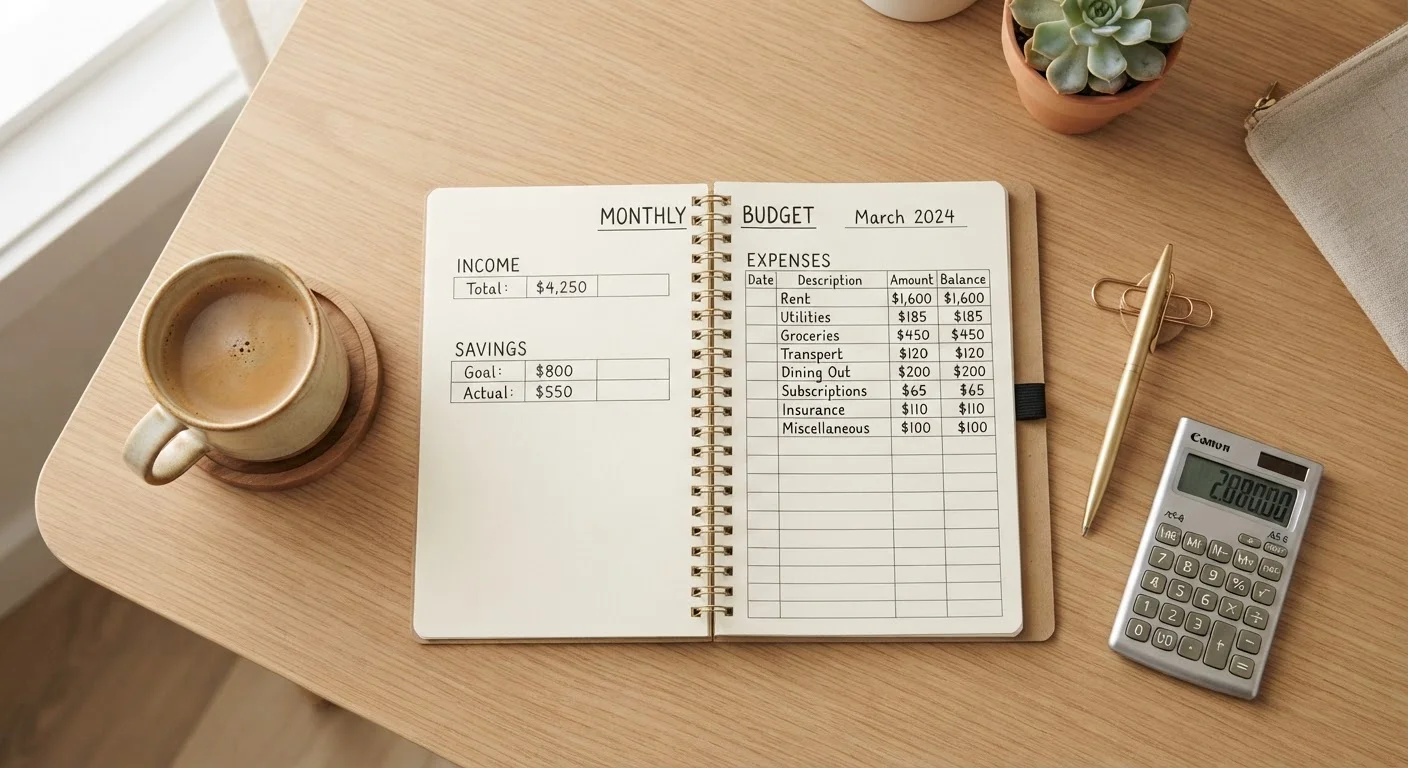
Why a Framework Beats a Spreadsheet Alone
A spreadsheet can record numbers, but a framework tells you what to do with them. Without a repeatable process - goal-setting, mapping, choosing a method, tracking, and reviewing - most budgets are abandoned within three months. A framework gives structure to every decision, so you spend less mental energy reinventing your approach each month.
If you are completely new to budgeting, the Personal Budgeting from the Ground Up guide covers core concepts before you dive into this end-to-end process. For households managing a shared income, Budgeting as a Couple addresses the unique challenges of aligning two money mindsets.
74%
Americans living paycheck to paycheck
A 2023 survey by LendingClub found roughly 74% of US consumers reported living paycheck to paycheck at some point during the year.
3 months
Median time before a budget is abandoned
Consumer financial behavior research consistently finds that most first-time budgeters stop tracking within the first quarter without a structured review process.
$1,000
Recommended starter emergency fund target
Many personal finance educators suggest $1,000 as an initial emergency fund milestone before aggressively paying down non-mortgage debt.
Step 1 - Define Your Financial Goals
Every effective budget starts with purpose. Before touching any numbers, write down what you are working toward. Goals generally fall into three time horizons:
- Short-term (under 1 year): Building a starter emergency fund, paying off a credit card, or saving for a vacation.
- Medium-term (1-5 years): A car purchase, a home down payment, or eliminating student loan debt.
- Long-term (5+ years): Retirement savings, a child's education fund, or financial independence.
Assign each goal a dollar amount and a target date. This converts vague wishes into specific monthly savings targets that can live as a budget line item. For travel goals specifically, Trip Planning Tips offers practical advice on estimating and saving for travel costs.
Write your goals on paper and keep them somewhere visible - inside a notebook cover or on a sticky note near your workspace. Tangible reminders measurably increase follow-through compared to goals stored only digitally.
Research in behavioral economics shows that externalizing goals - writing them down and placing them in your environment - strengthens commitment and reduces the likelihood of forgetting them under day-to-day pressure.
When setting a savings target for a goal, add a 10-15% buffer to your estimate to account for cost increases or timing slippage. Underestimating is the most common reason savings goals get extended or abandoned.
Cost estimates, especially for large purchases or travel, routinely come in higher than anticipated. Building in a buffer protects your timeline without requiring a full budget revision.
Step 2 - Map Your Income and Expenses
Accurate numbers are the foundation. Collect two to three months of bank and credit card statements, then categorize every transaction.
Income sources to include
- Take-home pay from employment (after taxes and deductions)
- Freelance, side gig, or rental income - use a conservative average if amounts vary
- Regular transfers such as child support or alimony
Expense categories to map
- Fixed: Rent or mortgage, insurance premiums, loan payments
- Variable essentials: Groceries, utilities, transportation fuel
- Discretionary: Dining out, entertainment, subscriptions, clothing
- Periodic: Annual fees, car registration, holiday gifts - divide by 12 and set aside monthly
Don't Skip Periodic Expenses
Car registration, annual subscriptions, and holiday spending catch many budgeters off guard because they don't appear every month. Divide these costs by 12 and treat them as a monthly line item. Failing to account for them is one of the most common reasons budgets appear balanced on paper but fall short in practice.
Once mapped, subtract total expenses from total income. A negative result means spending exceeds earnings - the starting point for immediate adjustments. A positive result reveals the margin available for savings goals.
Step 3 - Choose a Budgeting Method
No single method works for everyone. Below are three widely used approaches, each suited to different habits and income types.
50/30/20 Rule
Allocate roughly 50% of take-home pay to needs, 30% to wants, and 20% to savings and debt repayment. This is a useful starting structure for people with stable incomes who want simplicity. Adjust the percentages to match your actual cost-of-living - in high-cost cities, needs may consume a larger share.
Zero-Based Budgeting
Every dollar of income is assigned a specific job - expenses, savings, or debt payments - until the balance reaches zero. This method demands more monthly effort but provides the clearest picture of where money goes, making it well-suited to people tracking variable income or trying to break a spending pattern.
Pay Yourself First
Automatically transfer a set savings amount the moment each paycheck arrives, then spend whatever remains. This approach prioritizes savings without requiring detailed category tracking and works well for people who find granular budgets overwhelming.
Start With One Method for 90 Days
Resist the urge to blend multiple budgeting systems in your first attempt. Pick one method, follow it consistently for three full months, and evaluate its fit before modifying it. Switching too early prevents you from seeing whether the method works or whether you simply need more practice.
Step 4 - Execute and Track Throughout the Month
Building a budget is only half the work. Execution requires brief, regular check-ins rather than one stressful end-of-month review.
Consider a simple weekly habit: spend five minutes comparing actual spending to your budget plan. Many free banking apps categorize transactions automatically, reducing manual effort. If you overspend in a category mid-month, you have time to compensate elsewhere before the month closes - an option that disappears if you only review at month's end.
Growing your savings alongside budget execution is addressed in depth in the Saving & Credit hub, which covers how to make savings work harder once you have a surplus to direct.
Track Spending Before Cutting It
Many people try to cut expenses before they have an accurate picture of where money is going. This leads to unrealistic limits that collapse under normal life pressure. Spend at least one full month tracking every transaction without making changes first - the data you collect will make every subsequent decision far more accurate and sustainable.
Step 5 - Review, Adjust, and Repeat
At the end of each month, evaluate three things: which categories were on target, which were consistently over, and whether your savings goal was met. Honest assessment - not guilt - is the goal.
Use that data to set the following month's limits. Categories that ran over repeatedly may signal either a misaligned limit or a genuine lifestyle priority worth budgeting for openly. Either adjustment is valid. The Monthly Budget Reset Checklist provides a structured walkthrough of this process each month.
Sustaining the habit long-term is a separate skill from building the budget itself. Sustainable Habits That Make Budgets Work Long-Term explores the behavioral patterns that help everyday consumers stay consistent month after month.
This article is for general informational and educational purposes only and does not constitute personalized financial, tax, or legal advice. Consult a qualified financial professional for guidance specific to your circumstances.