
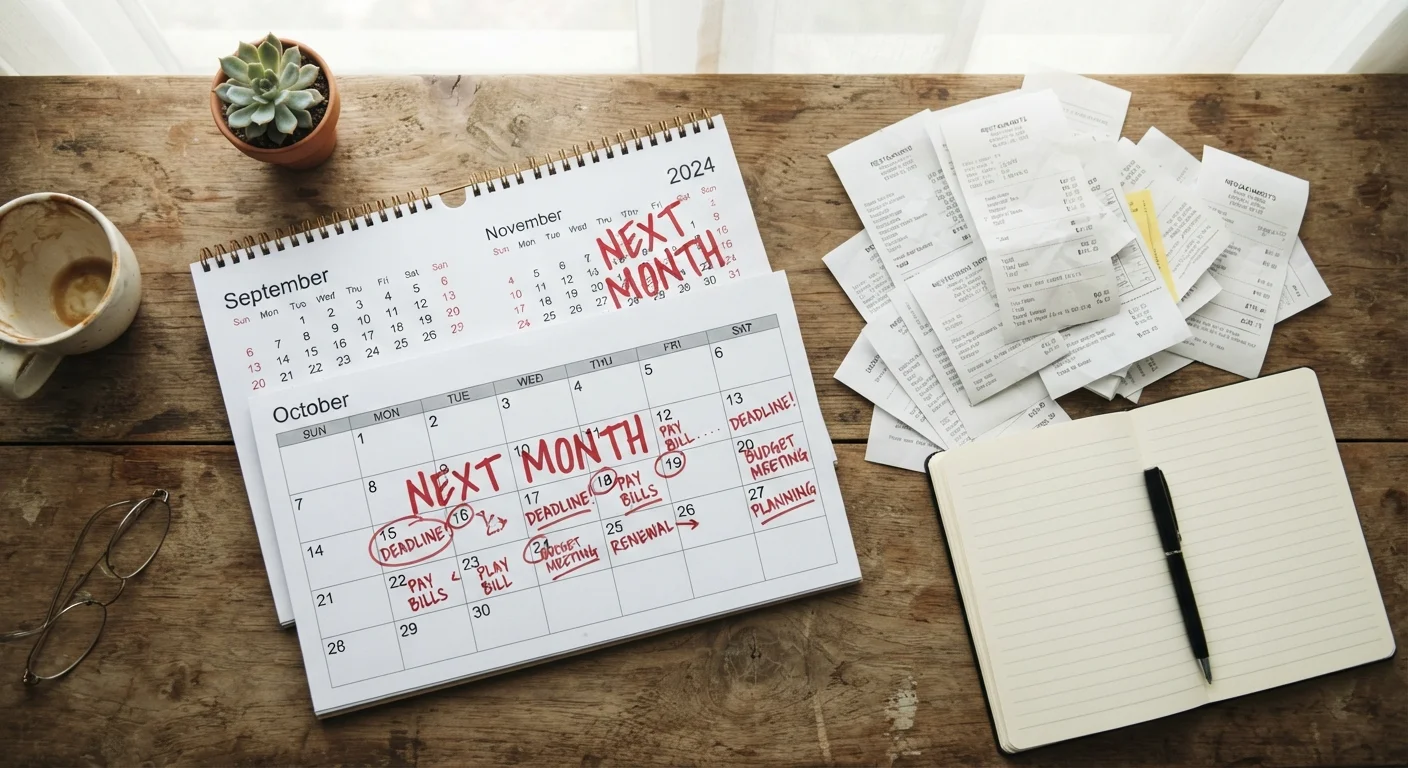
The Hidden Price of 'Next Month'
Procrastination is one of the most universal financial habits - and one of the most quietly expensive. Unlike a late fee or an overdraft charge, the cost of delaying a budget doesn't show up as a line item. It accumulates invisibly: in untracked subscriptions, impulse purchases, and savings that never quite get started.
Research in behavioral economics consistently shows that people overestimate how differently they'll behave in the future compared to today. The version of you who will 'definitely start budgeting next month' is the same person making spending decisions right now - just with less information. The sooner you bring structure to your finances, the sooner you gain control over them.
$1,800+
Average untracked annual overspend
Consumer finance studies consistently estimate that households without a formal budget overspend by $150 or more per month on discretionary categories compared to those who track spending.
65%
Americans without a written budget
Surveys by the National Financial Educators Council and similar organizations have found that roughly two-thirds of U.S. adults do not maintain a formal monthly budget.
If you've been putting off budgeting, you're not alone - and you're not broken. But understanding why the delay happens is the first step toward doing something about it.
Common Budgeting Mistakes That Fuel the Delay
Most budgeting procrastination isn't about laziness. It's driven by specific, identifiable thinking patterns that feel reasonable in the moment. Recognizing these patterns - and knowing how to counter them - is the practical core of getting started.
Waiting for a 'clean slate' moment - a new month, new year, or next paycheck - before starting a budget.
Why it happens: People psychologically anchor fresh starts to calendar milestones, believing it will be easier to track finances from a tidy starting point. This 'fresh start effect' feels logical but creates an endless cycle of postponement.
Believing you need a complex system or special app before you can budget effectively.
Why it happens: Financial content often showcases elaborate spreadsheets and premium apps, making people feel unready until they have the 'right' tools. This sets up an unnecessary prerequisite that delays action indefinitely.
Treating budgeting as a form of punishment or deprivation, making it emotionally unappealing to begin.
Why it happens: Many people grew up hearing that budgets mean cutting out everything enjoyable. This negative framing creates subconscious resistance - why start something that feels restrictive?
Avoiding budgeting because looking at current finances feels overwhelming or even shameful.
Why it happens: Financial anxiety is real and well-documented. When people expect to see 'bad numbers,' avoidance feels protective. Unfortunately, not looking doesn't change the numbers - it just removes your ability to influence them.
Assuming your income is too irregular or too low to make budgeting worthwhile.
Why it happens: Budgeting advice often assumes a steady paycheck, leaving freelancers, gig workers, and lower-income earners feeling excluded. This creates a false belief that budgeting only works in certain financial circumstances.
Once you've worked through these barriers, a monthly budget reset checklist can help you stay consistent from month to month without starting from scratch each time.
What to Do Right Now Instead of Waiting
You don't need a perfect plan to take a useful step. Here's a simple way to begin in the next 20 minutes:
- Pull up last month's bank or credit card statement. Don't analyze it yet - just open it.
- Identify your three biggest spending categories. Common ones include housing, food, and transportation, but yours may differ.
- Write down your take-home income for this month. If it varies, use a conservative estimate.
- Set one specific, small intention. For example: "I'll spend $50 less on takeout this month" or "I'll move $25 to savings this week."
That's a budget. It's not complete, but it's real - and real always beats theoretical. Many budgeters also find it helpful to account for irregular expenses they've overlooked; our guide on spending categories most budgets overlook can help you catch those gaps early.
Avoid the 'Perfect Start' Trap
Waiting until you fully understand every budgeting method, have the right app, or reach a round-number paycheck is a form of perfectionism - and it has a measurable financial cost. The goal of a first budget is awareness, not precision. Accuracy and refinement come with practice, not prerequisites.
As you build consistency, explore sustainable habits that make budgets work long-term - because sticking with a budget over time matters more than any single month's numbers.
This article is for general informational and educational purposes only and does not constitute personalized financial advice. For guidance specific to your financial situation, consult a qualified, licensed financial professional.