
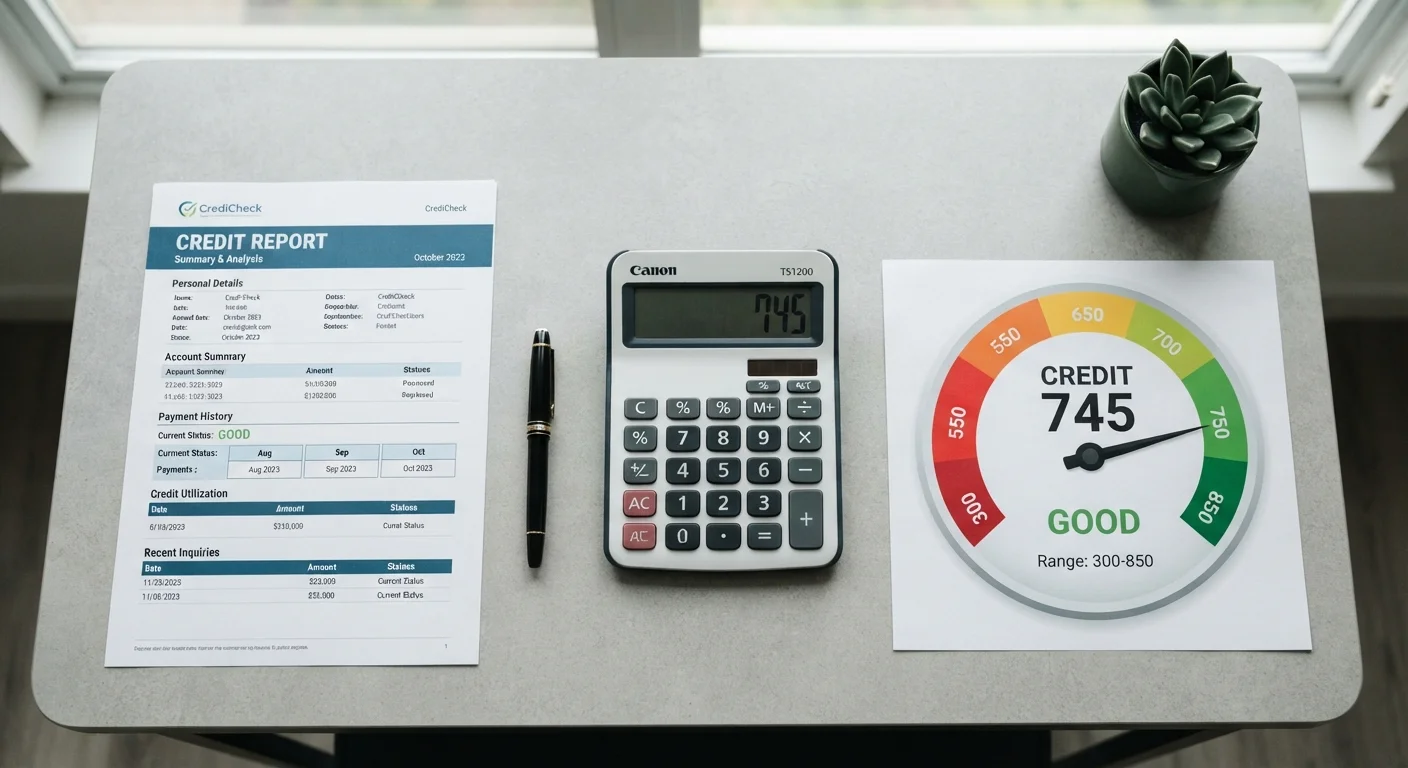
The Score Range - What Each Tier Signals
Credit scores don't just exist as a single pass/fail threshold - they sit within a spectrum that communicates degrees of lending risk. Under the standard FICO model, the tiers generally break down as follows:
- Exceptional (800-850): Borrowers typically qualify for the most favorable terms lenders offer.
- Very Good (740-799): Strong creditworthiness; most loan products are accessible at competitive rates.
- Good (670-739): Near or above the national average; most lenders view this as an acceptable risk.
- Fair (580-669): Some lenders will approve applications but may impose higher interest rates or require collateral.
- Poor (300-579): Approval is difficult; secured credit products or credit-builder tools are often the starting point here.
Understanding where you sit helps you set realistic expectations and prioritize which habits to change. For a deeper look at how your score shapes borrowing costs over time, see how credit scores affect different life stages.
716
Average US FICO Score
According to FICO's data, the average American credit score has hovered in the 'good' range in recent years, reflecting broader trends in consumer credit behavior.
35%
Weight of Payment History in FICO Score
The FICO scoring model assigns more weight to payment history than any other single factor, making on-time payments the highest-leverage credit habit.
3
Major US Credit Bureaus
Equifax, Experian, and TransUnion each maintain separate credit files; your score may differ slightly across all three depending on the data each holds.
The Five Factors Behind the Number
Your FICO Score is calculated from five weighted categories. Knowing the weight of each helps you focus your energy where it matters most.
- Payment History (35%): Whether you pay on time is the largest single driver. Even one missed payment can cause a noticeable drop, particularly if your score is already high.
- Amounts Owed / Credit Utilization (30%): This measures how much of your available revolving credit you are using. Keeping this ratio below 30% is a widely cited guideline, but lower is generally better. Learn more about how utilization is calculated.
- Length of Credit History (15%): Longer histories tend to produce higher scores, all else being equal. This includes the age of your oldest account, your newest account, and the average age across all accounts.
- Credit Mix (10%): Lenders like to see that you can handle different types of credit - such as installment loans (mortgages, auto loans) alongside revolving credit (credit cards).
- New Credit / Hard Inquiries (10%): Applying for several new accounts in a short window can signal financial stress. Multiple hard inquiries for the same loan type - such as mortgage shopping - are typically counted as a single inquiry if done within a defined period.
“Your credit score is essentially a report card for how you manage financial obligations. The good news is that unlike a school grade, you can always improve it by changing the behaviors that feed into it.”
— Consumer Financial Protection Bureau, US Federal Consumer Financial Watchdog Agency
Common Misconceptions Worth Clearing Up
Several persistent myths lead consumers to make decisions that inadvertently damage their scores. A few key ones:
- Income does not affect your score. Your salary, employment status, and net worth are not factored into any major scoring model - though lenders may review income separately when evaluating ability to repay.
- Closing an old card can hurt, not help. Closing a credit card reduces your total available credit, which can raise your utilization ratio and shorten your average account age - both potentially negative effects.
- Carrying a balance is not necessary. Paying your balance in full each month does not prevent you from building a strong score. You simply need activity on the account.
For a full breakdown of what's fact versus fiction, explore common credit myths that could be costing you points.
Check Your Report Before Applying for Credit
You are entitled to a free credit report from each of the three major bureaus annually through AnnualCreditReport.com, the official federally authorized site. Reviewing your report before a major loan application lets you catch errors - such as accounts you don't recognize or incorrectly reported late payments - and dispute them before they affect a lending decision.
How to Read Your Score in Context
A score is only one part of a lender's evaluation. Most lenders also review your full credit report, which contains the detailed account history that feeds the score. Understanding every section of your credit report gives you the full picture lenders actually see.
Your score can also look different depending on which bureau's data a lender pulls and which scoring model version they use. This is particularly relevant for auto lending - see how lenders use credit scores to set auto loan interest rates for a concrete illustration of how tier differences translate into real dollar costs.
Scores Can Vary by Lender and Model
When a lender pulls your credit, they choose which bureau and which scoring model version to use - and they don't always disclose this upfront. The score you see through a free monitoring service may use a different model than what a mortgage lender sees. Small differences between your monitored score and a lender's score are normal and expected.
This article is for general informational and educational purposes only. It does not constitute personalized financial or credit advice. Consult a qualified financial professional for guidance specific to your situation.