
What You'll Need Before You Start
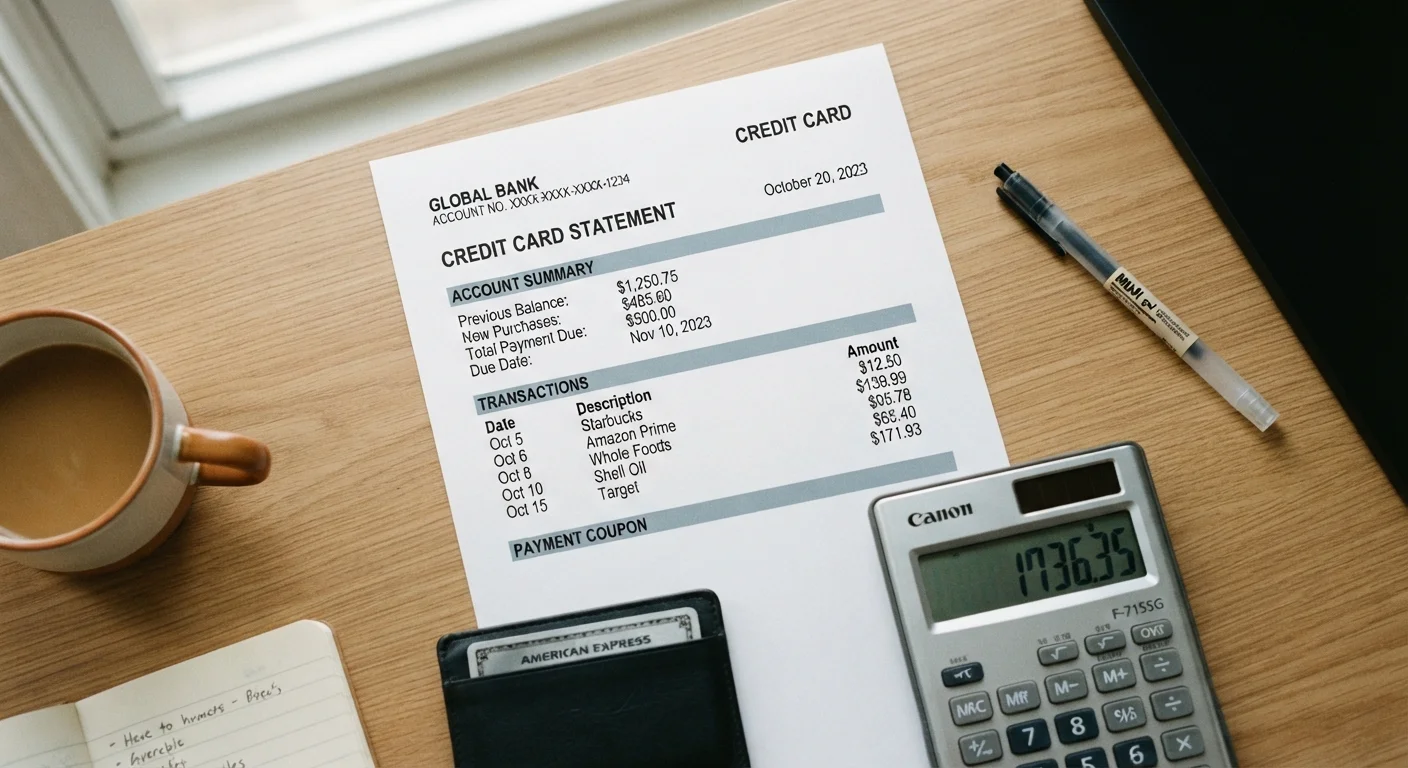
Before walking through your statement section by section, gather the following items so you can follow along with your own document. You can access your statement as a paper copy by mail or as a PDF through your card issuer's online portal or mobile app.
What you will need
If you're unfamiliar with common banking terminology, the banking terms every account holder should know is a helpful companion reference.
A Map of Your Credit Card Statement
Credit card statements look different across issuers, but they all contain the same core sections, required by federal law under the Truth in Lending Act. Here is what each one means:
- Account Summary: A snapshot of your previous balance, new charges, credits or payments applied, fees, interest charged, and your new balance.
- Payment Information: Shows your minimum payment due and the payment due date. Paying only the minimum keeps your account in good standing but allows interest to accumulate on the remaining balance.
- Statement Closing Date: The last day of your billing cycle. Transactions after this date appear on the next statement.
- Credit Limit and Available Credit: Your total approved credit line minus what you currently owe. Keeping your balance well below your limit supports a healthy credit utilization ratio.
- Rewards Summary (if applicable): Points, miles, or cash back earned and redeemed during the cycle.
Use Your Statement as a Budgeting Tool
Your transaction list is a ready-made spending log for the month. Categorizing charges by type - dining, groceries, subscriptions - takes just a few minutes and gives you a clear picture of where money is going. Many card issuers now do this automatically in their apps.
For a deeper look at how this data flows into your credit profile, see the anatomy of a credit report.
Step-by-Step: Reading Every Key Detail
Follow these steps each month when your statement arrives. Completing this review typically takes under 20 minutes and can prevent costly mistakes.
Confirm your billing cycle dates
Find the statement opening date and closing date. Every charge in the transaction list should fall within this window. Knowing these dates also tells you when the next cycle starts.
Check your new balance and minimum payment
The new balance is the total you owe as of the closing date. The minimum payment is the smallest amount you can pay without triggering a late fee. Paying the full new balance by the due date avoids interest charges entirely.
Locate your APR and interest charges
APR stands for Annual Percentage Rate - the yearly cost of borrowing expressed as a percentage. Your statement will list the APR for purchases, cash advances, and balance transfers separately. If interest was charged this cycle, it appears as a line item in the finance charges section.
Review every transaction line by line
Compare each listed transaction against your own receipts or purchase memory. Look for duplicate charges, unfamiliar merchant names (some vendors bill under a parent company name), and amounts that don't match your receipt.
Identify any fees charged this cycle
Scroll to the fees section and note each charge by type. Common fees include late fees, cash advance fees, and foreign transaction fees. If a fee appears that you believe was applied in error, document it before calling your issuer.
Note your payment due date and pay on time
The payment due date is prominently displayed and is typically 21 or more days after the statement closing date - this window is your grace period. Scheduling your payment at least 3-5 days before the due date accounts for processing time.
Don't Ignore Unfamiliar Charges
A charge you don't recognize could be a billing error, a forgotten subscription, or potential fraud. Federal law generally limits your liability for unauthorized charges, but you must report them promptly - typically within 60 days of the statement date. Contact your issuer immediately if something looks wrong.
Fees That Are Easy to Miss
Fees are sometimes listed in small print or grouped under a generic "Finance Charges" heading. Look specifically for:
- Late Fee: Charged when a payment arrives after the due date. Federal rules cap initial late fees, but they still add up quickly.
- Cash Advance Fee: Applied when you use your card to withdraw cash or make certain transfers. These also typically carry a higher APR with no grace period.
- Balance Transfer Fee: Usually a percentage of the amount moved from another card.
- Foreign Transaction Fee: Charged on purchases made in a foreign currency, typically 1-3% of each transaction.
- Returned Payment Fee: Assessed if a payment is rejected due to insufficient funds.
These charges can appear alongside interest calculations in the finance charges section. If you spot a fee you don't recognize, contact your issuer directly. For a comparison of how similar fees appear on bank account statements, see account costs decoded.
Disputing a Charge Has a Time Limit
Under the Fair Credit Billing Act, you generally have 60 days from the statement date to formally dispute a billing error in writing. Missing this window can limit your ability to recover the funds. If you find an error, act quickly and keep copies of all correspondence with your issuer.
Putting Your Statement to Work
A monthly statement review is more than a bookkeeping task - it's a habit that builds financial resilience. Scan every transaction against your own records to catch unauthorized charges. Verify that payments were credited correctly and on time. Note whether your balance is trending upward or downward month over month.
If you're carrying a revolving balance, the interest charge disclosure box on your statement is required to show how long it would take to pay off your balance making only the minimum payment - and the total interest you'd pay. That number often motivates faster payoff strategies. For more context on why carrying a balance rarely benefits your credit score, read why carrying a balance does not build credit.
If you find a charge that looks incorrect, the credit report dispute process article explains how to escalate unresolved billing issues that reach your credit file.
This article is for general informational purposes only and does not constitute personalized financial or legal advice. Consult a qualified financial professional for guidance specific to your situation.