How Each Mortgage Structure Works
A fixed-rate mortgage carries the same interest rate from origination through the final payment - whether your loan term is 15, 20, or 30 years. Because neither the rate nor the principal-and-interest portion of your payment ever changes, you can budget with confidence regardless of what happens in the broader interest rate market.
An adjustable-rate mortgage (ARM) works differently. It typically begins with a fixed introductory rate - often 5, 7, or 10 years - then adjusts periodically based on a benchmark index, such as the Secured Overnight Financing Rate (SOFR). A "7/1 ARM," for example, holds its initial rate for seven years, then adjusts once per year afterward. ARMs include rate caps that limit how much the rate can change in any single adjustment period and over the life of the loan, but within those caps, your payment can rise or fall.
Understanding this structural difference is the starting point for evaluating which option aligns with your financial situation. For a broader look at the home ownership decision itself, see our analysis of renting vs. buying.
| Criterion | Fixed-Rate Mortgage | Adjustable-Rate Mortgage (ARM) |
|---|---|---|
| Interest Rate | Locked for entire loan term | Fixed initially, then adjusts periodically |
| Initial Monthly Payment | Typically higher | Typically lower |
| Payment Predictability | Fully predictable | Uncertain after introductory period |
| Rate Change Risk | None | Moderate to high after fixed period |
| Best Loan Term Match | 15, 20, or 30 years | 5/1, 7/1, or 10/1 ARM structures |
| Ideal Time Horizon | 10+ years in the home | Fewer than 7-10 years in the home |
| Protection from Rising Rates | Complete | Limited by rate caps only |
The Core Trade-Offs: Stability vs. Savings Potential
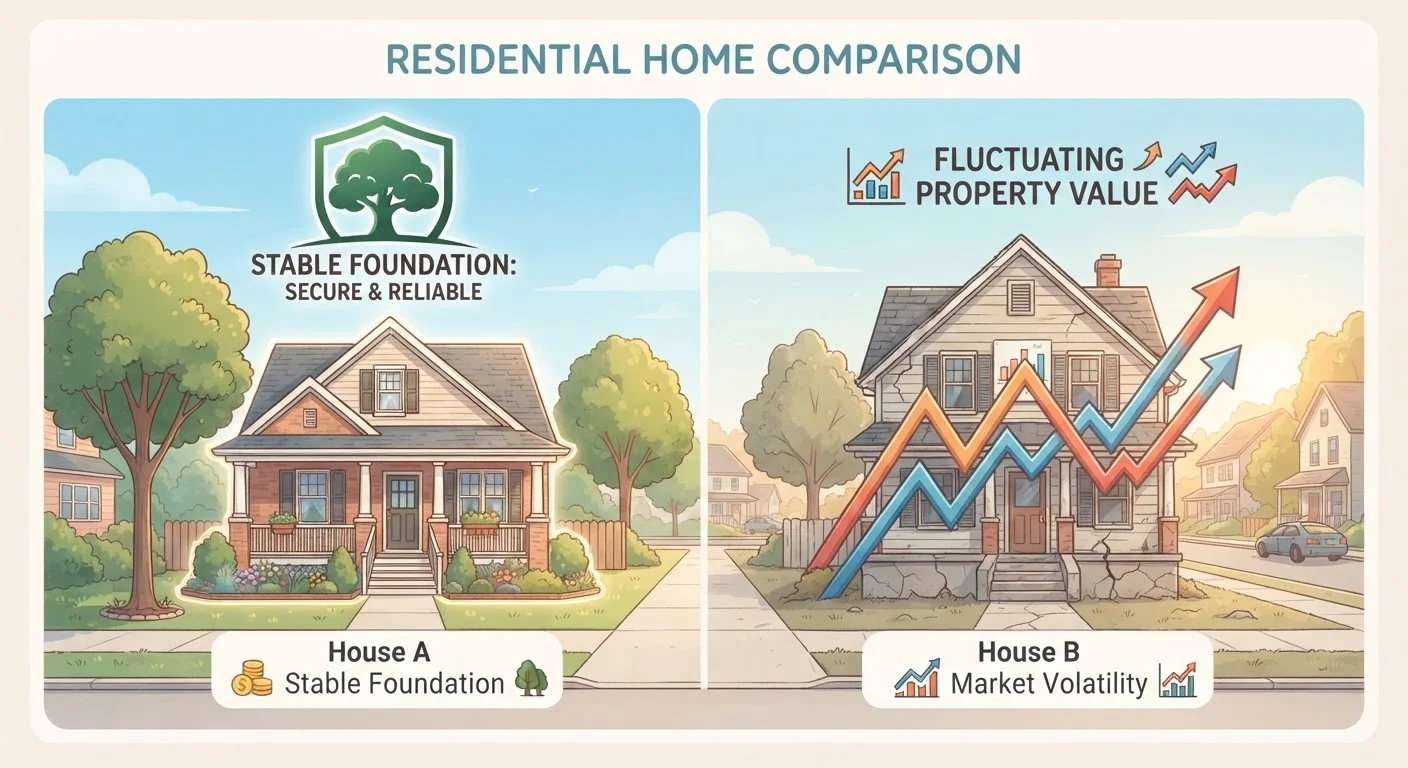
The central tension between these two structures comes down to certainty versus potential savings - at least in the short term.
Fixed-rate mortgages typically carry a slightly higher initial interest rate than comparable ARMs. That premium buys something real, though: complete insulation from future rate increases. If market rates rise significantly after you close, your payment is unaffected.
ARMs generally offer a lower rate during their introductory period, which can meaningfully reduce monthly payments in the early years of ownership. The risk is what happens after the fixed period expires. If prevailing interest rates have climbed by then, your rate - and payment - can increase, sometimes substantially. Rate caps provide a ceiling, but payments can still rise to levels that strain a household budget if rates move sharply.
30 years
Most common fixed-rate mortgage term in the US
The 30-year fixed-rate mortgage has historically been the most widely used home loan structure among US buyers, according to federal mortgage market data.
5/2/5
Typical ARM cap structure (initial/annual/lifetime)
A common ARM cap configuration limits the first adjustment to 5 percentage points, subsequent adjustments to 2 points, and the lifetime change to 5 points above the starting rate.
~10%
Share of mortgage applications that are ARMs (varies by rate environment)
ARM application share tends to rise when fixed rates climb significantly, as borrowers seek lower entry-point payments, per Mortgage Bankers Association survey data.
One often-overlooked factor is the total interest paid over the loan's life. A buyer who holds an ARM loan for 30 years and experiences several upward adjustments may pay more in total interest than they would have under a fixed rate, even if the ARM started lower. Conversely, a buyer who sells after six years on a 7/1 ARM may never encounter a single adjustment.
Once you understand the mortgage structure that suits you, evaluating lenders is the next step. Our guide to questions worth asking mortgage lenders can help you navigate that conversation.
Choosing the Right Structure for Your Situation
No mortgage structure is universally superior. The right choice depends on several factors specific to your circumstances.
- Time horizon: How long do you realistically plan to stay in this home? If you anticipate a move within five to seven years, the ARM's lower initial rate may work in your favor. If you intend to stay for decades, a fixed rate provides more durable protection.
- Risk tolerance: Can your household absorb a meaningful increase in monthly housing costs if rates rise? If that kind of uncertainty would create financial strain or significant stress, the predictability of a fixed rate has real value beyond its interest cost.
- Current rate environment: When fixed rates are historically low, locking one in often makes straightforward sense. When the spread between fixed and adjustable rates is narrow, the ARM's short-term savings advantage shrinks.
- Financial flexibility: Some borrowers use the lower initial ARM payment to direct more cash toward savings, investments, or other financial goals in the early years. That strategy carries its own risks and requires disciplined planning.
A licensed mortgage professional can model specific scenarios based on actual loan terms and your financial profile. And remember, the mortgage payment itself is only one component of home ownership costs - our overview of the true cost of owning a home covers the full picture.
Rate Caps Don't Eliminate Risk Entirely
ARM rate caps set a ceiling on how much your interest rate can increase, but they do not prevent increases altogether. A loan with a 5-point lifetime cap starting at 4% could eventually reach 9%, significantly raising your monthly payment. Always ask your lender to show you payment scenarios at the cap ceiling before committing to an ARM.
This article is for general informational purposes only and does not constitute personalized financial or mortgage advice. Consult a licensed mortgage professional or financial adviser before making any loan decisions.