How the Two Approaches Actually Work
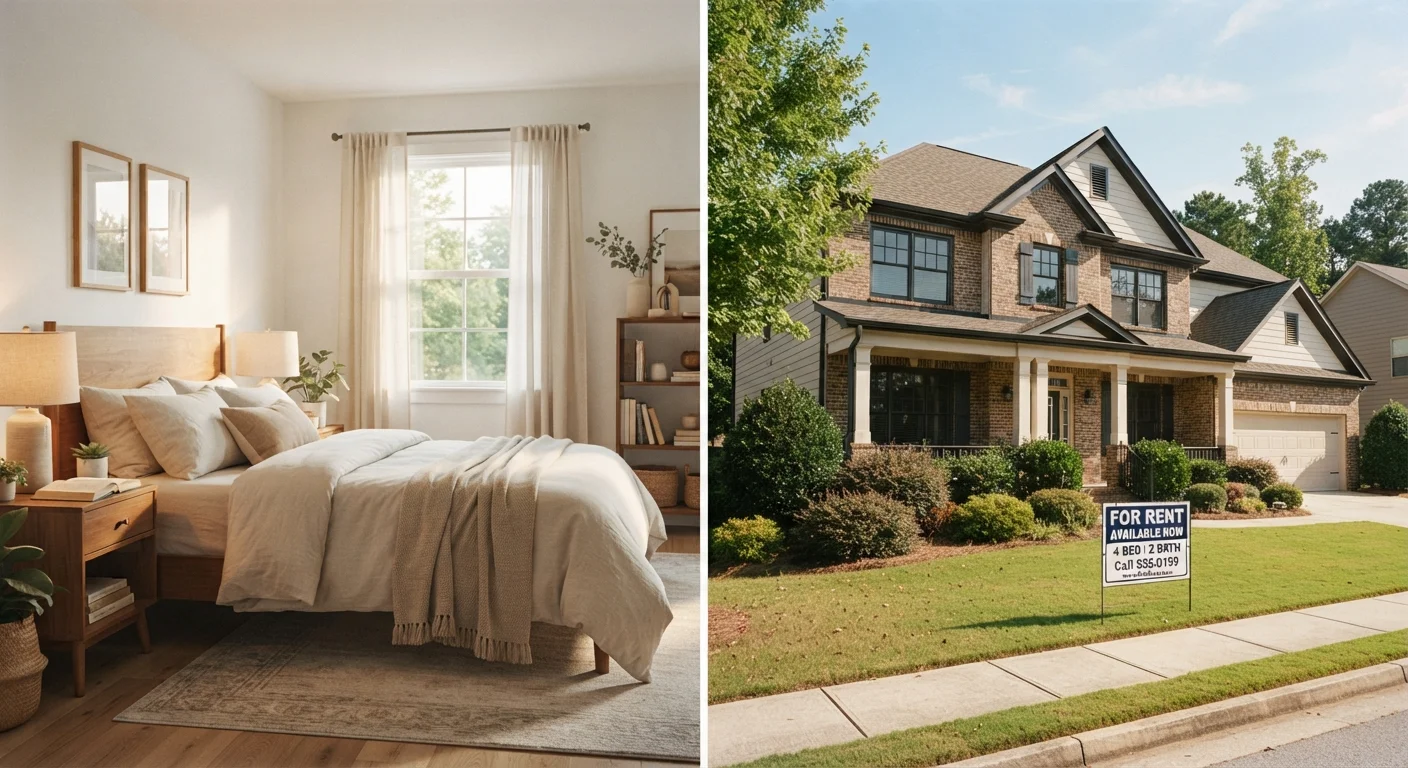
When homeowners talk about generating rental income, they're usually considering one of two distinct models: renting a single room within their occupied home, or vacating the property entirely and renting it to a tenant or family. These aren't just different in scale - they differ fundamentally in lifestyle impact, legal standing, and financial structure.
Room rental means you remain a resident. You share common areas - kitchens, bathrooms, living rooms - with your tenant. You're present to address maintenance issues immediately and can screen tenant behavior in real time. The tradeoff is a meaningful reduction in personal privacy and space.
Whole-property rental means the tenant has exclusive use of the entire home. You become a traditional landlord operating at arm's length, and you'll need somewhere else to live. This model resembles running a small rental business, with all the management responsibilities that entails. For more on how landlord-tenant relationships are structured, the type of lease you choose will significantly shape your obligations either way.
| Criterion | Renting Out a Room | Renting Out the Whole Property |
|---|---|---|
| Owner occupancy | Yes - you remain in residence | No - tenant has full exclusive use |
| Typical income level | Partial - one room's market rate | Full market rent for the property |
| Privacy impact | Significant - shared common spaces | None - you live separately |
| Landlord oversight | Daily, informal, on-site | Remote, formal, scheduled |
| Insurance needs | Homeowner policy endorsement | Dedicated landlord/rental policy |
| Tax deduction scope | Proportional share of home expenses | Broader rental expense deductions |
| Lease complexity | Simpler room rental agreement | Full landlord-tenant lease required |
| Vacancy risk | Lower - home is maintained regardless | Higher - empty home = zero income |
Financial Realities: Income, Costs, and Tax Considerations
A whole-property rental typically commands the full market rent for your area - potentially covering your entire mortgage payment and then some, depending on local conditions. Room rentals generate a fraction of that, though they also come with lower overhead since you're already paying utilities and maintaining the space regardless.
Tax treatment differs as well. When you rent out a room, you can generally deduct a proportional share of eligible home expenses - mortgage interest, utilities, insurance, depreciation - based on the percentage of the home used for rental purposes. When you rent the whole property, you may deduct a broader range of expenses against rental income. Either way, rental income is generally taxable, and the IRS rules around partial-use versus full-use rentals are distinct. Consulting a qualified tax professional before you collect your first rent check is strongly advisable.
~48%
US landlords who own just one rental property
According to US Census Bureau data, nearly half of rental properties in the US are owned by individual landlords with a single unit, reflecting how common small-scale rental arrangements are.
1-2 months
Typical vacancy loss per year for small landlords
Industry estimates suggest independent landlords often lose the equivalent of one to two months' rent annually to vacancies and turnover costs, making income continuity a real planning concern.
There's also the matter of vacancy risk. A full-property rental sitting empty for even one month is a significant income gap. A room rental, by contrast, means you're still occupying and maintaining the property whether or not the room is filled.
Liability, Insurance, and Legal Protections
Both approaches require a written lease - even for room rentals. A clearly drafted agreement protects both parties, establishes expectations around noise, guests, and shared space use, and gives you legal footing if a dispute arises. For whole-property rentals, a more comprehensive landlord-tenant agreement is standard, covering habitability standards, security deposits, maintenance responsibilities, and notice requirements governed by state law.
Insurance is non-negotiable in either scenario. A standard homeowner's insurance policy typically does not cover rental activity. You'll generally need either a landlord policy (for whole-property rentals) or a homeowner's policy endorsement that includes rental coverage (for room rentals). Failure to update your coverage could leave you unprotected in the event of tenant injury or property damage.
Check Local Zoning and HOA Rules First
Before advertising a room or listing your whole property for rent, verify whether local zoning ordinances or your homeowner's association (HOA) restrict or regulate rental activity. Some municipalities require landlord registration or rental permits, and some HOAs prohibit short-term or even long-term rentals outright. Violating these rules can result in fines or forced tenant removal, regardless of your lease agreement.
Live-in landlords in some states hold additional legal protections - for example, certain owner-occupied properties may be exempt from some fair housing provisions, though this varies by jurisdiction and should be verified with a local attorney. If you're also considering what it means to be on the other side of a rental relationship, our overview of renting and leasing fundamentals provides useful context. For homeowners whose rental activity grows in scope, professional property management may eventually become worth the cost.