What the Listing Price Leaves Out
When a rental listing says $1,800/month, that number captures one line item. The full monthly outlay for most renters lands meaningfully higher once every required and near-universal expense is counted. Understanding these costs upfront prevents budget shortfalls after you've already signed a lease.
The gap between advertised rent and actual monthly spend varies widely by market, building type, and lease terms - but the categories of hidden costs are remarkably consistent. Recognizing them before you apply, not after you move in, is the most practical financial advantage a renter can have. For a broader perspective on how renting stacks up financially against ownership, see Renting vs. Buying a Home: Understanding the Financial and Lifestyle Trade-Offs.
Move-In and Application Costs
Before you hand over a single month's rent, you're likely to encounter several upfront charges:
- Application fees: Typically $25-$100 per applicant to cover credit and background checks. These are usually non-refundable, even if you're denied.
- Security deposit: Most landlords require one to two months' rent, held against potential damages. Rules on how and when it must be returned vary by state. See what landlords can and cannot legally deduct.
- First and last month's rent: Some landlords require both upfront, meaning move-in day could cost three months' rent at once.
- Admin or move-in fees: Building-specific charges, sometimes called "amenity fees" or "move-in administration fees," that are separate from the deposit and often non-refundable.
Security deposit
A sum paid by the tenant at move-in, held by the landlord as protection against unpaid rent or property damage. State laws govern maximum amounts and return timelines.
Renters insurance
A policy that covers a tenant's personal belongings against loss or damage and provides liability protection. It does not cover the physical structure of the rental unit - that's the landlord's responsibility.
Rent escalation clause
A lease provision that allows rent to increase by a set amount or percentage during or at the end of a lease term, sometimes tied to an inflation index.
Pet rent
A recurring monthly fee charged by some landlords on top of base rent for tenants with pets. Distinct from a one-time non-refundable pet fee.
Move-in fee
A non-refundable charge separate from the security deposit, sometimes labeled an administrative or amenity fee, collected by some landlords at the start of tenancy.
If you're navigating these details for the first time, what first-time renters need to know before signing covers the most common surprises in detail.
Recurring Monthly Costs Beyond Rent
Once you're in, these expenses recur every month and can add hundreds of dollars to your true housing cost:
$200-$700
Typical monthly cost gap above advertised rent
Industry estimates suggest utilities, parking, renters insurance, and internet routinely add this range to a renter's actual monthly spend.
~95%
Renters who pay their own utilities in some markets
Utility inclusion in rent varies widely by region and building type; many urban apartments list rent without any utilities included.
$15-$30
Average monthly renters insurance premium
Despite low premiums, renters insurance is frequently skipped, leaving personal property unprotected.
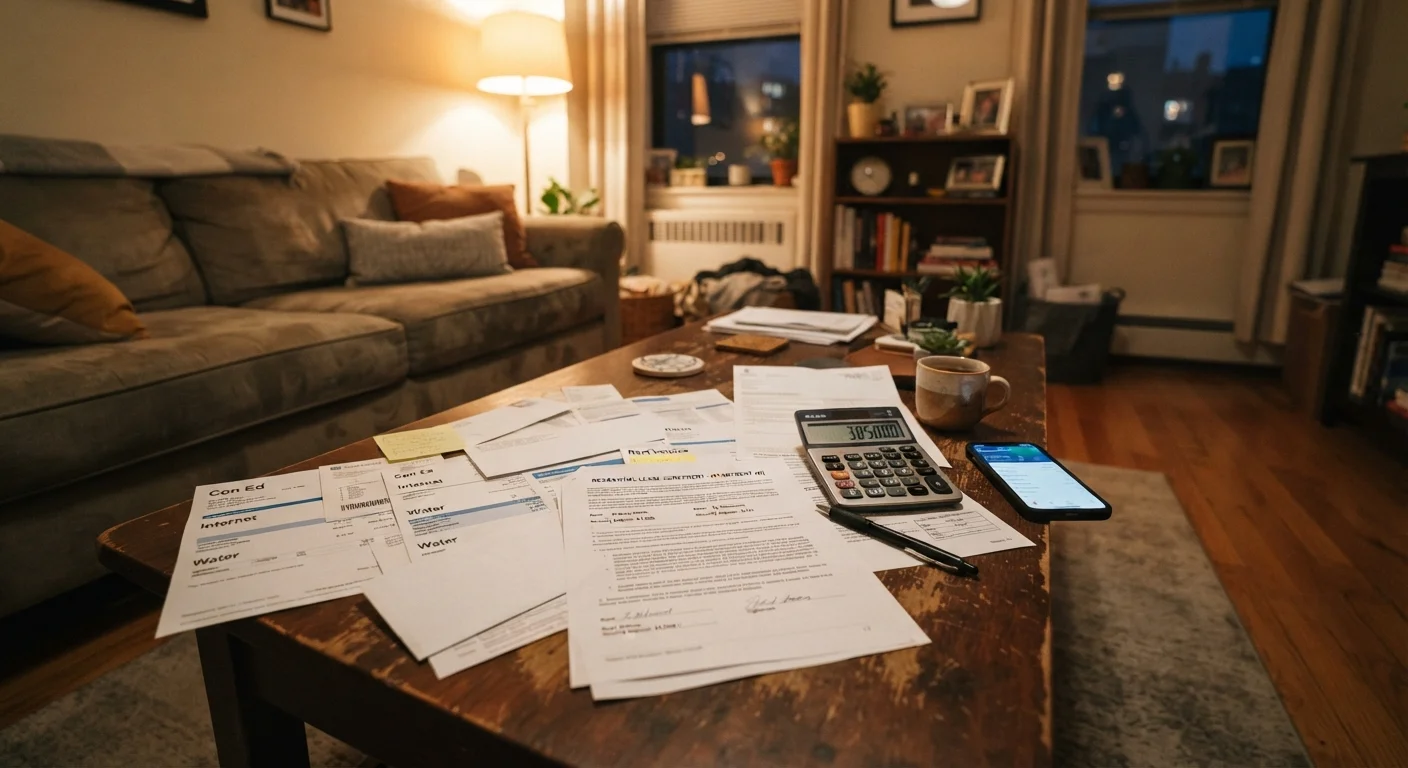
- Utilities: Electricity, gas, water, and trash may or may not be included. In units where they aren't, budget $100-$300/month depending on climate, unit size, and usage.
- Internet and cable: Rarely included. Broadband plans typically run $40-$100/month.
- Renters insurance: Often required by landlords and broadly advisable regardless. Policies typically cost $15-$30/month and cover personal property and liability.
- Parking: In many urban buildings, parking is a separate monthly charge - commonly $50-$300/month depending on location.
- Pet fees: If you have pets, expect a non-refundable pet fee at move-in ($100-$500), an ongoing monthly pet rent ($25-$75), or both.
- Storage units: Buildings sometimes charge separately for assigned storage, typically $25-$75/month.
- Laundry: If in-unit laundry isn't available, coin-operated or app-based building laundry adds a recurring cost - or the expense of a laundromat.
These costs compound quickly. A renter paying $1,800/month in base rent could easily spend $2,200-$2,500/month in total housing costs once utilities, parking, renters insurance, and internet are factored in. Compare this dynamic to homeownership, where costs beyond the mortgage.
Lease Terms That Affect Your Costs
Certain lease provisions directly affect how much renting ultimately costs you over time:
- Rent escalation clauses: Some leases specify automatic annual rent increases, often tied to a percentage or an index. Know whether yours does before signing.
- Early termination fees: Breaking a lease before it ends typically triggers a penalty - often one to two months' rent - plus potential liability for rent through re-letting.
- Renewal terms: Leases that convert to month-to-month after the fixed term may carry a higher rent rate. Understand how month-to-month and fixed-term leases compare before your lease expires.
- Move-out requirements: Some leases require professional carpet cleaning or painting restoration, which can reduce or eliminate the security deposit you expected returned.
When a landlord proposes a rent increase mid-tenancy or at renewal, knowing your options matters. Your rights during a rent increase depend heavily on your state, lease type, and local ordinances.
This article is for general informational purposes only and does not constitute legal or financial advice. Consult a licensed attorney or financial professional for guidance specific to your situation.