
What Manufacturers Actually Mean by 'Lifetime'
The word 'lifetime' on a car part or fluid sounds reassuring - almost like a promise. In practice, it's an engineering shorthand for a design target, not a maintenance-free guarantee. When automakers use the term, they typically mean the component is expected to perform adequately for the anticipated life of an average vehicle under average conditions - a benchmark often set around 100,000 miles.
That definition creates a gap between expectation and reality for many drivers. Vehicles in the U.S. are routinely kept for 150,000, 200,000, or more miles. Driving in extreme heat, cold, stop-and-go traffic, or with a trailer in tow places stress on fluids and components that laboratory testing doesn't fully replicate. Understanding the fine print behind 'lifetime' is one of the most practical things a driver can do to protect a vehicle investment. For a broader view of how these costs compound, see the full picture of auto ownership costs.
Myth
If a part is labeled 'lifetime,' I never need to inspect or replace it for as long as I own the car.
Fact
'Lifetime' is an engineering benchmark, not a blanket maintenance exemption. Most such parts still require periodic inspection and eventual replacement depending on mileage and conditions.
Automakers define 'lifetime' internally - often as the vehicle reaching roughly 100,000 miles under average driving conditions in a controlled test environment. Real-world ownership routinely exceeds that figure, and real-world conditions are rarely average. Coolant, spark plugs, and cabin air filters have all carried 'lifetime' or extended-interval labels, yet mechanics regularly find them degraded well before that implied endpoint. Treat 'lifetime' as a starting reference, not a final answer.
Myth
Lifetime transmission fluid is a genuine improvement that means the transmission is truly sealed for the car's life.
Fact
Modern transmission fluids do last longer than older formulas, but heat and mechanical stress still degrade them - they are not immune to wear.
Sealed transmission systems with factory-fill fluid became common in the 1990s and 2000s as fluid chemistry improved. However, every gear change, every tow, and every summer in a hot climate adds thermal stress that breaks down the fluid's protective additives. Many independent transmission specialists recommend inspecting this fluid between 60,000 and 90,000 miles regardless of the 'lifetime' designation - especially for vehicles using CVT or dual-clutch designs, which are more sensitive to fluid condition. See how transmission service fits into high-mileage costs for a broader picture.
Myth
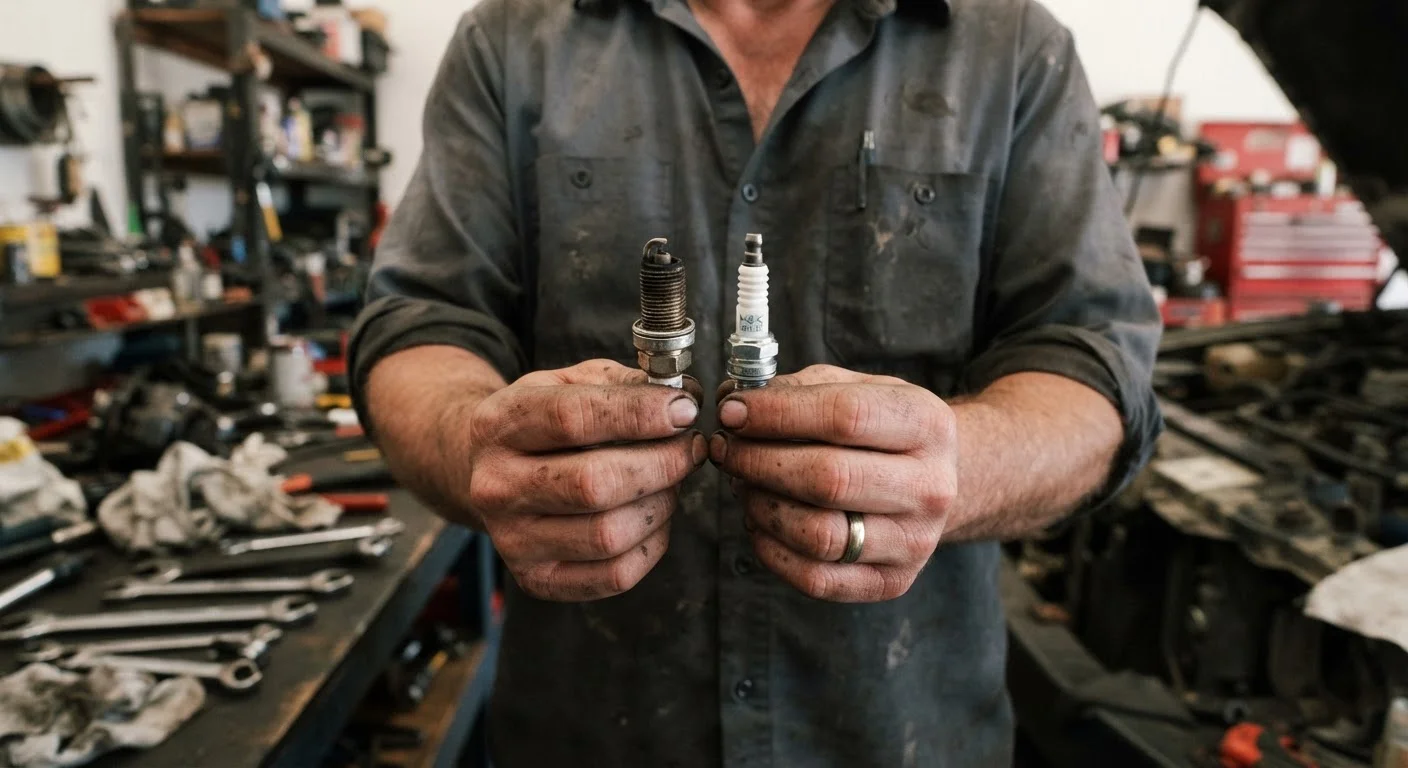
Extended-life spark plugs mean I can ignore ignition maintenance for 100,000 miles regardless of how I drive.
Fact
Iridium and platinum spark plugs do extend service intervals, but oil consumption, engine deposits, and aggressive driving can shorten their effective life.
Traditional copper plugs needed replacement every 30,000 miles or so. Modern iridium-tipped plugs are rated for longer intervals - sometimes 60,000 to 100,000 miles. But those ratings assume a clean, healthy engine burning minimal oil. If your engine uses oil between changes, the plugs foul faster. Misfires, rough idle, or reduced fuel economy are signs worth investigating before the 'lifetime' interval expires. Check with your mechanic if any of those symptoms appear.
Myth
Lifetime coolant never needs flushing - the whole point is that it's permanently effective.
Fact
Extended-life coolants have longer service windows than conventional antifreeze, but they still degrade and must eventually be replaced to prevent corrosion.
Organic acid technology (OAT) and hybrid OAT coolants - the types often marketed as 'lifetime' or 'extended life' - resist corrosion longer than older green antifreeze. But the corrosion inhibitors deplete over time, especially in systems with mixed metals like aluminum heads and iron blocks. A degraded coolant can cause pitting in the water pump and internal radiator corrosion. Most manufacturer service guidelines still recommend a coolant condition check at major service milestones. Your vehicle's maintenance schedule should clarify the recommended inspection window.
Myth
If a dealership says a fluid is 'lifetime,' I'll void my warranty by changing it anyway.
Fact
Performing additional maintenance - including changing a fluid early - does not void a manufacturer's warranty under U.S. federal law.
The Magnuson-Moss Warranty Act generally prohibits manufacturers from voiding a warranty solely because an owner performed additional maintenance or used non-dealer parts and services. Changing a 'lifetime' fluid before its nominal interval is considered proactive maintenance, not warranty-voiding tampering. If you have specific concerns about your warranty terms, consult your warranty documentation or an independent legal resource. Understanding proactive maintenance habits can also help you avoid unnecessary spending over the life of your vehicle.
When Driving Conditions Change Everything
Most maintenance interval data - including 'lifetime' designations - is derived from what manufacturers call normal or ideal driving conditions. The reality for many U.S. drivers is classified as severe-duty use: frequent short trips under 10 miles, driving in temperatures below 10°F or above 90°F regularly, sustained highway speeds, towing, or operating in dusty or hilly terrain.
Neglecting 'Lifetime' Transmission Fluid Can Be Costly
Transmission fluid labeled 'lifetime fill' degrades with heat and use. Neglecting it - especially in vehicles with continuously variable transmissions (CVTs) or dual-clutch automatics - can lead to slipping gears, rough shifts, and ultimately full transmission failure. Replacement transmission assemblies can cost thousands of dollars. If your vehicle has high mileage or operates under demanding conditions, have the fluid inspected by a qualified technician.
Under severe conditions, real-world service life for fluids and wear parts can be meaningfully shorter than the label implies. The practical takeaway: ask your mechanic to evaluate your specific driving profile when setting a maintenance schedule, rather than relying solely on label claims. If you're also weighing the long-term fuel costs of your vehicle, factoring in maintenance realities at the same time gives you a more complete ownership picture.
100,000 mi
Common 'lifetime' part benchmark mileage
Many automakers define vehicle 'lifetime' as approximately 100,000 miles when setting maintenance intervals, though actual ownership often extends well beyond that.
30%+
Potential fluid life reduction in severe driving
Industry maintenance guidelines generally suggest that severe-duty driving conditions - including towing, extreme temperatures, and frequent short trips - can reduce fluid and component service intervals by 30% or more compared to normal use.
Don't Take 'Lifetime' at Face Value
When a manufacturer labels a part or fluid as 'lifetime,' that designation is based on controlled test assumptions, not your specific driving conditions. High-mileage drivers, those in extreme climates, or anyone who tows or hauls regularly may see significantly shorter service lives. Always cross-reference the label with your owner's manual and discuss your driving habits with a qualified mechanic.