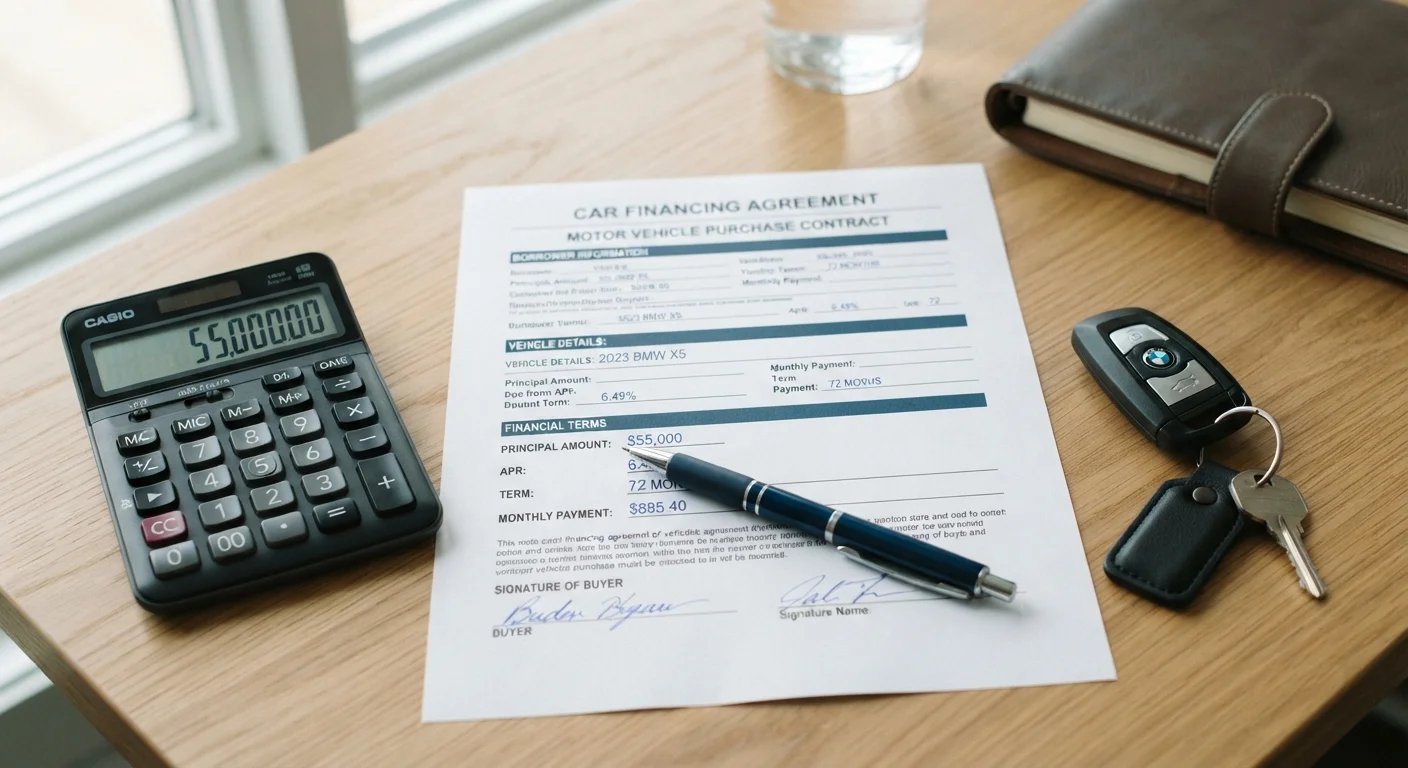
Documents, research, budget figures, and questions to have ready — a practical checklist that helps you enter negotiations on solid footing.
Key Takeaways
Knowing your budget ceiling before you arrive prevents financing pressure tactics from inflating your cost.
Researching fair market value for your target vehicle gives you a credible reference point during negotiation.
Having all required documents organized in advance speeds up the purchase process considerably.
A pre-arranged financing offer from a bank or credit union gives you a concrete alternative to dealer financing.
Preparing specific questions about fees, warranties, and add-ons helps you avoid surprises at signing.
Why Preparation Changes the Outcome
Walking into a dealership without preparation puts you at an immediate information disadvantage. Sales staff handle these transactions daily; most buyers do it a handful of times in their lives. That gap closes significantly when you arrive having done your homework. Preparation isn't about being adversarial - it's about making sure the decisions you make reflect your actual priorities and financial situation, not the pressure of the moment.
This checklist covers four areas: your financial picture, vehicle research, the documents you need, and the questions worth asking out loud. Work through each section before your visit. If you want a broader picture of what happens once you're inside, see our walkthrough of the full car-buying process.
Know Your Numbers
Calculate your total monthly budget for vehicle ownership, including estimated insurance, fuel, and maintenance - not just the loan payment.Must
Set a firm ceiling on the out-the-door price (total cash cost including taxes, title, and all fees) before you arrive.Must
Check your credit score through your bank, credit union, or a free monitoring service so you know what financing tier to expect.Must
Obtain a pre-approval offer from your bank or credit union to use as a baseline against any dealer financing rate.Should
Calculate the realistic trade-in value range of your current vehicle using at least two independent valuation tools.Should
Research the Vehicle
Look up the manufacturer's suggested retail price (MSRP) and the average transaction price for your target make, model, trim, and model year.Must
Identify which trim level includes the features you actually need, so you can resist upsells to higher trims during the visit.Must
Review reliability data and owner feedback for the specific model year you're considering from independent sources.Should
Check manufacturer incentives, rebates, or financing promotions currently being offered directly on the automaker's website.Should
For a used vehicle, obtain a vehicle history report using the VIN and note any flags to raise with the seller.Must
Gather Your Documents
Bring a valid government-issued photo ID (driver's license or passport) for identity verification.Must
Bring proof of current insurance or your insurer's contact information, since most states require coverage before you can drive off the lot.Must
Carry proof of income (recent pay stubs or a bank statement) if you plan to finance through the dealership.Must
Have your pre-approval letter from your bank or credit union printed or accessible on your phone.Should
Bring the title and any payoff documentation for your trade-in vehicle.Should
Prepare Your Questions
Write down a list of all fees you expect to see (documentation fee, destination charge, dealer prep) and plan to ask for an itemized breakdown.Must
Ask specifically which add-ons - such as paint protection, extended warranties, or GAP insurance - are pre-installed versus optional.Must
Confirm the exact out-the-door price in writing before discussing monthly payment amounts.Must
Ask about the return or exchange policy, if any, and get it in writing rather than relying on a verbal assurance.Should
If buying used, ask whether the vehicle has passed a certified inspection and request the inspection report.Should
Plan to ask for at least one overnight or extended test drive to evaluate the vehicle under real conditions before committing.Nice to have
Note the name of the finance and insurance (F&I) manager you'll meet at signing, and look up common F&I add-ons in advance so nothing is unfamiliar.Nice to have
Tools That Support Your Research
You don't need specialized software to prepare well, but a handful of free or widely available resources make the research phase faster and more reliable. The tools below support specific steps in the checklist above.
Required
Manufacturer Website
Verify current MSRP, trim configurations, and any factory incentives or financing offers directly from the source.
Required
Independent Vehicle Valuation Tools
Establish a fair market price range for the vehicle you want and a realistic trade-in estimate for your current car.
Required
Your Bank or Credit Union
Obtain a pre-approved auto loan offer to use as a negotiating baseline against dealer financing.
Optional
VIN History Report Service
Pull a vehicle history report for any used car you're seriously considering to check for accidents, title issues, or odometer discrepancies.
Required
Free Credit Monitoring Service
Check your current credit score before applying for financing so you can anticipate the rate tier you qualify for.
If you're considering a used vehicle, a pre-purchase inspection by an independent mechanic is one of the highest-value steps you can take. Our article on what a pre-purchase inspection covers and why it matters explains what to expect and what to request. For a comparison of how dealership buying differs from private-party transactions, see our piece on private party vs. dealership purchases.
Negotiate the Total Price, Not the Monthly Payment
A common dealership tactic is to shift the conversation from total vehicle cost to monthly payment. A lower monthly payment can mask a higher overall price if it simply reflects a longer loan term. Always agree on the complete out-the-door price first, then work out the payment structure. Extending a loan term to make payments feel affordable can significantly increase total interest paid over time.
Auto Editorial Team is the collective byline for our editorial team and contributor network. Articles published under this byline or an editorial pen name are researched, written, and reviewed according to our editorial standards for clarity, consistency, and independence before publication.
The content on this site is for informational purposes only and is not a substitute for professional advice. Always consult a qualified professional for guidance specific to your situation.