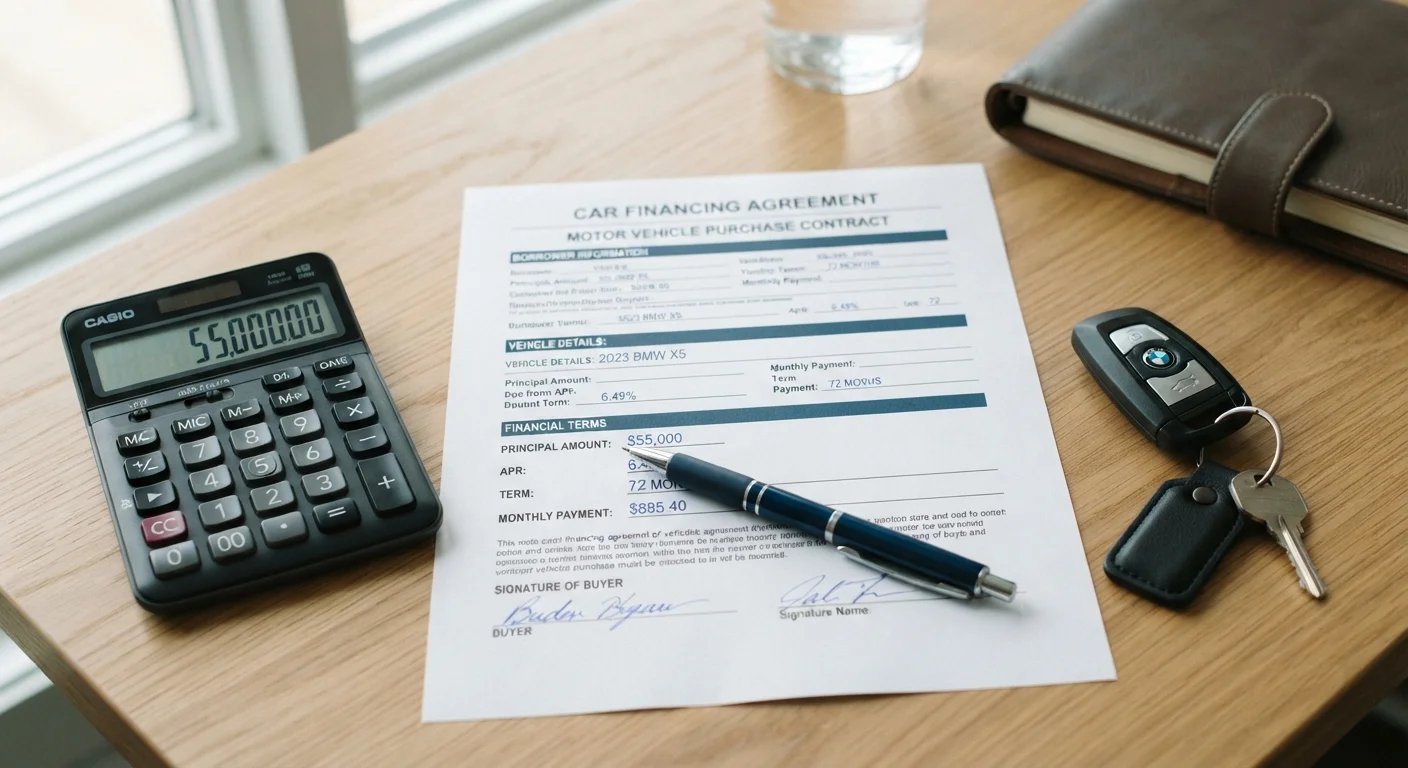

Why Car Buying Myths Are So Persistent
Car dealerships are one of the most complex retail environments most people ever navigate. The process involves multiple interlocking negotiations - purchase price, financing rate, trade-in value, and add-on products - each of which can be adjusted independently. That complexity creates fertile ground for misconceptions to take root and spread.
Some myths are genuinely innocent misunderstandings. Others are shaped by outdated advice that no longer reflects how modern dealerships operate. A few are actively reinforced by sales practices designed to keep buyers focused on the wrong numbers. Regardless of origin, believing them tends to cost shoppers real money.
The myths below cover the scenarios where misinformation does the most financial damage. For a broader look at ongoing vehicle expenses beyond the purchase itself, see our guide on common myths about car ownership costs.
Myth
Focusing on the monthly payment is the smartest way to negotiate a car deal.
Fact
Monthly payment negotiation almost always costs buyers more over the life of the loan because it obscures the total purchase price and interest paid.
When a buyer anchors on a monthly payment target, a dealer can hit that number by extending the loan term - say, from 48 months to 72 or 84 months - while keeping the purchase price and interest rate unchanged or even higher. A lower monthly payment can mask a significantly more expensive deal overall. Always negotiate the out-the-door purchase price first, then evaluate financing terms separately based on total cost, not just the monthly figure.
Myth
The end of the month is always the best time to buy because dealers are desperate to hit quotas.
Fact
End-of-month timing can create some negotiating advantage, but dealers also operate on quarterly and annual sales cycles, and individual salespeople have varying incentive structures.
While it's true that dealerships often have monthly sales targets, the pressure to discount isn't uniform or predictable for every consumer on every vehicle. Manufacturer incentives - which dealers may pass on - are typically tied to monthly or quarterly programs, but these change frequently and aren't always publicly advertised. A buyer who enters any day of the month well-prepared with competing offers and a clear price target is often better positioned than one waiting for a specific calendar date without doing that groundwork.
Myth
Dealership financing is always worse than going through your own bank.
Fact
Dealer-arranged financing is sometimes competitive, and in certain cases - particularly with manufacturer-subsidized rates - it can beat outside offers. The key is having a pre-approved rate to compare against.
Dealers work with multiple lending partners and can sometimes secure rates that match or undercut what a buyer's bank offers. Manufacturer captive financing arms periodically offer promotional rates - including 0% APR - on specific models, which outside lenders cannot replicate. That said, dealers also earn income by marking up the rate they receive from lenders, which means the rate offered to you may not be the lowest available rate. Walking in with a pre-approval gives you a concrete benchmark and eliminates guesswork.
Myth
Your trade-in value is fixed - every dealer will offer roughly the same amount.
Fact
Trade-in offers vary meaningfully across dealers, and the offer you receive can also be influenced by how and when you introduce the trade-in during negotiations.
Trade-in valuations are influenced by a dealer's current inventory needs, regional demand for specific models, and how the trade-in fits into their used-vehicle sales strategy. A dealer well-stocked with similar vehicles may undervalue yours, while another with demand for that model may offer more. Obtaining independent appraisals - including offers from third-party vehicle-buying services - before entering a dealership gives you a documented baseline to negotiate against, regardless of what any single dealer proposes.
Myth
Applying for multiple auto loan pre-approvals will significantly damage your credit score.
Fact
Most credit scoring models treat multiple auto loan inquiries within a short window as a single inquiry, specifically to accommodate rate shopping.
This rate-shopping protection exists because credit scoring systems recognize that responsible borrowers comparison-shop for loans. The typical window is 14 days under older scoring models and up to 45 days under newer versions, though the exact window varies by model. Skipping pre-approval to avoid a perceived credit hit is a costly trade-off: without a competing rate in hand, buyers have no objective way to evaluate whether the dealer's financing offer is favorable. For related context on how credit inquiries actually work, see credit myths that may be costing you points.
Myth
The sticker price on a new car is non-negotiable.
Fact
On most new vehicles, the sticker price - formally called the Manufacturer's Suggested Retail Price (MSRP) - is a starting point, not a fixed selling price.
MSRP is set by the manufacturer as a suggested price. Dealers typically have flexibility below MSRP, and in normal supply conditions, new vehicles frequently sell at or below that figure. Market conditions, vehicle popularity, and regional inventory levels all influence how much - if any - discount is available. During periods of tight supply, some vehicles do sell above MSRP. Understanding current market conditions for the specific model you want, including dealer invoice data available through third-party pricing tools, helps you enter any negotiation with realistic expectations.
Financing and Trade-In Realities
Two of the most expensive myths in car buying both involve money that exists outside the vehicle's sticker price: what you're offered for your trade-in and what interest rate you'll pay on a loan.
72+ months
Average new-vehicle loan term in recent years
Data from the Consumer Financial Protection Bureau has noted the rise of longer loan terms, which lower monthly payments but increase total interest paid over the life of the loan.
~$1,000+
Typical gap between dealer ask and dealer invoice on new vehicles
Third-party automotive pricing sources such as Edmunds and Kelley Blue Book provide dealer invoice estimates that illustrate the negotiating range present on most new vehicle transactions.
On financing, many buyers assume that applying for pre-approval from a bank or credit union before visiting a dealership will hurt their credit score significantly. In reality, multiple auto loan inquiries made within a short window - typically 14 to 45 days depending on the scoring model - are generally treated as a single inquiry under rate-shopping protections built into most credit scoring formulas. Getting pre-approved is one of the most effective ways to create genuine negotiating leverage on rate. See how dealer financing and outside financing compare before you sign anything.
On trade-ins, the sequencing of your negotiation matters enormously. When a buyer reveals their trade-in early, a dealer can use that figure as a cushion - inflating trade-in value slightly while padding the purchase price or financing terms. Keeping those conversations separate protects you. Our article on trade-in timing and deal sequencing explains how each piece connects in practice.
Bundling Negotiations Costs Buyers Money
One of the most effective dealer tactics is combining the purchase price, trade-in, and financing into a single conversation. When all three are discussed simultaneously, it becomes difficult to track whether gains in one area are being offset by losses in another. Negotiate each element separately and confirm the numbers in writing before moving to the next stage of the deal.
Finally, the out-the-door price - not the sticker price - is what actually matters. Taxes, documentation fees, dealer add-ons, and registration can add thousands to the final bill. Understanding what drives the gap between advertised price and actual cost is essential reading before any negotiation.
Making Smarter Decisions at Every Stage
Correcting these myths doesn't require expertise - it requires knowing which questions to ask and which numbers to focus on. The purchase price, the financing rate, and the trade-in value should each be negotiated as separate line items, not blended into a single monthly payment figure.
If you're weighing whether to buy new or used, the decision involves more than sticker price. Depreciation curves, warranty coverage, certified pre-owned protections, and financing rate differences all factor in. A clear comparison of new versus used trade-offs can help frame that decision accurately.
Watch for Add-Ons After the Price Is Set
Once a purchase price is agreed upon, buyers are often moved to a finance and insurance office where additional products - extended warranties, paint protection, gap insurance, and others - may be presented as standard or necessary. These products are almost always optional and are frequently priced at a significant markup. Review each item individually, ask for the cost to be itemized, and take time to evaluate whether each product offers genuine value for your specific situation before agreeing.
For a complete walkthrough of the buying process from test drive to title transfer, see what actually happens when you buy a car - so nothing catches you off guard at the table.