How Each Financing Path Is Structured
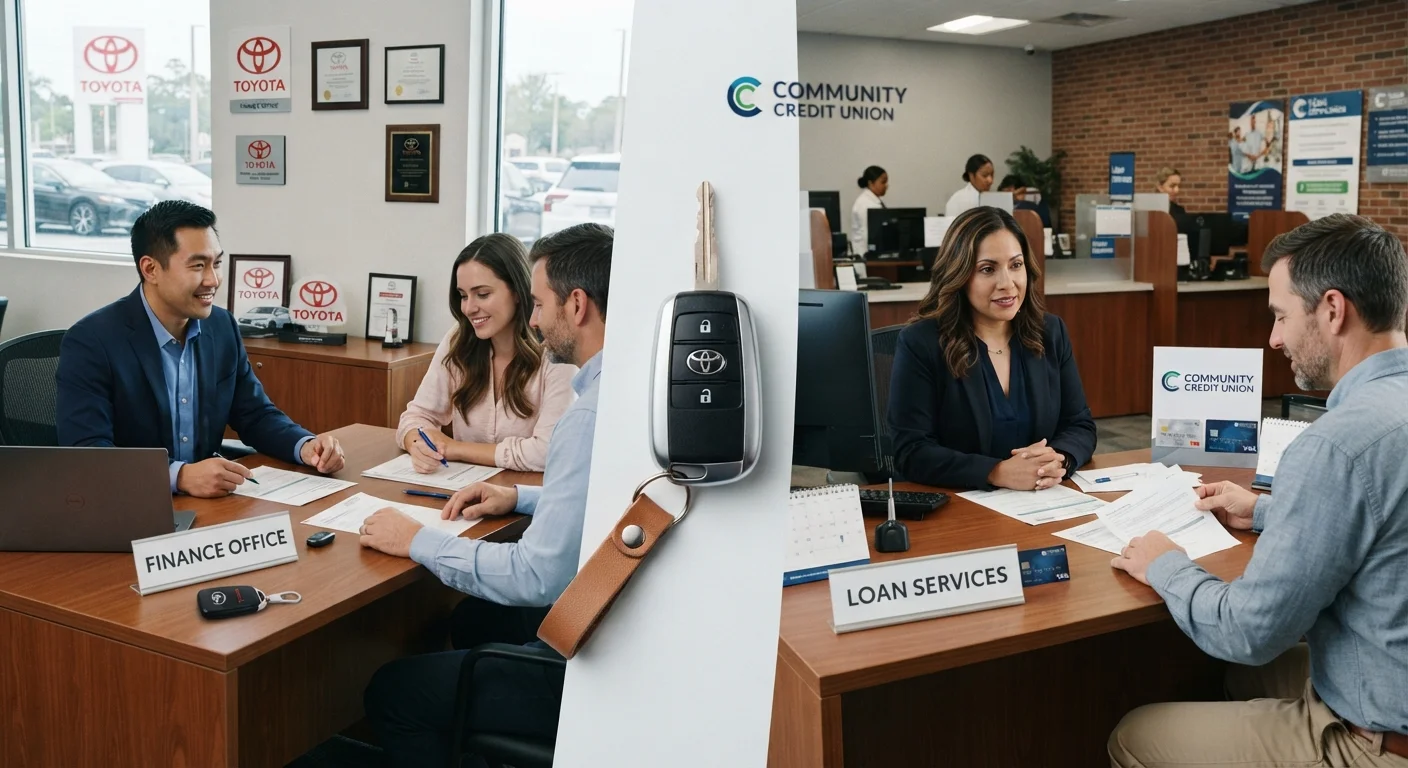
When you finance a vehicle through a dealership, the dealer typically does not lend you money directly. Instead, it submits your application to one or more third-party lenders - banks, captive finance arms (the financing subsidiaries of automakers), or other institutions - and then presents you with terms. The dealer acts as an intermediary, and in many cases earns compensation by marking up the rate above what the lender originally approved. This markup is commonly called dealer reserve.
Outside financing works differently. You apply directly to a bank, credit union, or other lender, get approved for a specific loan amount and interest rate, and receive a pre-approval letter or check. You then bring that offer to the dealership. The vehicle purchase and the financing terms are already partially settled before any paperwork begins.
Understanding this structural difference matters because it shapes your negotiating position. To understand how banks and credit unions differ from each other as lending institutions, see our explainer on their structural differences.
| Criterion | Dealer Financing | Outside Financing |
|---|---|---|
| Who sets the rate | Third-party lender, potentially marked up by dealer | Lender directly; rate disclosed upfront to borrower |
| Access to manufacturer promotions | Yes, if eligible | No - promotions are dealer-channel only |
| Rate transparency | Dealer reserve may not be disclosed | Rate is stated clearly in pre-approval |
| Preparation required | Minimal - handled at point of sale | Requires advance application and approval |
| Negotiating leverage | Financing and price often bundled together | Financing separated from vehicle price negotiation |
| Best credit scenarios | Excellent credit (for promos) or subprime lenders | Good to excellent credit; credit unions flexible |
The Rate Markup Question and What It Means for You
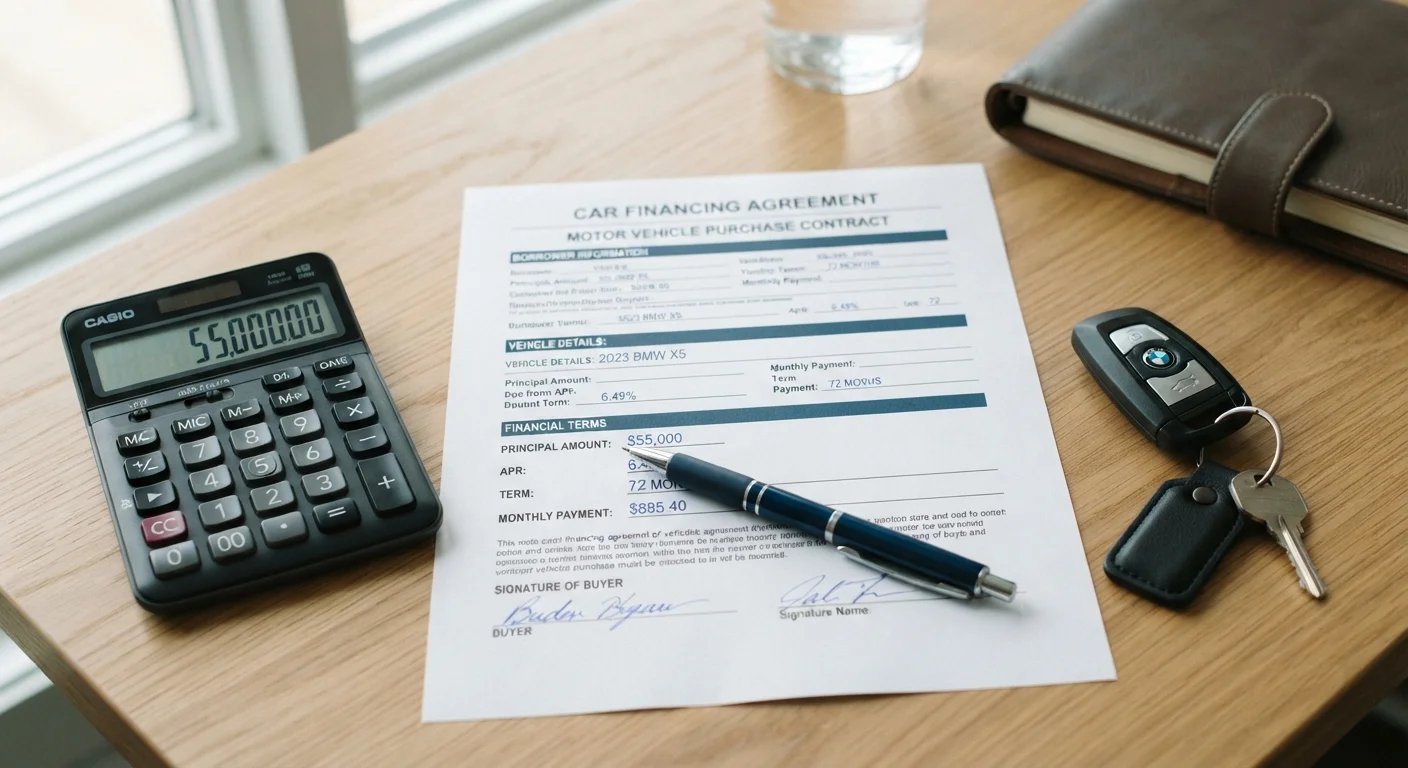
One of the most consequential features of dealer financing is dealer reserve. When a lender approves you at, say, 6.5% APR, the dealer may present you with a rate of 8% and keep the difference as compensation. This practice is legal in most states and is not always disclosed explicitly.
This doesn't mean dealer financing is always more expensive. Dealers sometimes have access to manufacturer-subsidized rates - such as 0% or below-market APR promotions - that outside lenders cannot match. These offers are typically restricted to buyers with strong credit and specific vehicle models. If you qualify and the promotion applies to the vehicle you want, dealer financing can result in a genuinely lower cost.
~80%
New car buyers who finance through the dealership
According to industry estimates, a large majority of financed new vehicle purchases in the US are arranged through dealership channels rather than external lenders.
1-2%
Typical dealer reserve markup range
Consumer advocacy research has noted that dealer interest rate markups commonly fall in the range of one to two percentage points above the lender's buy rate, though this varies widely.
For buyers who don't qualify for promotional rates, outside financing often provides more transparency. You see exactly what rate you've been approved for, you understand what your monthly payment will be, and you can compare that against anything the dealer offers. This is one reason financial educators commonly suggest getting a pre-approval before visiting a dealership - it gives you a baseline. For more on how the dealership finance office works once you're inside, see our overview of what to expect in the F&I office.
Practical Considerations Before You Decide
Several factors are worth evaluating when choosing between these two paths:
- Your credit score: Buyers with strong credit typically have the most to gain from shopping outside rates and comparing them directly against dealer offers. Buyers with weaker credit may find dealers have relationships with lenders who specialize in that segment.
- The vehicle type: New vehicles are more likely to carry manufacturer-rate promotions through dealerships. Used vehicles generally do not.
- How you structure the negotiation: Mixing trade-in value, vehicle price, and financing terms into a single conversation can make it harder to evaluate each element. Our article on trade-in timing explains how sequencing these pieces affects the final numbers.
- Time and preparation: Securing outside financing requires advance planning - typically several days to a week for application, approval, and documentation.
It's also worth noting that accepting a pre-approval doesn't obligate you to use it. If the dealer's offer genuinely beats your outside rate, you can use the dealer's financing instead. The pre-approval simply gives you a comparison point. Many buyers overlook this flexibility, which is one of the persistent myths that end up costing shoppers real money.
This article is for general informational purposes only and does not constitute personalized financial or legal advice. Consult a qualified financial professional before making decisions about your specific loan or purchase situation.
Pre-Approvals and Hard Credit Inquiries
Applying for a pre-approval at a bank or credit union typically triggers a hard credit inquiry, which can have a minor short-term effect on your credit score. However, most credit scoring models treat multiple auto loan inquiries within a short window (commonly 14-45 days) as a single inquiry to encourage rate shopping. Check with your lender for specifics, and consider timing your applications accordingly.