
Why Sequence Matters in a Car Deal
Most car buyers focus on the end number - the monthly payment - without realizing that number is the product of several interlocking negotiations. Purchase price, trade-in value, and financing terms each affect the final math, and the order in which you address them shapes how much visibility you have into each piece.
Dealers are structured to manage all three variables simultaneously. When bundled together, adjustments in one area can be offset by changes in another, sometimes in ways that aren't immediately obvious to a buyer. Understanding the sequence - and insisting on separating the components - is one of the most practical tools a consumer has at the table.
For a broader look at the full arc of the buying process, see what actually happens when you buy a car.
Best Practices for Managing Each Stage
The following practices reflect how experienced buyers structure a deal to maintain clarity at every step.
Get an independent trade-in appraisal before setting foot in a dealership.
Independent appraisals from sources such as third-party vehicle valuation services establish a market-rate baseline for your vehicle. Without one, you're evaluating the dealer's offer against an unknown standard, which significantly weakens your position.
Negotiate the purchase price of the new vehicle before disclosing that you have a trade-in.
When a dealer knows you have a trade-in early, the two figures can be blended in ways that make it harder to verify whether you received fair value for either. Settling on the out-of-pocket price first creates a clear reference point.
Secure a pre-approved loan from a bank or credit union before discussing dealer financing.
Pre-approval gives you a concrete interest rate to benchmark dealer financing against. It also removes urgency - you're not dependent on the dealer's financing office to complete the purchase.
Always evaluate total loan cost, not just monthly payment.
Monthly payment is one of the most easily manipulated figures in a car deal. Extending loan term length reduces the monthly figure while increasing total interest paid. The only way to compare financing offers accurately is to look at the full repayment amount.
Treat the F&I office as a separate, additional negotiation.
Many buyers feel the deal is done once the purchase price is agreed upon, leading them to accept add-on products with less scrutiny. F&I products carry their own costs and deserve independent evaluation.
The Monthly Payment Trap
One of the most well-documented negotiation dynamics at dealerships is the shift from discussing total price to discussing monthly payment. When a buyer anchors to a monthly number, the dealer gains flexibility across loan term length, interest rate, and trade-in credit - variables the buyer may no longer be tracking closely.
Monthly Payment vs. Total Cost
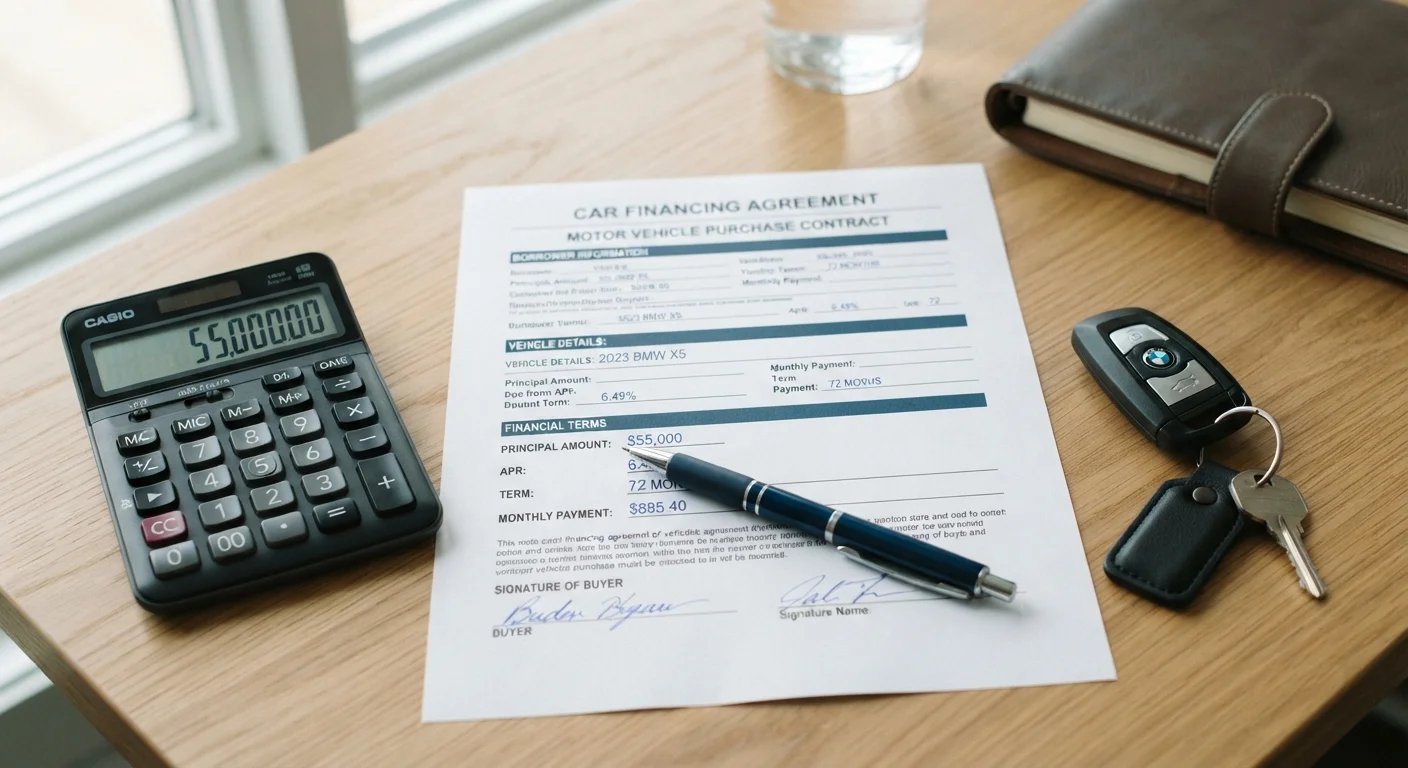
A lower monthly payment doesn't always mean a better deal. Loan term length is a key variable - extending a loan from 48 to 72 months reduces the monthly figure but increases total interest paid. Always calculate what you'll pay in full over the life of the loan before comparing offers. Ask for the APR (Annual Percentage Rate), total financed amount, and total repayment figure in writing.
A loan stretched from 48 months to 72 months at a slightly lower payment can increase total interest paid by hundreds or even thousands of dollars, depending on the rate and principal. Always calculate total cost of the loan, not just the monthly figure.
For more on how financing structures compare, see how dealer and outside financing differ before you sit down to talk numbers.
Quick Wins Before You Walk In
Preparation before you arrive at the dealership is the most reliable way to improve your negotiating position. These are steps you can take today that directly affect your outcome.
Common misconceptions about how trade-ins and financing work can also cost buyers real money before the conversation even starts. Review persistent car buying myths to avoid negotiating from a flawed premise.
After the Price Is Set: The F&I Office
Once you've agreed on a purchase price and trade-in value, the deal typically moves to the finance and insurance (F&I) office. This is a distinct stage with its own set of decisions - extended warranties, GAP coverage (Guaranteed Asset Protection, which covers the difference between what you owe and your car's value if it's totaled), and other add-ons will be presented here.
These products are not inherently without value, but they are almost always presented at a profit margin for the dealership. Evaluating each one on its own merits - independent of the relief you may feel that the earlier negotiation is done - is essential. Understand what the F&I office offers and how to think about it before you get there.
72 months
Most common new vehicle loan term length
According to data from Experian's State of the Automotive Finance Market reports, loan terms of 72 months have become among the most common for new vehicle purchases in recent years.
~$1,000+
Typical F&I product gross profit per vehicle
Industry analyst reports have consistently shown that the finance and insurance office is a significant profit center for dealerships, often generating hundreds to over a thousand dollars per transaction.
Going in with a complete preparation checklist - including a clear budget ceiling and a list of questions - keeps the full deal visible from start to finish. Use a preparation checklist before your dealership visit to make sure nothing catches you off guard.