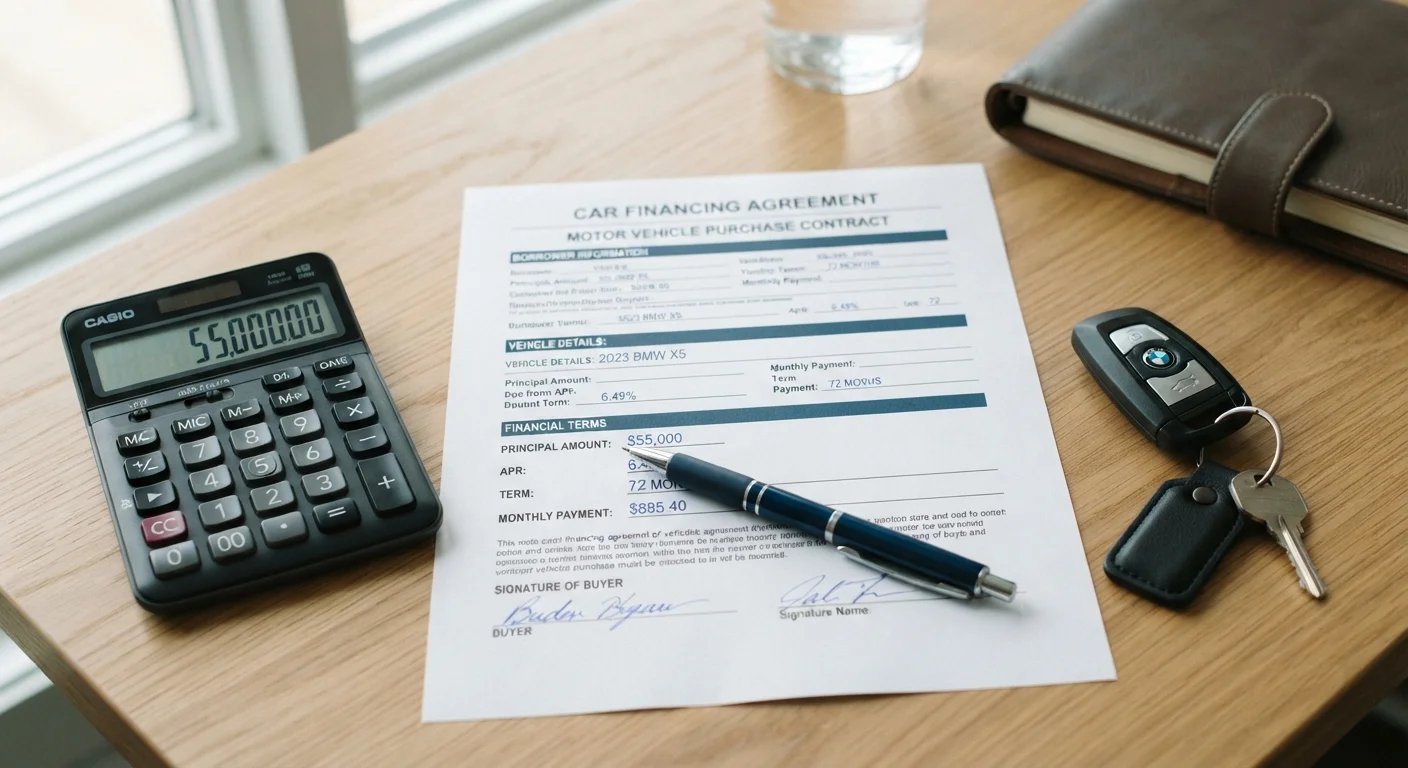

What Actually Happens in the F&I Office
Once you and a salesperson agree on a vehicle price, you're handed off to the F&I manager - a specialist whose role is to complete your financing paperwork and introduce a selection of optional products. The conversation typically follows a structured presentation, often called a "menu," that bundles several add-ons together at a monthly cost rather than a lump-sum price.
This framing matters. A product that costs $1,200 sounds different when presented as "about $20 a month" stretched over your loan term. Understanding the total cost of any add-on - not just its monthly impact - is an important habit to develop before you walk in.
See our full walkthrough of the car-buying process to understand how the F&I step connects to everything that came before it.
The F&I Office Is Not the Finish Line
Many buyers assume that agreeing on a vehicle price is the hard part. The F&I stage, however, introduces a separate set of financial decisions that can meaningfully affect your total cost of ownership. Going in informed - and taking your time - is not unusual; it's prudent.
Common Products You'll Likely Be Offered
F&I menus vary by dealership, but most buyers encounter some version of the following:
- Extended warranty / service contract: Covers certain mechanical repairs after the manufacturer's warranty expires. Coverage scope, deductibles, and claim processes differ significantly between contracts. What the fine print usually says is worth reviewing before enrolling in any plan.
- GAP (Guaranteed Asset Protection) insurance: Pays the difference between your loan balance and your vehicle's actual cash value if it's declared a total loss. Most useful when financing a large percentage of a vehicle's value over a long term.
- Credit life and disability insurance: Pays your loan if you die or become disabled. Standard life and disability coverage you may already carry can serve the same purpose - compare before adding.
- Appearance protection packages: Fabric protection, paint sealant, and similar treatments. These are commonly available as aftermarket products at considerably lower cost.
- Tire and wheel protection: Covers road hazard damage to tires and wheels. Review what your auto insurance and any existing roadside plan already covers.
~$1,500
Average F&I profit per vehicle sold
Industry estimates from sources such as the National Automobile Dealers Association have historically placed average F&I gross profit per retail unit in this range, though it varies by dealership and market.
72+ months
Common loan term length in the US
Data from sources including the Consumer Financial Protection Bureau has noted that longer loan terms increase the period during which a buyer may owe more than the vehicle's depreciated value, making GAP coverage more relevant.
How to Evaluate Each Product Clearly
The most useful question for any F&I product is: What specific risk does this address, and do I already have coverage for it?
Check your existing auto insurance policy before the dealership visit. Some policies include GAP coverage or roadside assistance, making dealership versions redundant. If you have a strong emergency fund, some of these products may duplicate financial protection you've already built.
Ask for the full contract for any product before agreeing. Verbal summaries from the F&I manager are not the same as the written terms. Pay attention to exclusions, deductibles, cancellation rights, and whether coverage is transferable if you sell the vehicle.
Request the Full Contract Before Agreeing
Before accepting any F&I product, ask to read the complete written contract - not just the summary sheet. Look for the list of exclusions, the deductible amount, and the cancellation policy. Many service contracts can be cancelled within a specified window for a prorated refund, which is worth confirming upfront.
Also consider that ongoing ownership costs extend well beyond the purchase day - a realistic view of your total budget helps you decide what optional coverage genuinely makes sense.
Protecting Yourself Through the Process
The F&I office can feel rushed. The paperwork is dense, and the menu of products is sometimes presented as if it's a normal part of every purchase. Slowing down is reasonable and appropriate.
A few practical habits help: arrive with your own financing pre-approval so you have a rate benchmark; write down the all-in price of each product separately; and never sign documents you haven't fully read. If something is unclear, ask for clarification in plain language.
The sequence of your deal also affects how F&I products land - understanding how the numbers connect across negotiation, trade-in, and financing puts you in a stronger position at every stage.
This article provides general consumer education about dealership F&I practices and is not financial, legal, or insurance advice. Consult a licensed professional for guidance specific to your situation.