
How the Car-Buying Process Is Structured
Buying a car involves more moving parts than most consumers anticipate. It isn't a single transaction - it's a sequence of decisions spread across research, negotiation, financing, and legal transfer of ownership. Each stage has its own pressure points, and confusion about what comes next is one of the most common reasons buyers feel they overpaid or signed something they didn't fully understand.
This guide walks through the full process in order, so you know exactly what to expect at each step. For a side-by-side comparison with another major purchase, the home buying process follows a similar staged structure with its own distinct requirements.
Out-the-door price
The total amount you'll actually pay for a vehicle, including the negotiated price, all dealer fees, documentation charges, sales tax, and registration costs. This is the only number that tells you the true cost of the transaction.
Pre-approval
A conditional offer from a lender - typically a bank or credit union - to finance a vehicle up to a certain amount at a specified interest rate. It gives you a firm benchmark before you discuss financing at a dealership.
F&I office
Short for Finance and Insurance office - the room at a dealership where you complete loan or lease paperwork and are presented with optional add-on products after agreeing on a vehicle price.
Gap insurance
Optional coverage that pays the difference between what you owe on a vehicle loan and what the vehicle is worth if it's totaled or stolen. It's most relevant when you've financed a high percentage of the purchase price.
Title transfer
The legal process of changing the registered owner of a vehicle. It involves updating the official title document held by your state's motor vehicle authority to reflect the new owner's name.
Documentation fee
A fee charged by dealerships to process the paperwork associated with a vehicle sale. The amount varies by state and dealership; some states cap how high this fee can go.
Before You Set Foot on a Lot
The decisions you make before visiting a dealership have an outsized effect on the outcome. Research starts with understanding your realistic budget - not just the monthly payment, but the total cost of the vehicle including taxes, fees, and ongoing expenses. The total cost of ownership primer breaks down every major cost category first-time buyers need to account for.
You should also secure a pre-approval for financing from your bank or credit union before stepping onto a lot. This gives you a concrete interest rate benchmark and prevents dealership financing discussions from anchoring entirely on monthly payment figures. Gather required documents - license, proof of income, insurance, and any trade-in title - well in advance. The dealership preparation checklist covers everything you should have ready before negotiations begin.
Get Pre-Approved Before You Shop
Securing financing from your own bank or credit union before visiting a dealership gives you a concrete interest rate to compare against any offer made in the F&I office. It also shifts the conversation away from monthly payment and toward total cost, which is a much more useful negotiating frame. Bring your pre-approval letter with you - it signals to the dealer that you're a prepared buyer.
At the Dealership: Test Drive to Agreed Price
Once you arrive, the sequence typically moves from inspection and test drive to price negotiation. The test drive isn't just about comfort - it's your opportunity to evaluate fit, visibility, noise levels, and how the vehicle responds under real conditions. Take it on roads similar to your daily commute, not just the dealership parking lot.
Price negotiation should focus on the out-the-door price - the total amount you'll pay including all dealer fees, documentation fees, and applicable taxes - rather than the monthly payment. Negotiating on payment alone makes it easy for other costs to be quietly inflated. Many common beliefs about what buyers can and can't negotiate are simply inaccurate; the car buying myths article addresses the most persistent ones with an accurate picture.
Don't Anchor on the Monthly Payment
Focusing only on what fits your monthly budget makes it easy for other costs - extended loan terms, add-on fees, inflated interest rates - to quietly increase your total spend. A lower monthly payment stretched over a longer loan can cost significantly more overall. Always calculate and compare the full amount you'll pay before agreeing to any financing terms.
The Finance and Insurance Office
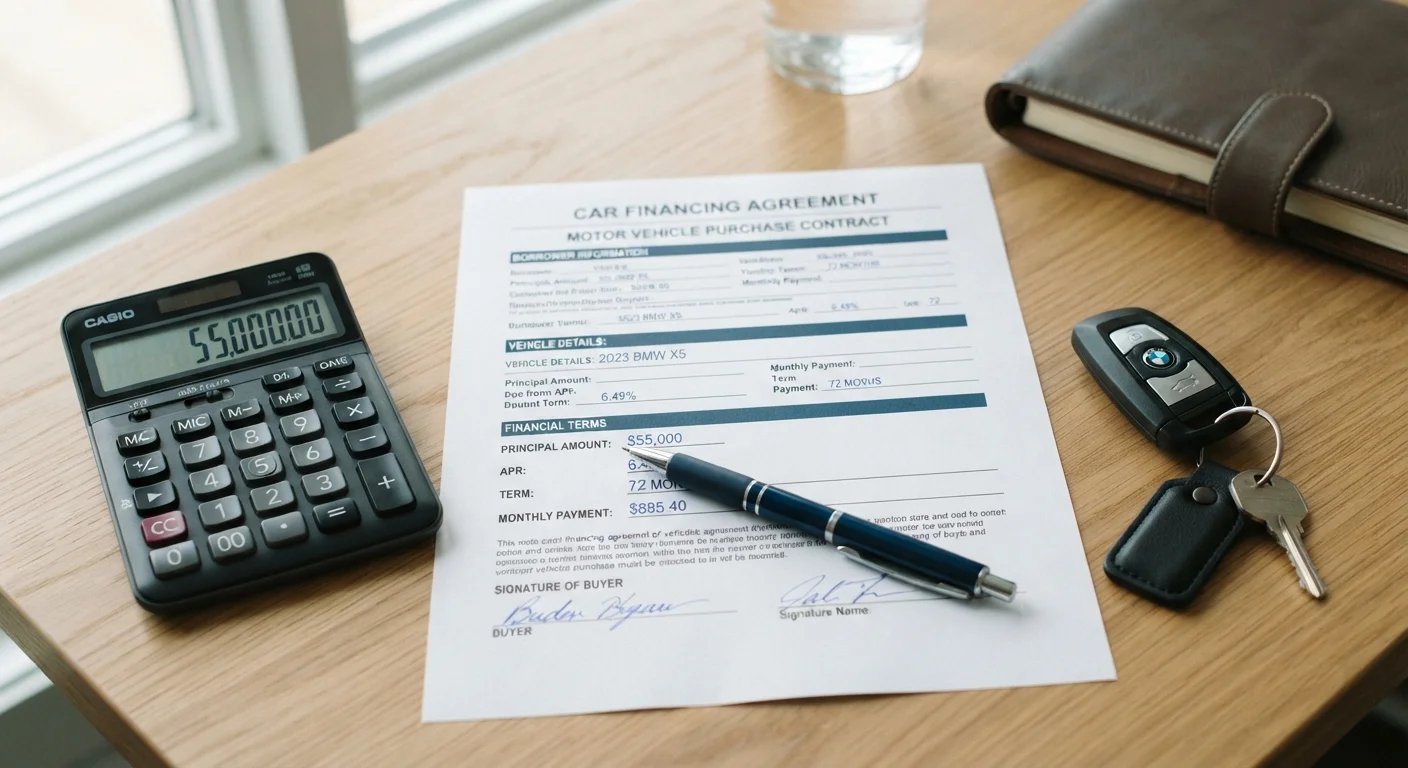
After agreeing on a vehicle price, you'll be directed to the finance and insurance (F&I) office to complete the transaction. This is the stage where many buyers, having mentally already made their decision, agree to products and terms they hadn't planned on. The F&I manager will present financing options and a menu of optional add-ons: extended service contracts, gap insurance, paint and fabric protection, tire and wheel coverage, and others.
Each of these products has a cost and a term - read every one carefully before signing. Gap insurance, for example, can be valuable if you financed a large portion of the vehicle's value, but it may also be available at a lower price through your auto insurer. Nothing in the F&I office is mandatory unless a lender explicitly requires it as a condition of your loan.
Compare the dealer's financing rate against your pre-approval. If the dealer offers a lower rate, it may be worth taking - just confirm there are no other cost offsets built in. Review the entire purchase agreement line by line before signing.
Title, Registration, and Driving Away
Once paperwork is signed, the dealership typically handles filing for the title transfer and registration on your behalf, rolling those fees into the transaction. The physical title may not arrive for several weeks - it will go to your lender if you financed the vehicle, or directly to you if you paid in full. Registration deadlines vary by state, and driving an unregistered vehicle past that window can result in fines.
If you're purchasing from a private seller rather than a dealership, you'll be responsible for handling the title transfer and registration yourself through your state's motor vehicle agency. If the vehicle crosses state lines, additional complexity applies - the out-of-state car buying guide covers those logistics in detail.
Before driving away from any purchase, confirm your auto insurance is active and covers the new vehicle. Most insurers extend coverage automatically for a short window, but verify this with your provider.
What Happens After You Drive Home
Ownership costs begin immediately. Your first loan payment is typically due within 30 to 45 days of purchase - confirm the exact date in your financing agreement. Budget for fuel, routine maintenance, and any registration or personal property taxes that may be billed separately by your municipality.
Review the owner's manual to understand the manufacturer's recommended maintenance schedule. Some components are marketed as requiring little attention, but it's worth understanding what those claims mean in practice - the real story behind 'lifetime' car parts explains how that terminology is applied and what it means for long-term care. For a full picture of ongoing vehicle expenses, the auto ownership costs hub is a useful reference as you settle into ownership.