
What Total Cost of Ownership Actually Means
Total cost of ownership (TCO) is the full amount of money a vehicle requires over the period you own it - not just what you paid to drive it off the lot. For first-time buyers focused on the monthly payment, this distinction matters enormously.
A car priced at $25,000 might require $45,000 or more in combined spending over five years once insurance, fuel, maintenance, taxes, and fees are layered in. TCO thinking shifts the question from "Can I afford this car?" to "Can I afford everything that comes with this car?"
Total Cost of Ownership (TCO)
The complete sum of all money spent on a vehicle over the time you own it, including purchase price, financing, insurance, fuel, maintenance, fees, and depreciation.
Depreciation
The gradual loss in a vehicle's market value over time. It is not a payment you make, but it reduces what you could recover if you sell or trade in the car.
Underwater / Upside-Down
A situation where you owe more on your vehicle loan than the car is currently worth. This can happen when depreciation outpaces loan repayment, especially early in ownership.
Comprehensive and Collision Coverage
Two types of auto insurance that pay for damage to your own vehicle - collision covers accident damage, while comprehensive covers theft, weather, and other non-collision events. Lenders typically require both on financed vehicles.
MPG (Miles Per Gallon)
A measure of fuel efficiency that indicates how many miles a vehicle can travel on one gallon of gasoline. Higher MPG means lower fuel costs for the same distance driven.
Maintenance Reserve
A set amount of money you set aside each month to cover routine upkeep costs such as oil changes, tire rotations, and fluid replacements when they come due.
If you are also evaluating large purchases like a home, you may find that the same mindset applies - our article on the true cost of owning a home explores how recurring costs stack up well beyond a mortgage payment.
The Big Three: Loan Payments, Insurance, and Fuel
Three expenses typically make up the largest share of what you will spend each month.
Loan or Lease Payments
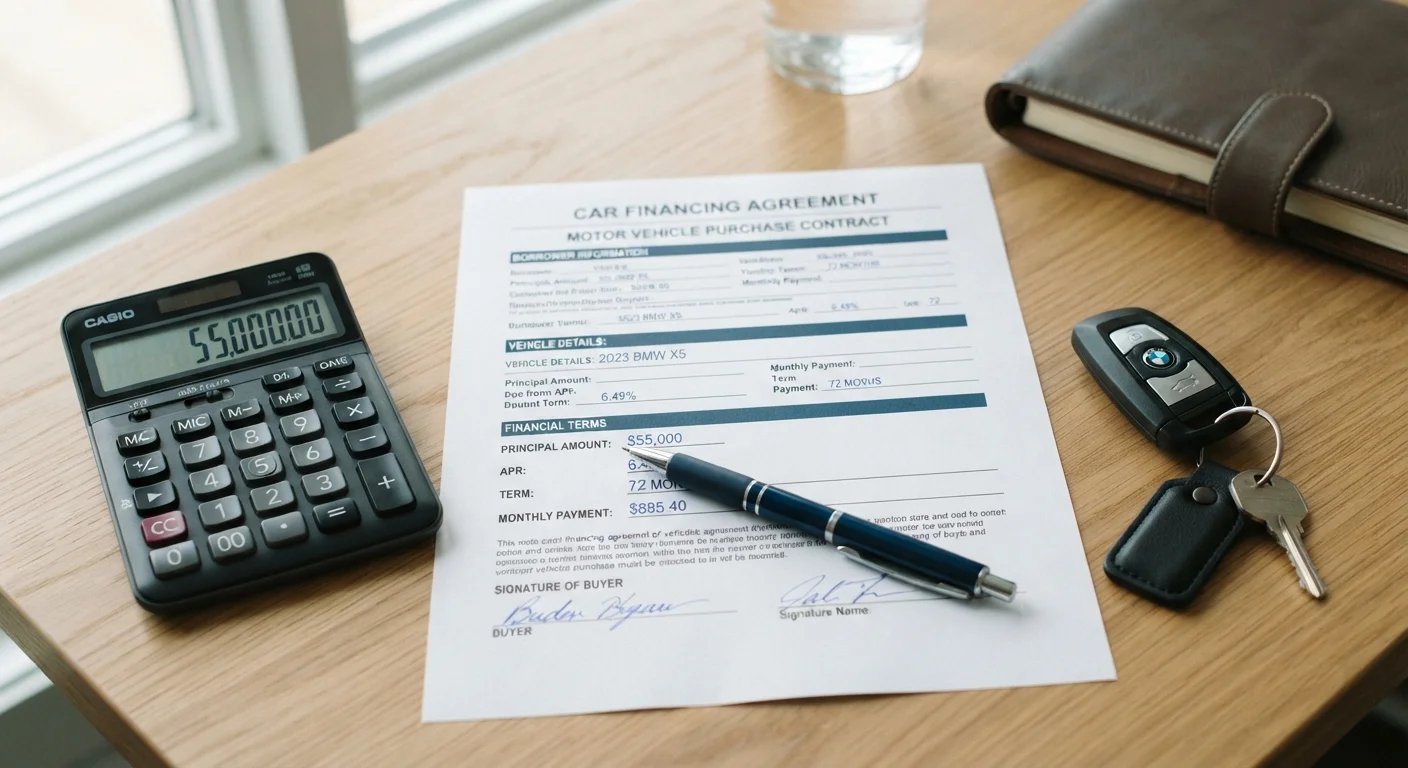
If you finance your vehicle, your monthly payment is determined by the purchase price, down payment, interest rate, and loan term. Longer loan terms reduce the monthly payment but increase total interest paid. Understanding the full repayment amount - not just the monthly figure - is essential.
Auto Insurance
Lenders require comprehensive and collision coverage on financed vehicles. Premiums vary by driver age, location, vehicle value, and coverage limits. For many first-time owners, especially those under 25, insurance is the single largest monthly vehicle expense. Get quotes on specific vehicles before committing to a purchase - insurance costs can vary hundreds of dollars per year between comparable models.
Fuel
Your annual fuel cost depends on how many miles you drive, the vehicle's fuel economy (measured in miles per gallon), and local gas prices. A simple estimate: divide your expected annual mileage by the vehicle's combined MPG rating, then multiply by your local price per gallon. Vehicles with lower MPG ratings can add thousands of dollars to annual operating costs.
Get Insurance Quotes Before You Decide
Insurance premiums are tied to the specific vehicle, not just the driver. Before finalizing a purchase, contact insurers with the exact make, model, year, and trim you are considering. This step has saved some buyers hundreds of dollars annually by choosing a vehicle with a lower insurance profile.
Maintenance, Depreciation, and the Costs People Miss
Beyond the predictable monthly expenses, several cost categories catch first-time owners off guard.
Routine Maintenance
Oil changes, tire rotations, brake inspections, air filters, and fluid checks are not optional - they protect the vehicle and your safety. Following the manufacturer's maintenance schedule (found in your owner's manual) reduces the risk of costly repairs. Budget a general reserve each month for these recurring needs.
Tires and Brakes
Tires require replacement roughly every 25,000-50,000 miles depending on type and driving habits. A full set is a significant expense that should be anticipated, not absorbed as a surprise.
Depreciation
Most vehicles lose value continuously. This is not a monthly bill, but it is a real financial cost. If you sell or trade in the vehicle, you receive the current market value - not what you paid. Rapid early depreciation can leave owners in a situation where they owe more on their loan than the car is worth, sometimes called being underwater or upside-down on a loan.
For a comprehensive look at expenses that rarely come up in dealership conversations, see our guide on hidden ownership costs new car buyers often overlook.
Watch Out for Being Upside-Down on Your Loan
If you finance with a small down payment and a long loan term, early depreciation can quickly outpace what you have paid off. This means selling or trading in the vehicle could leave you owing money even after the sale. A larger down payment and a shorter loan term reduce this risk, though the right approach depends on your full financial picture - consider consulting a financial professional.
Building a Realistic Monthly Car Budget
Once you understand the cost categories, the practical step is converting them into a monthly budget you can actually manage.
- Estimate each cost category separately. Do not group everything into a vague "car expense" line. Loan payment, insurance, fuel, and a maintenance reserve should each have their own figure.
- Add a repair buffer. Even reliable vehicles need unexpected attention. Setting aside a small monthly amount - even $30-$50 - builds a cushion before a repair bill arrives.
- Account for annual costs monthly. Registration fees, inspection costs, and tire replacements happen annually or less frequently, but dividing them by 12 and including them in your monthly view gives a more accurate picture.
- Compare vehicles on total cost, not just price. A vehicle with a lower sticker price but higher insurance rates or worse fuel economy may cost more to own. Use TCO comparisons to evaluate options objectively.
Our annual car ownership cost checklist provides a structured tool for tracking every recurring vehicle expense year over year. And if you are still in the vehicle selection process, our car buying tips hub covers how to evaluate purchases with confidence.
Once your ownership routine is established, financial habits that help keep car costs in check can show you how proactive choices around maintenance timing and insurance reviews reduce spending over the long run.
This article is for general informational purposes only and does not constitute financial or legal advice. Consult a qualified financial professional for guidance specific to your situation.