Why an Independent Inspection Is Worth the Effort
Buying a used car without an independent inspection is a bit like accepting a home purchase without a walkthrough - you're making a major financial decision with limited information. Unlike a home inspection, which is often a formal part of the transaction process, a vehicle PPI is entirely optional. That makes it easy to skip - and easy to regret.
The average used car repair bill for a significant mechanical issue can run well into the thousands of dollars. Problems like failing transmissions, worn timing chains, or hidden frame damage rarely reveal themselves on a test drive but show up clearly to a trained mechanic. Spending $100-$200 upfront to confirm a vehicle's condition is straightforward risk management, not an unnecessary extra step.
It's also worth understanding what a PPI is not: it doesn't replace doing your research before you get to the lot. If you haven't already, see our dealership preparation checklist for what to have ready before you're even looking at a specific vehicle.
Choose Your Own Mechanic
Always select an independent shop with no connection to the vehicle seller. If you're buying from a private party, a local independent repair shop or a franchise inspection service works well. If you're at a dealership, take the car to a shop outside the dealership's network. Independence is the entire point of the PPI.
What a PPI Actually Examines
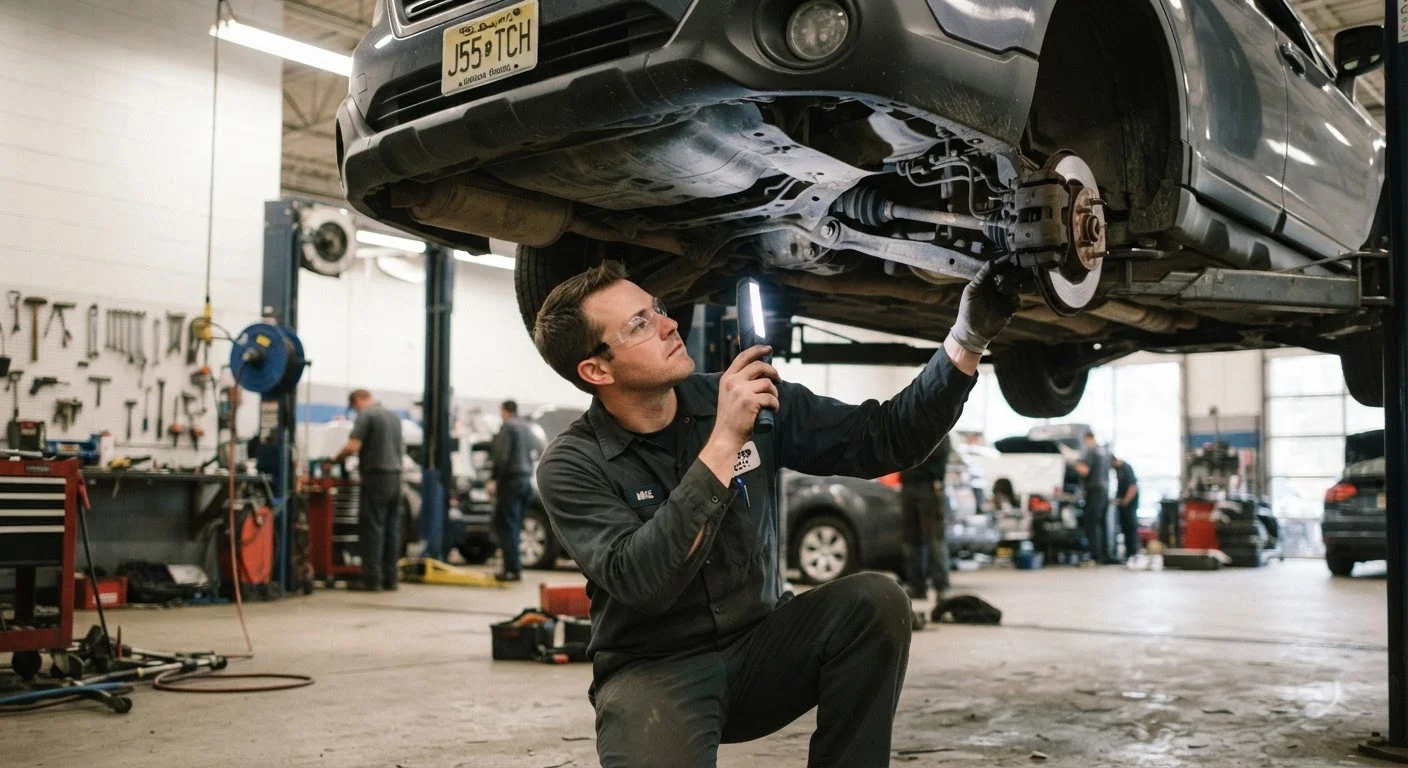
A thorough pre-purchase inspection covers several key systems. While the exact scope varies by mechanic and shop, a comprehensive PPI generally includes:
- Engine and drivetrain: Oil condition, coolant levels, belts, hoses, and signs of leaks or overheating. The mechanic will also check for unusual noises under load.
- Transmission: Fluid condition, shifting behavior, and any signs of slippage or delay - problems that are expensive to fix and easy to miss otherwise.
- Brakes and suspension: Pad and rotor wear, brake fluid condition, shock absorbers, struts, and steering components. These directly affect safety.
- Frame and body: Evidence of prior collision repair, rust, misaligned panels, or structural welding - signs the car may have been in an accident not reported on its history.
- Electrical systems: Battery health, lights, and any dashboard warning codes pulled via diagnostic scanner.
- Tires: Tread depth and wear patterns, which can indicate alignment or suspension issues beyond just tire age.
- Undercarriage: Rust, leaks, damaged components, and the condition of exhaust systems.
After the inspection, ask for a written summary. Understanding how a mechanic frames repair findings can help you interpret the severity of any issues flagged.
$100-$200
Typical cost of an independent PPI
Industry estimates from consumer automotive organizations suggest most independent mechanics charge within this range for a standard pre-purchase inspection.
~77%
Used cars sold that are more than 3 years old
According to Edmunds market data, the vast majority of used vehicle transactions involve older vehicles where wear-related issues are more likely to exist.
How to Arrange One - and What to Ask For
The key is choosing a mechanic who has no connection to the seller. Independent repair shops, certified technicians at non-affiliated dealerships, or AAA-approved facilities are common options. If you're buying from a dealership, don't use their in-house service department for the PPI - find someone independent.
When you book the inspection, be specific about what you want covered. Ask for:
- A full visual and mechanical inspection with a written report
- An OBD-II diagnostic scan for stored fault codes
- A road test, if the shop offers one
- Photos of any problem areas, especially rust or body damage
Once you have the report, use it. If the mechanic flags issues, get repair estimates - either from that shop or elsewhere. Those numbers give you concrete negotiating leverage: you can request a price reduction, ask the seller to complete repairs, or decide the vehicle isn't worth the risk. This step fits naturally into the broader car-buying process described in our overview of what actually happens when you buy a car.
PPIs Have Limits Too
Even a thorough inspection has scope limits. Mechanics typically won't disassemble components, so internal engine or transmission wear may not be fully visible. Intermittent electrical gremlins can also go undetected if they aren't present during the inspection. A PPI reduces uncertainty significantly - it doesn't eliminate it entirely. Factor this into your decision alongside the vehicle history report and your own test drive observations.
If the vehicle you're considering is marketed as certified pre-owned, a PPI is still worthwhile. CPO programs vary significantly by manufacturer, and understanding what certification actually covers is important context - see certified pre-owned vs. standard used for a breakdown. A PPI adds an independent data point regardless of any certification claim.