What a General Home Inspection Actually Covers
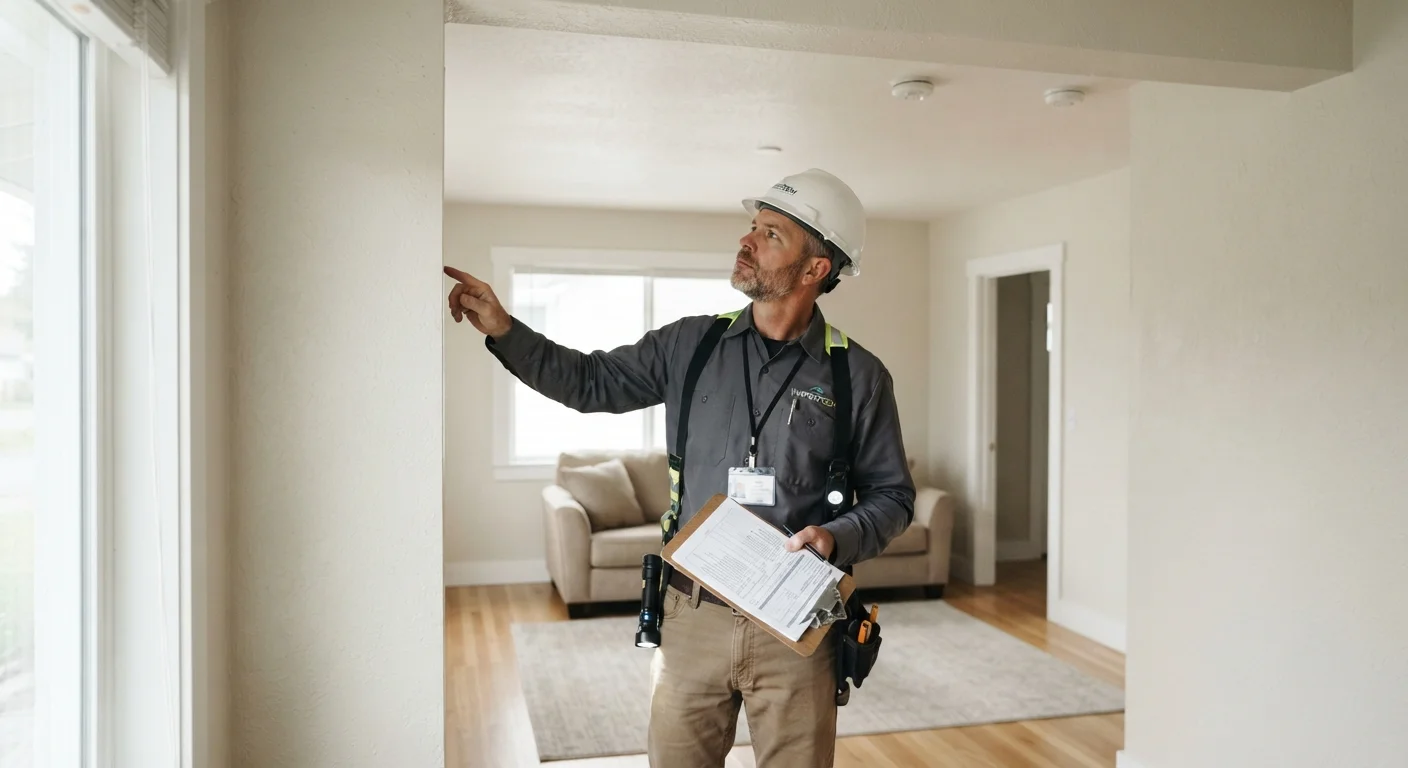
A general home inspection is a visual, non-invasive examination of a property's readily accessible systems and components. A licensed inspector walks through the home and documents observable conditions - not predictions or warranties. The scope typically includes:
- Structural components: Foundation, framing, roof structure, and walls, assessed for visible signs of movement, damage, or deterioration.
- Roofing: Visible roof covering, gutters, downspouts, and flashing - often viewed from the ground or roofline with binoculars if direct access is unsafe.
- Electrical systems: Service panel, visible wiring, outlets, and grounding - checked for obvious code concerns and safety hazards.
- Plumbing: Visible supply and drain lines, water heater, fixtures, and water pressure.
- HVAC: Heating and cooling equipment, ductwork, and filters - operated to confirm basic function during the inspection window.
- Interior: Walls, ceilings, floors, windows, doors, and stairs - looking for water staining, cracks, or operational problems.
- Insulation and ventilation: Accessible attic and crawl space conditions, where entry is safe and practical.
The inspector delivers a written report with photos, describing each issue and its apparent severity. This report is a snapshot of conditions on a single day.
What Falls Outside the Inspector's Scope
The limits of a general inspection are just as important to understand as what it covers. Several categories are routinely excluded:
Does not detect hidden or concealed defects
Inspectors only assess what is visible and accessible. Problems inside walls, under flooring, or beneath insulation go undetected unless they have surfaced in a visible way.
Excludes environmental hazards like radon and asbestos
Testing for radon gas, asbestos-containing materials, lead paint, or mold requires separate specialist assessments - none of these are part of a standard general inspection.
Pest and termite damage falls outside scope
Wood-destroying insects and organisms require a dedicated pest inspection by a licensed operator; a general inspector may note conditions favorable to infestation but will not confirm active activity.
Does not assess sewer lines or underground utilities
The lateral sewer line from house to street - which can cost thousands to replace if collapsed or root-invaded - is underground and requires a camera scope inspection to evaluate.
No guarantee or warranty on findings
An inspection report reflects conditions observed on a specific day; inspectors are not liable for problems that were concealed, developed afterward, or fell outside accessible areas.
Sellers are not legally obligated to make repairs
Findings create leverage but not obligation; whether a seller agrees to address defects is a matter of negotiation, and in competitive markets sellers may decline repair requests entirely.
These exclusions exist partly by design - inspectors are generalists. Probing inside walls, testing for airborne hazards, or assessing active pest colonies requires specialist licensing, equipment, and liability frameworks that a general inspection does not provide.
It's worth noting that even within covered systems, inspectors only report on what they can see. A finished basement conceals what's behind drywall. A freshly painted ceiling may hide water damage. The scope of what inspectors examine is constrained by access, not intent.
The Case for Getting an Inspection
Despite its limits, a general home inspection remains one of the most protective steps a buyer can take.
Provides an objective, third-party condition report
An inspector has no financial stake in whether the sale proceeds, which means findings are reported impartially - a significant advantage over relying solely on seller disclosures.
Creates negotiating leverage before closing
Material defects identified in the report give buyers documented grounds to request repairs, price reductions, or credits - potentially saving thousands of dollars.
Surfaces safety hazards before move-in
Issues like faulty wiring, missing GFCI protection, or inadequate ventilation are exactly the kind of hazards buyers rarely notice during a showing but that inspectors are trained to spot.
Helps buyers plan for future maintenance costs
Even minor findings - an aging water heater, worn weatherstripping, or a deteriorating driveway - give buyers a prioritized maintenance checklist for their first years of ownership.
Typically low cost relative to the transaction
General inspections typically range from a few hundred to several hundred dollars depending on home size and region - a modest sum compared to the purchase price and potential repair exposure.
Inspection Contingencies: Know Your Options
Most standard purchase contracts allow buyers to include an inspection contingency - a clause specifying that the offer depends on inspection results meeting certain conditions. Buyers can use this clause to renegotiate, request repairs, or exit the contract without losing their earnest money deposit. The specific terms, timelines, and protections vary by state and contract type, so reviewing your contract with a real estate attorney or agent is advisable before waiving this right.
Inspection contingencies - clauses in the purchase contract that allow the buyer to negotiate or withdraw based on findings - are a standard tool in most US real estate transactions. Buyers who waive inspections to make competitive offers take on real financial risk, particularly in older homes or markets with high inventory pressure.
When Specialist Inspections Are Worth Considering
For issues a general inspection flags - or for risks specific to a property's age, location, or type - specialty assessments add meaningful protection:
~86%
Home buyers who get an inspection
According to the National Association of Realtors, the large majority of home buyers include an inspection as part of their purchase process.
$300-$500
Typical general inspection cost range
Costs vary by property size, age, and local market, but most general inspections fall within this range for a standard single-family home.
1 in 15
US homes with elevated radon levels
The EPA estimates roughly one in fifteen US homes has radon levels at or above the recommended action threshold - a risk invisible to a general inspection.
- Radon testing: Short-term or long-term test kits measure radon gas levels in the home's lowest livable space. The EPA recommends action when levels reach 4 pCi/L or higher.
- Sewer scope: A camera inspection of the underground sewer lateral from house to street reveals root intrusion, collapsed pipe, or old clay lines that drain slowly or fail completely.
- Mold assessment: Recommended when a general inspector notes moisture intrusion, musty odors, or visible staining that could indicate fungal growth.
- Pest/termite inspection: Typically conducted by a licensed pest control operator; required by some lenders for government-backed loans.
- Structural or geotechnical engineer: Warranted when foundation cracking, uneven floors, or soil movement is observed.
Pairing general and specialist inspections gives buyers the most complete picture available before closing. Once you own the home, protection shifts to tools like homeowners insurance - and as our colleagues explain, homeowners insurance has its own coverage gaps worth understanding in advance.