
How Online Banks Actually Work
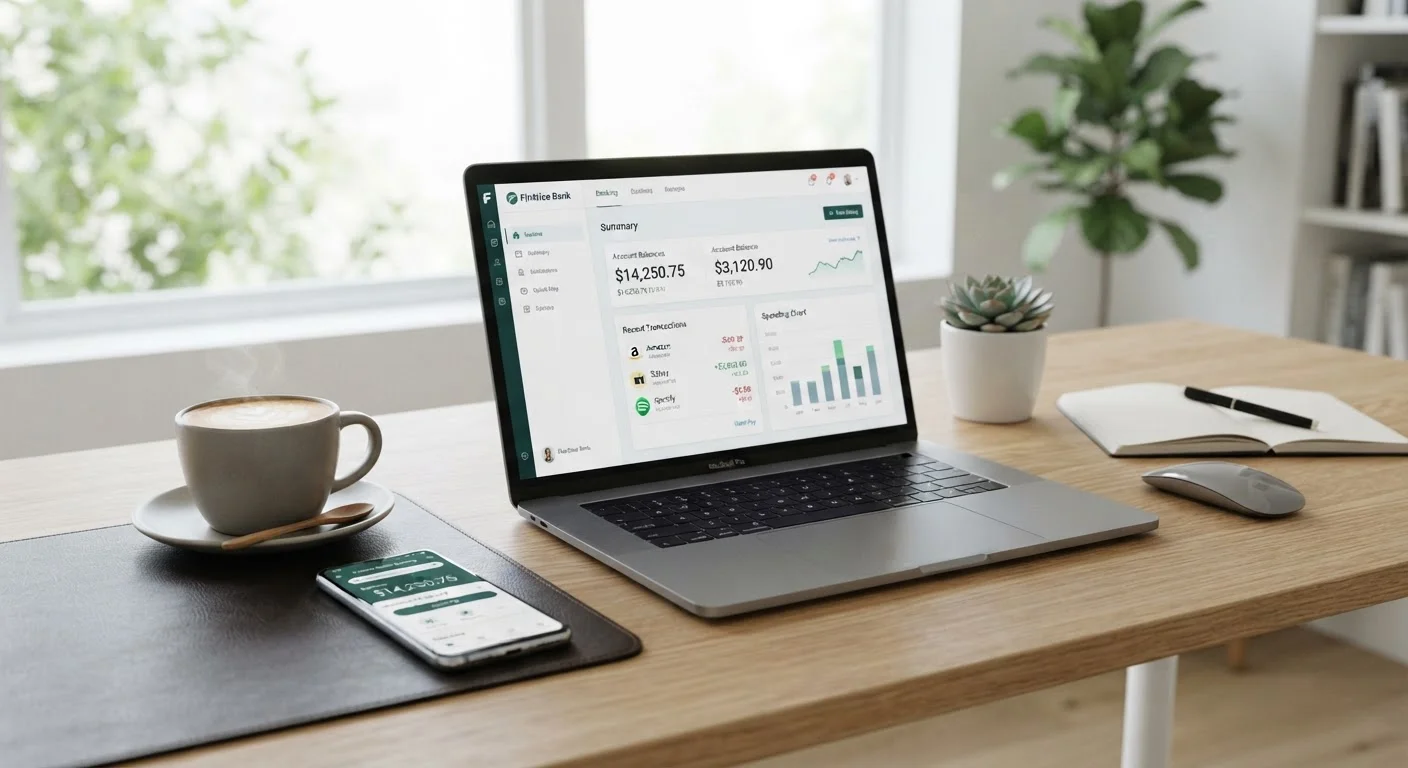
Online banks function on the same legal and regulatory foundation as traditional banks - they hold a banking charter, are examined by federal or state regulators, and must maintain capital reserves. The critical difference is operational: every customer interaction happens through a website or mobile app instead of a teller window.
When you open an account, you complete an identity verification process digitally, often by uploading a photo ID and providing a Social Security number. Funds move in through direct deposit, electronic transfers from another bank, or mobile check deposit - a feature that lets you photograph a paper check to deposit it remotely. Withdrawals happen via debit card, ATM, or electronic transfer.
Because these banks have no branch network to staff and maintain, their cost structure is fundamentally different from a traditional institution. That lower overhead is one reason online banks are frequently able to offer higher annual percentage yields (APYs) on savings accounts and charge fewer account fees - though consumers should always verify specific terms before opening an account, as offerings vary widely.
Verify FDIC Status Before You Deposit
Before opening an account with any online bank, confirm it holds FDIC insurance by searching the FDIC's BankFind tool at fdic.gov. Some financial technology companies offer bank-like accounts but are not banks themselves - your deposits may be held at a partner bank, which affects how and whether FDIC coverage applies. Always read the account disclosures carefully.
FDIC Insurance and Your Money's Safety
A common concern about online banking is whether deposits are safe. For FDIC-member banks, the answer is straightforward: the Federal Deposit Insurance Corporation insures deposits up to $250,000 per depositor, per ownership category, per insured bank. This coverage applies regardless of whether the bank has physical branches or not.
The FDIC, an independent federal agency established in 1933, insures deposits so that if a member bank fails, customers don't lose their insured funds. You can confirm any bank's membership using the FDIC's online BankFind tool. For a deeper look at exactly which account types and products qualify for coverage, see what the FDIC actually insures.
$250,000
FDIC insurance limit per depositor per bank
The Federal Deposit Insurance Corporation insures deposits up to this amount per depositor, per ownership category, at each FDIC-member institution, including online banks.
~4,600
FDIC-insured banks in the US
As of mid-2024, the FDIC reported approximately 4,600 insured commercial banks and savings institutions operating in the United States, a group that includes online-only institutions.
Where Online Banks Fall Short
Online banking works well for many people, but there are genuine limitations worth understanding before committing to one as your primary institution.
- Cash deposits: Most online banks don't accept cash directly. Workarounds include fee-based retail deposit services or maintaining a separate account elsewhere for cash needs.
- No in-person support: Complex issues - such as disputes over large transactions or estate account changes - are handled remotely, which some customers find less reassuring than face-to-face service.
- Technology dependence: If the bank's app or website experiences an outage, account access may be temporarily disrupted.
- Notary and medallion services: Some financial documents require in-person authentication that an online bank cannot provide.
Whether these trade-offs matter depends entirely on your banking habits. Someone who rarely uses cash and prefers digital communication may find online banking seamless. Our side-by-side comparison of banking institution types can help you weigh these factors more systematically.
Fintech Apps Are Not Always Banks
A growing number of financial technology (fintech) companies offer app-based accounts that resemble online banking but are not chartered banks. In these cases, your funds may be held at a third-party partner bank, and FDIC coverage depends on that arrangement. This distinction matters - if the fintech company itself fails, the protections and recovery process differ from a direct bank failure. Always confirm where your deposits are ultimately held and how they are insured.
Making an Informed Choice
Choosing a bank - online or otherwise - comes down to how well the institution's features match your everyday needs. Key factors to evaluate include account fees, ATM access and reimbursement policies, interest rates on savings, mobile app reliability, and the quality and hours of customer support.
Before opening any account, it's worth reviewing the full fee disclosure and terms carefully. Our checklist for evaluating any bank account walks through the specific details to examine. And if you're considering switching from a traditional bank, a structured approach to switching banks can help you transfer direct deposits and automatic payments without disruption.
Online banking is one legitimate option among several. Understanding how it works - including both its advantages and its real limitations - puts you in a stronger position to decide whether it fits your financial life.
This article is for general informational and educational purposes only and does not constitute personalized financial advice. Consult a qualified financial professional for guidance specific to your situation.