Why Homeowner Records Matter More Than Most People Realize
Owning a home comes with a documentation responsibility that most buyers aren't fully warned about at closing. Unlike renting - where a landlord handles maintenance history and building records - homeowners are their own archivists. Gaps in your records can cost you money at tax time, complicate insurance claims, and create friction when you eventually sell.
The good news: building an organized system doesn't require much time upfront, and the categories of documents worth keeping are predictable. Whether you're a first-time buyer or have owned for years, now is the right time to get organized. Our guide to annual maintenance tasks pairs well with this record-keeping framework.
The Core Categories of Documents Every Homeowner Should Keep
Homeowner records fall into a few distinct categories, each serving a different protective purpose:
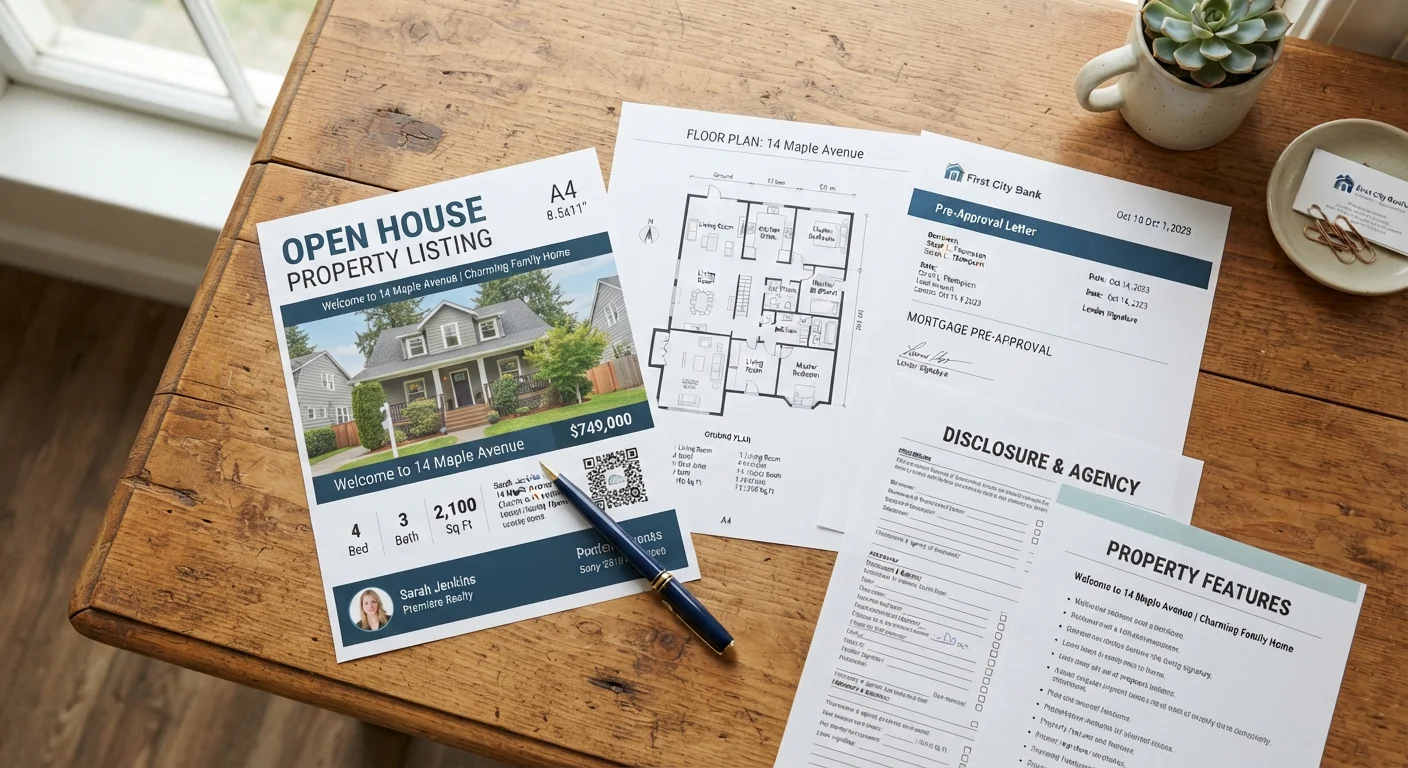
- Ownership and legal documents: Your deed, title insurance policy, property survey, and closing disclosure. These establish your legal ownership and the terms of your purchase. Keep these permanently.
- Permits and inspection reports: Any permit pulled for renovation or addition work, plus the final inspection sign-off. These travel with the property and protect future owners - and you - from liability.
- Improvement receipts and contractor contracts: Invoices, signed contracts, and payment records for any project that adds value or extends the life of the home. These affect your cost basis for tax purposes.
- Appliance documentation: Purchase receipts, warranty cards, model and serial numbers for HVAC systems, water heaters, refrigerators, dishwashers, and other major equipment.
- Insurance records: Your current homeowners policy declarations page, renewal history, and documentation of any claims filed - including photos, adjuster reports, and correspondence.
Keep all permits and inspection reports permanently in your home file.
Permits prove that renovations were completed to code and legally approved. When you sell, buyers and their agents often request this documentation, and missing permits can stall or derail a transaction. Unpermitted work can also create liability for the seller.
Save all receipts and contracts for home improvements, no matter how small.
Capital improvements - projects that add value or extend the life of your home - can increase your cost basis, potentially reducing your taxable gain when you sell. Without receipts, you cannot substantiate these costs to the IRS if questioned.
Store appliance manuals, model numbers, and warranty cards together in one place.
When an appliance breaks, having the model number and warranty status on hand speeds up service calls and can determine whether a repair is covered at no cost. Many manufacturers now offer online registration, but a physical backup remains useful.
Document every insurance claim with photos, written descriptions, and correspondence.
Insurance disputes sometimes require you to prove the timing and extent of damage. A clear paper trail - including adjuster communications and any denial letters - strengthens your position if a claim is contested or underpaid.
Create and maintain a digital backup of all physical homeowner records.
Paper records are vulnerable to the very disasters - fires, floods - that often trigger the need to file claims or prove ownership. Scanned digital copies stored in a cloud service or external drive ensure your records survive when you need them most.
How Records Protect You When It Counts Most
The moments when organized records pay off tend to arrive unexpectedly. A pipe bursts and you need to file an insurance claim. A buyer's agent asks for permit history during a sale negotiation. The IRS questions your reported cost basis after a profitable sale. In each scenario, documentation you gathered years earlier determines the outcome.
This Is General Information, Not Tax Advice
Tax rules around home sales, deductions, and cost basis can vary significantly based on individual circumstances and change over time. The information here is educational. Consult a licensed tax professional or CPA before making decisions about your specific tax situation.
For homeowners who also track vehicle expenses, the same logic applies across asset classes - the value of a documented service history mirrors the protection that good home records provide. Staying organized is a financial habit, not just a clerical task.
Building a System That You'll Actually Use
The most effective record-keeping system is the one you'll actually maintain. A simple two-part approach - a physical binder for originals and a cloud folder for digital scans - covers most homeowners' needs without requiring specialized software.
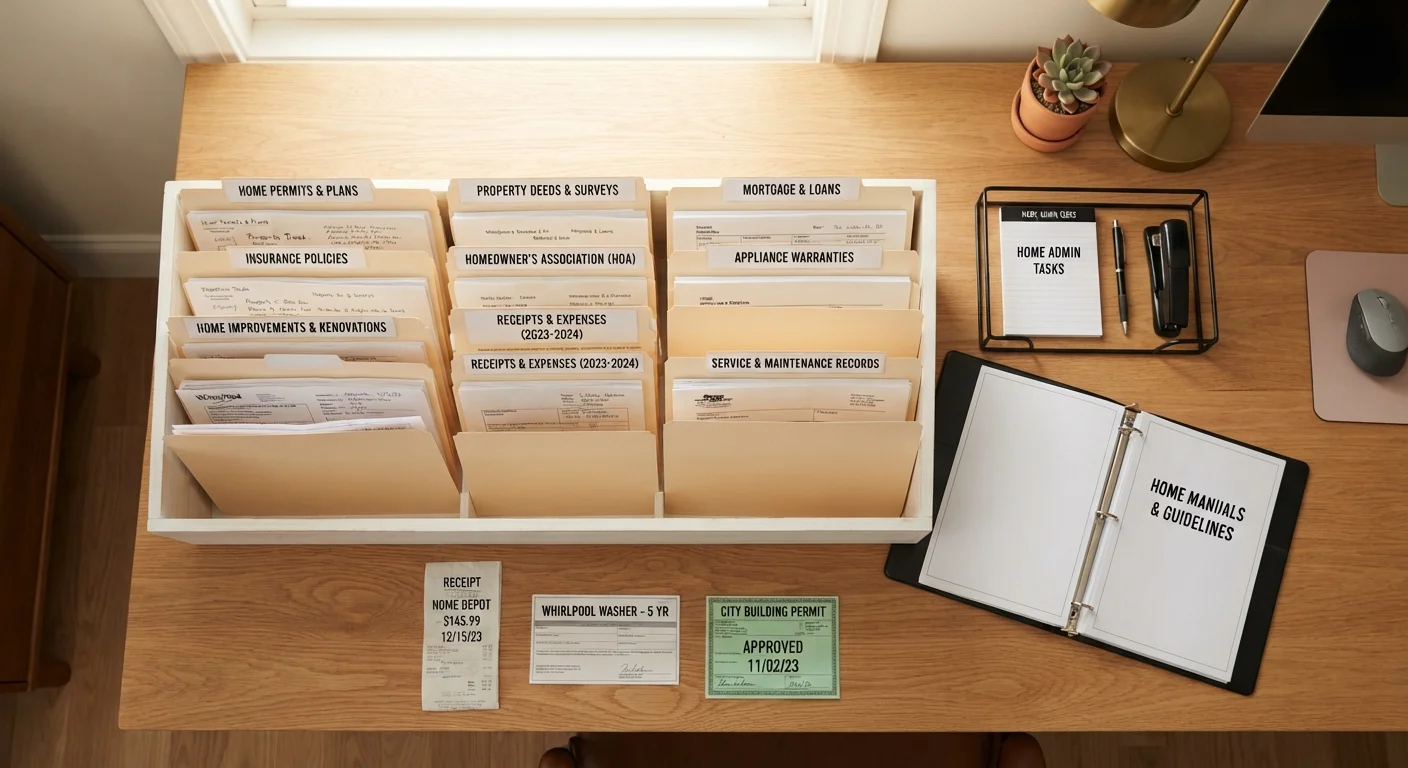
Label physical folders by category: Ownership, Permits, Improvements, Appliances, Insurance. After any project or purchase, spend five minutes filing the paperwork immediately rather than letting it pile up. For seasonal guidance on what to inspect and track throughout the year, our seasonal maintenance checklist provides a useful framework to layer on top of your record-keeping routine.
If you're renting out a portion of your property or transitioning to a landlord role, thorough documentation becomes even more critical - much like the move-in documentation practices outlined in our guide to apartment walkthroughs. The discipline of documentation is the same whether you're the owner or the landlord.
This article is for general informational purposes only and does not constitute legal, tax, or financial advice. Consult a qualified professional regarding your specific situation.