Why Service Records Are Worth More Than Receipts
Most drivers keep car paperwork long enough to get home from the shop, then lose it in a glovebox shuffle. It's an easy habit to fall into - until the moment you need to prove a repair was done, support a warranty claim, or justify your asking price on a private sale.
A documented service history isn't just an organizational virtue. It's a financial asset. When someone evaluates a used vehicle, the absence of records creates doubt, and doubt costs money. Sellers who can produce a clear, consistent paper trail are in a stronger position than those who say, "I always kept up with maintenance" without anything to back it up. See our guide to reading vehicle history reports to understand how appraisers and buyers think about documented service history.
The same logic applies when something goes wrong under warranty. Extended warranties and service contracts frequently require proof that required maintenance was performed on schedule - and without records, a legitimate claim can be delayed or denied.
What to Track and How to Organize It
Good records don't require a sophisticated system. They require consistency. At minimum, every service event - whether at a dealership, independent shop, or your own driveway - should be logged with the date, odometer reading, what was done, and what parts or fluids were used.
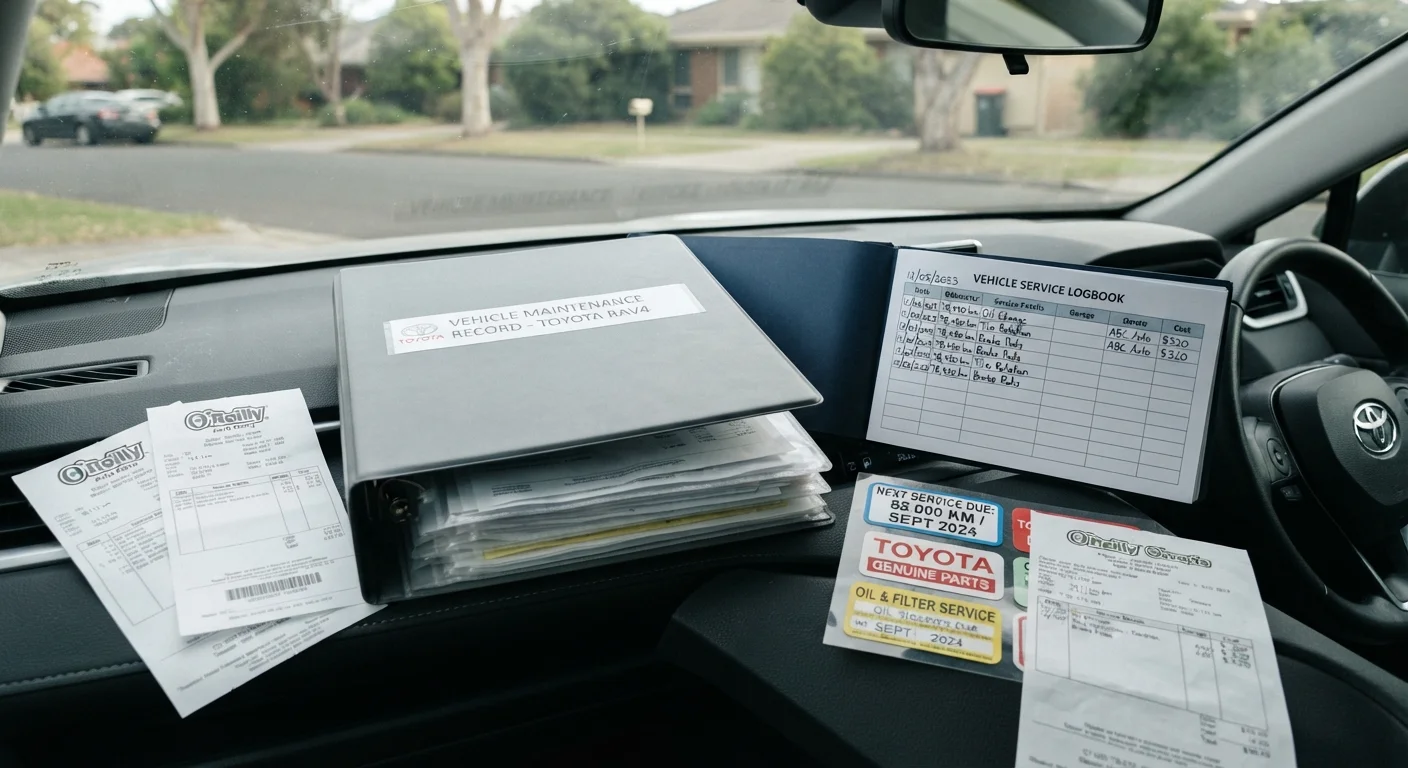
Save every itemized service receipt immediately after each visit.
Receipts are the only third-party proof that a service actually occurred on a specific date at a specific mileage. Relying on memory or informal notes leaves gaps that can hurt you during resale negotiations or warranty disputes.
Log each service in a simple running document, including mileage and what was done.
A personal log lets you track service intervals at a glance without sorting through a stack of receipts. It also helps you identify when the next scheduled service is due based on mileage or time elapsed.
Photograph or scan physical receipts and store them in cloud backup.
Thermal paper receipts fade within a few years, and paper folders can be lost to water damage, fire, or simple misplacement. A digital copy ensures the record survives regardless of what happens to the original.
Record any DIY maintenance with dates, mileage, and the parts used.
Self-performed services - like air filter swaps or wiper blade replacements - are legitimate maintenance events. Undocumented DIY work creates gaps in the service history that future buyers or mechanics may question.
Keep records of any recurring or unresolved issues alongside repair invoices.
Intermittent problems are notoriously difficult to diagnose. A written timeline of when a symptom first appeared, how often it recurs, and what remedies were attempted gives your mechanic far more to work with than a verbal description.
For a deeper look at which services actually matter for your vehicle's longevity, Your Car's Maintenance Schedule, Explained breaks down what each interval actually involves and why skipping certain services carries outsized risk.
Dealerships vs. Independent Shops
Service records from independent mechanics are generally just as valid as dealership records for warranty and resale purposes - as long as the work meets manufacturer specifications and the receipts are itemized. Keep all records regardless of where the work was performed. If you ever need to support a warranty claim, documentation of parts used and services completed matters more than the shop's name.
Records That Pay Off When It Counts
The practical value of good records shows up in specific, high-stakes moments - not during routine driving. Three situations where documentation makes a tangible difference:
- Private resale: A complete service history supports your asking price and gives buyers confidence. Without it, expect negotiation pressure. Buyers consulting a car buying resource are typically coached to discount vehicles with incomplete histories.
- Warranty disputes: Manufacturers and extended contract administrators can deny coverage if scheduled maintenance wasn't verifiably completed. Dated, itemized receipts are your defense.
- Repeat or chronic problems: Mechanics diagnosing intermittent issues benefit enormously from a timeline. Neglected maintenance tasks are a leading driver of expensive repeat repairs - your records help distinguish neglect from a manufacturing defect.
Keeping auto ownership costs under control over time starts with knowing what's been done and when. Records make that possible.