Why Routine Services Get Skipped
Most drivers understand that cars need maintenance, but a gap often exists between knowing and doing. Cost concerns, busy schedules, and an absence of obvious symptoms all contribute to services being pushed back - sometimes indefinitely. The problem is that many mechanical systems degrade silently. By the time a symptom appears, the underlying damage is already substantial.
Understanding the real ongoing costs of vehicle ownership means accounting not just for what you pay at scheduled intervals, but for what you risk when those intervals are ignored. The math is rarely in the driver's favor when a skipped $80 service leads to a $2,000 repair.
Don't Rely on the Mileage Sticker Alone
Oil change reminder stickers placed by quick-lube shops are not a substitute for your owner's manual. Severe driving conditions - frequent short trips, towing, extreme heat or cold - shorten recommended service intervals. Always cross-reference the manufacturer's severe-duty schedule if your driving patterns qualify, which they often do for urban commuters.
The Most Costly Skipped Services
Certain maintenance tasks carry outsized consequences when neglected. The mistakes below represent some of the most frequent - and expensive - patterns seen in repair shops across the country.
Skipping transmission fluid changes because there are no obvious symptoms.
Why it happens: Transmissions rarely give clear warning signs until damage is already significant, so drivers assume silence equals health. Some vehicles even market their transmissions as having 'lifetime' fluid, which is often misleading under real-world conditions.
Ignoring coolant flushes until the engine overheats.
Why it happens: Coolant doesn't visibly degrade the way oil does, so drivers assume it's fine if the temperature gauge reads normal. In reality, coolant becomes acidic over time and begins corroding the radiator, water pump, and hoses from the inside.
Skipping tire rotations because the tires still look okay.
Why it happens: Uneven wear develops gradually and isn't obvious until tires are inspected closely. Many drivers also skip rotations to save time or money, not realizing the front tires on front-wheel-drive vehicles wear dramatically faster than the rear.
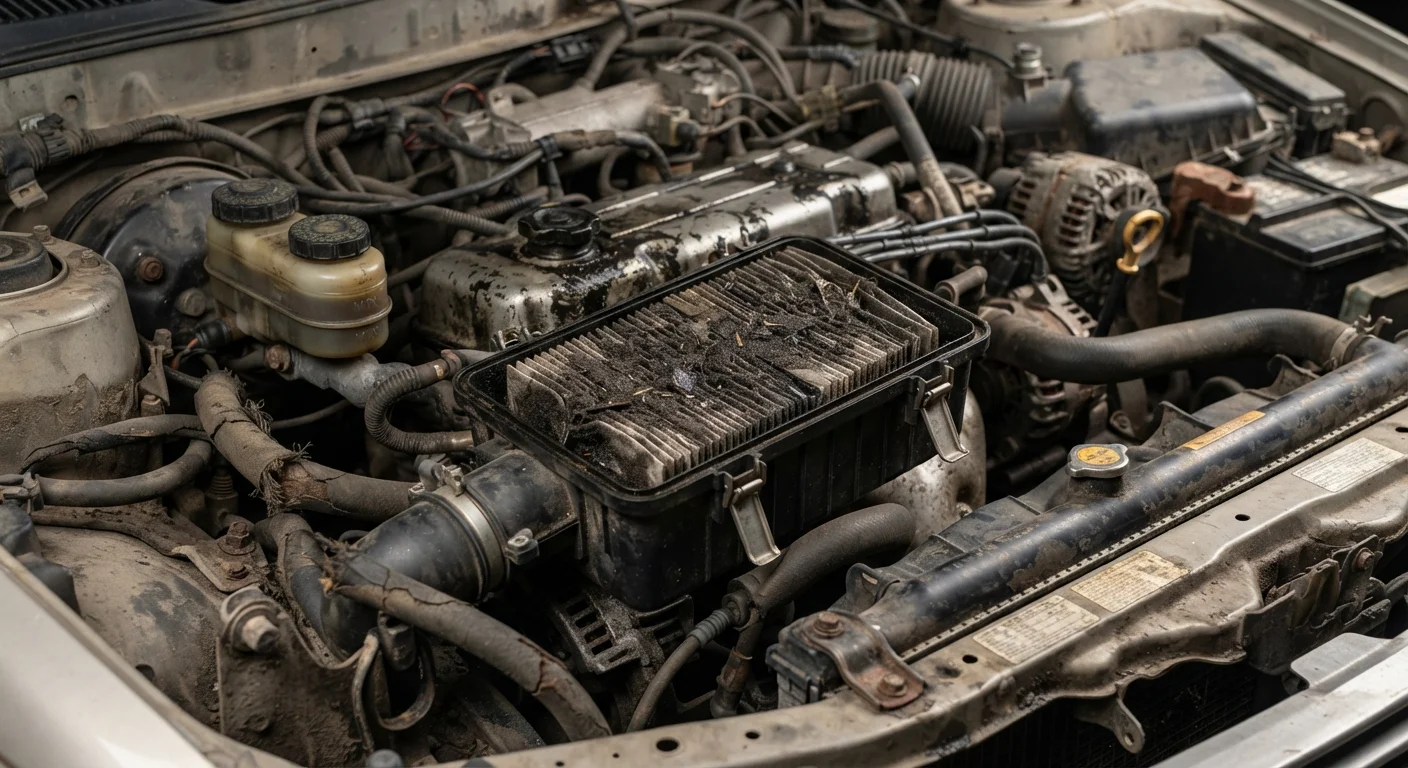
Replacing the engine air filter far less often than needed.
Why it happens: Air filters are out of sight and rarely mentioned outside of an inspection, so they're easy to overlook. Some drivers also assume filters only matter for fuel economy, underestimating the strain a clogged filter places on the engine.
Delaying brake fluid replacement until brake feel changes noticeably.
Why it happens: Brake fluid degradation is invisible to most drivers, and the brakes may still feel adequate even when the fluid has absorbed significant moisture. This moisture lowers the boiling point of the fluid, which can cause brake fade under hard use.
$3,500+
Typical transmission rebuild cost
According to repair industry data, automatic transmission rebuilds frequently exceed $3,500 - a bill that proper fluid maintenance may have helped prevent.
25%
Fuel efficiency loss from dirty air filter
The U.S. Department of Energy has noted that a clogged engine air filter can reduce fuel economy on older carbureted vehicles; modern fuel-injected engines see reduced performance and increased engine strain.
45,000 miles
Average tire life cut short by skipped rotations
Tire manufacturers and industry sources suggest that tires skipping regular rotation may wear unevenly, potentially losing thousands of miles of usable life.
For a structured view of service intervals and what they typically cost across different vehicle types, the scheduled maintenance cost reference by vehicle type is a useful planning resource.
What Happens as Mileage Climbs
Deferred maintenance doesn't just create immediate repair bills - it sets up compounding problems as vehicles age. A transmission stressed by old fluid is more vulnerable to additional failures in related components. A cooling system damaged by acidic coolant may need a water pump, thermostat, and radiator replaced in sequence rather than individually.
Deferred Maintenance Compounds Over Time
Skipping one service rarely causes immediate failure - but it accelerates wear on surrounding components. A missed transmission fluid change, for example, doesn't destroy the transmission overnight; it degrades the fluid until metal-on-metal friction does lasting internal damage. By the time a symptom appears, the repair cost is often several times what the service would have been.
Drivers approaching higher mileage should be especially attentive. The expenses that tend to spike in high-mileage years often have their roots in maintenance decisions made thousands of miles earlier. Staying ahead of the schedule - and keeping thorough service records - is one of the most practical steps any driver can take to control long-term ownership costs.
When a repair does become necessary, being an informed consumer matters. Knowing how to read a repair estimate can help you ask the right questions before approving any work.