Why Vehicle Type Changes Your Maintenance Bill
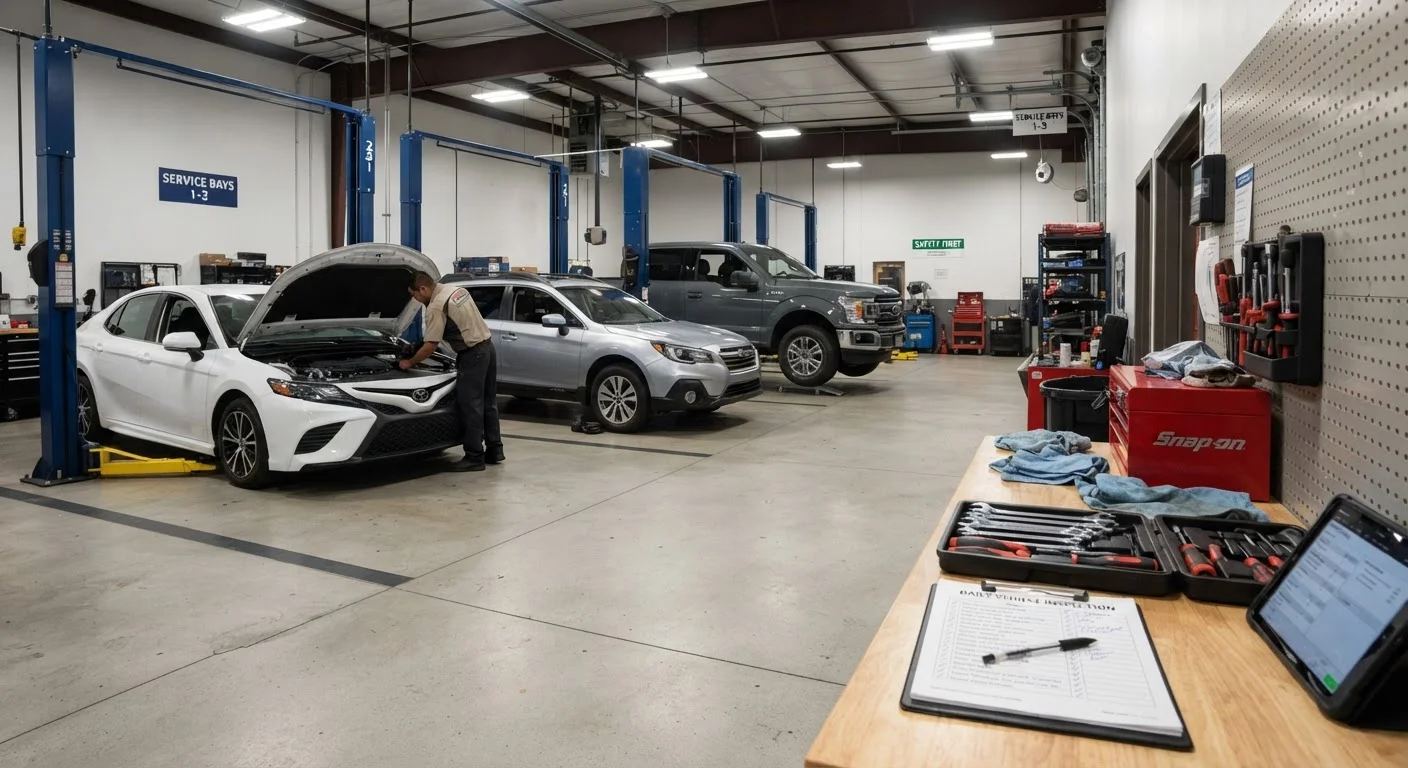
Not all scheduled maintenance costs the same across vehicle categories. A compact sedan typically carries lower service costs than a full-size truck or SUV - largely because of part prices, fluid capacities, and manufacturer-specified intervals. Understanding these differences before you own a vehicle, or as you plan your annual budget, helps you avoid cash-flow surprises.
This reference covers the most common scheduled maintenance tasks - oil changes, tire rotations, brake service, filters, and fluid checks - organized by vehicle type. Cost ranges reflect general market estimates for the US and can vary based on region, shop labor rates, and whether you use a dealership or independent mechanic. Always consult your owner's manual for your vehicle's specific intervals.
For a broader view of recurring expenses beyond maintenance, see the annual car ownership cost checklist for a full-year accounting framework.
| Typical Sedan Annual Maintenance | $500-$900 (General US market estimates, independent and dealer shops combined) |
| Typical EV Annual Maintenance | $300-$700 (Excludes traction battery; includes tires, filters, brake fluid) |
| 4WD Fluid Service Interval | Every 30,000-60,000 miles (Varies by manufacturer; consult owner's manual) |
| Luxury Vehicle Premium Over Standard | Up to 2-3× more (Proprietary parts and dealer-only requirements drive higher costs) |
| Oil Change Frequency (Modern Engines) | Every 5,000-10,000 miles (Synthetic oil extends intervals; always follow OEM guidance) |
| Brake Pad Lifespan (average) | 25,000-70,000 miles (Wide range due to driving style, vehicle weight, and pad type) |
Maintenance Cost Ranges by Vehicle Category
The table below summarizes typical annual scheduled maintenance cost estimates by vehicle type. These figures assume average annual mileage of roughly 12,000-15,000 miles and cover oil changes, tire rotations, cabin and engine air filters, and a brake inspection.
| Vehicle Type | Est. Annual Maintenance Cost | Key Cost Drivers |
|---|---|---|
| Compact/Mid-Size Sedan | $500-$900 | Smaller oil capacity, widely available parts |
| Full-Size Sedan | $600-$1,100 | Larger engine variants, premium filters on some trims |
| Crossover SUV | $650-$1,200 | AWD fluid service, larger tires |
| Full-Size SUV / Truck | $800-$1,500 | High oil capacity, 4WD service, heavy-duty brakes |
| Luxury Vehicle (any size) | $1,200-$2,500+ | Proprietary parts, dealer-only service requirements |
| Battery Electric Vehicle (BEV) | $300-$700 | No oil changes; tire, brake, and cabin filter service only |
Trucks and larger SUVs that include four-wheel-drive systems add transfer case and front/rear differential fluid changes - services that can cost $150-$400 combined and are typically recommended every 30,000-60,000 miles. If you're evaluating what changes as your vehicle ages, expenses that spike in high-mileage years breaks down what to expect beyond the standard service schedule.
Scheduled Maintenance
Preventive service performed at manufacturer-specified mileage or time intervals to keep a vehicle running reliably. It includes tasks like oil changes, filter replacements, and fluid checks outlined in the owner's manual.
Differential Fluid
A lubricant inside the differential - a mechanical component that allows wheels to rotate at different speeds during turns. In trucks and AWD/4WD vehicles, this fluid requires periodic replacement to prevent gear wear.
Regenerative Braking
A system used in electric and hybrid vehicles that converts kinetic energy back into stored battery charge during deceleration. It reduces wear on traditional friction brake pads, extending their service life.
Transfer Case
A gearbox in four-wheel-drive vehicles that distributes power between the front and rear axles. It contains its own fluid that requires inspection and periodic replacement per the manufacturer's service schedule.
Electric Vehicles: Lower Routine Costs, Different Priorities
Battery electric vehicles eliminate several traditional maintenance items - no engine oil, no spark plugs, no timing belt, and far less brake wear thanks to regenerative braking. That said, EVs are not maintenance-free. Cabin air filters, tire rotations (often more frequent due to added battery weight), and coolant system checks for the battery thermal management system are still required.
Brake fluid, which absorbs moisture over time, should still be inspected and replaced per manufacturer guidance even if brake pads last considerably longer. Some EV manufacturers also recommend periodic 12-volt auxiliary battery checks, which differ from the main traction battery.
The result is that EV owners typically spend less on scheduled maintenance annually, but should still budget $300-$700 per year to cover legitimate service needs. This figure can rise if tires wear faster than expected - a common outcome with heavier EV platforms and instant torque delivery.
For guidance on the full scope of seasonal adjustments - which apply to EVs and gas vehicles alike - see seasonal vehicle prep.
EV Battery Warranty vs. Routine Service
The main traction battery in most EVs is covered under a separate federal-minimum warranty - typically 8 years or 100,000 miles. Routine maintenance costs described here do not include potential battery replacement, which is a distinct and much larger expense. If you're evaluating EV total cost of ownership, factor the battery warranty terms into your long-term planning.
Budgeting Strategies That Hold Up Over Time
Regardless of vehicle type, predictable maintenance spending comes down to three practices: following your owner's manual intervals rather than relying on rule-of-thumb mileage myths, getting a written estimate before authorizing service, and keeping a simple log of every service performed with its date and mileage.
A dedicated savings line - even $50-$100 per month set aside for vehicle maintenance - prevents routine service from becoming a budget disruption. Drivers who skip or delay scheduled service to cut costs often encounter the opposite outcome: neglected maintenance is one of the most consistent drivers of expensive repairs. The maintenance tasks drivers skip that lead to expensive repairs covers the highest-risk omissions in detail.
Understanding your vehicle's full maintenance schedule is foundational. If the intervals in your owner's manual feel unclear, your car's maintenance schedule, explained walks through what each service milestone actually means. And for broader financial habits around vehicle ownership, keeping car costs in check offers practical approaches that work across vehicle types.