What a Maintenance Schedule Actually Is
Open most owner's manuals and you'll find a maintenance section that reads like a checklist - oil at 5,000 miles, tire rotation at 7,500, cabin air filter at 15,000, and so on. That chart isn't arbitrary. Engineers build these intervals based on component lifespan testing, fluid degradation rates, and real-world wear data specific to your powertrain and design.
The key distinction to understand is that intervals are triggered by either mileage or time, whichever comes first. A driver who logs only 5,000 miles a year still needs an annual oil change because oil degrades chemically over time regardless of how far the car has traveled. Ignoring the time component is one of the most common - and costly - misunderstandings among low-mileage drivers.
Maintenance schedules also typically separate normal and severe driving conditions. Short urban commutes, stop-and-go traffic, towing, or driving in extreme heat or cold all qualify as severe. If your daily driving fits that profile, you'll need more frequent service intervals than the standard schedule suggests.
Electric Vehicles Have Different Maintenance Needs
Battery-electric vehicles (EVs) skip many traditional maintenance items - no oil changes, no spark plugs, fewer brake replacements due to regenerative braking. However, EVs still require cabin filter changes, tire rotations, coolant checks for the battery thermal system, and brake fluid inspection. Always consult your EV's owner's manual, as the schedule differs significantly from a gasoline vehicle.
Common Milestone Services and What They Cover
Rather than memorizing every line in the manual, it helps to understand the purpose behind the most common service milestones:
- Oil and filter change: Engine oil lubricates moving parts and carries away combustion byproducts. As it degrades, it loses viscosity and protective properties. Interval varies by oil type and engine - consult your manual rather than defaulting to an older rule of thumb.
- Tire rotation: Tires wear unevenly depending on drivetrain (front-wheel vs. all-wheel drive) and driving habits. Regular rotation extends overall tire life and maintains even traction.
- Air filters (engine and cabin): A clogged engine air filter reduces fuel efficiency; a dirty cabin filter affects interior air quality and HVAC performance.
- Brake inspection: Brake pads, rotors, and fluid are all subject to wear. Brake fluid absorbs moisture over time, which lowers its boiling point - a safety concern under hard use.
- Coolant flush: Coolant degrades and becomes acidic, which can corrode internal passages. Most manufacturers specify a flush interval measured in years or miles.
- Spark plugs and timing belt/chain: These are longer-interval components - often 60,000 to 100,000 miles - but failing to address them on schedule can result in significant engine damage. See what 'lifetime' ratings on certain parts really mean before assuming a component never needs attention.
Start With Your Owner's Manual, Not the Shop's Sticker
The oil change reminder sticker placed on your windshield by a service shop often reflects a conservative interval that may not match your manufacturer's recommendation. Always cross-reference with your owner's manual to avoid unnecessary services - or missing ones that the sticker doesn't cover.
Why Following the Schedule Protects You Financially
Routine maintenance is often framed as an expense, but the financial logic runs the other way. Many of the most expensive automotive repairs - transmission failures, seized engines, warped rotors - trace directly to skipped service. The maintenance tasks most commonly skipped by drivers are also among the ones most likely to cause serious downstream damage.
Warranty coverage is another practical concern. Automakers can deny claims on systems where scheduled maintenance was demonstrably neglected. You don't need dealer service to maintain warranty validity - independent shops qualify - but you do need records. Keeping a thorough maintenance paper trail matters both for warranty purposes and when it comes time to sell the vehicle.
If you're driving a high-mileage vehicle, the stakes shift somewhat. Vehicles past 100,000 miles have different maintenance priorities - some services become more frequent, and others, like transmission fluid or coolant, become more critical to monitor closely.
~$1,200
Average annual vehicle maintenance cost for US drivers
According to AAA's annual Your Driving Costs study, routine maintenance and tire costs average over $1,200 per year for a typical sedan.
35%
Drivers who delay or skip recommended maintenance
Consumer surveys consistently find that a significant share of drivers postpone scheduled services, often citing cost concerns or uncertainty about urgency.
Reading Your Owner's Manual Without the Confusion
Many drivers assume their service advisor or dashboard reminder is the definitive guide to when maintenance is due. These are useful cues, but neither replaces the owner's manual. Oil life monitors, for instance, use algorithms based on driving behavior - they're helpful, but they don't account for every service item your car needs.
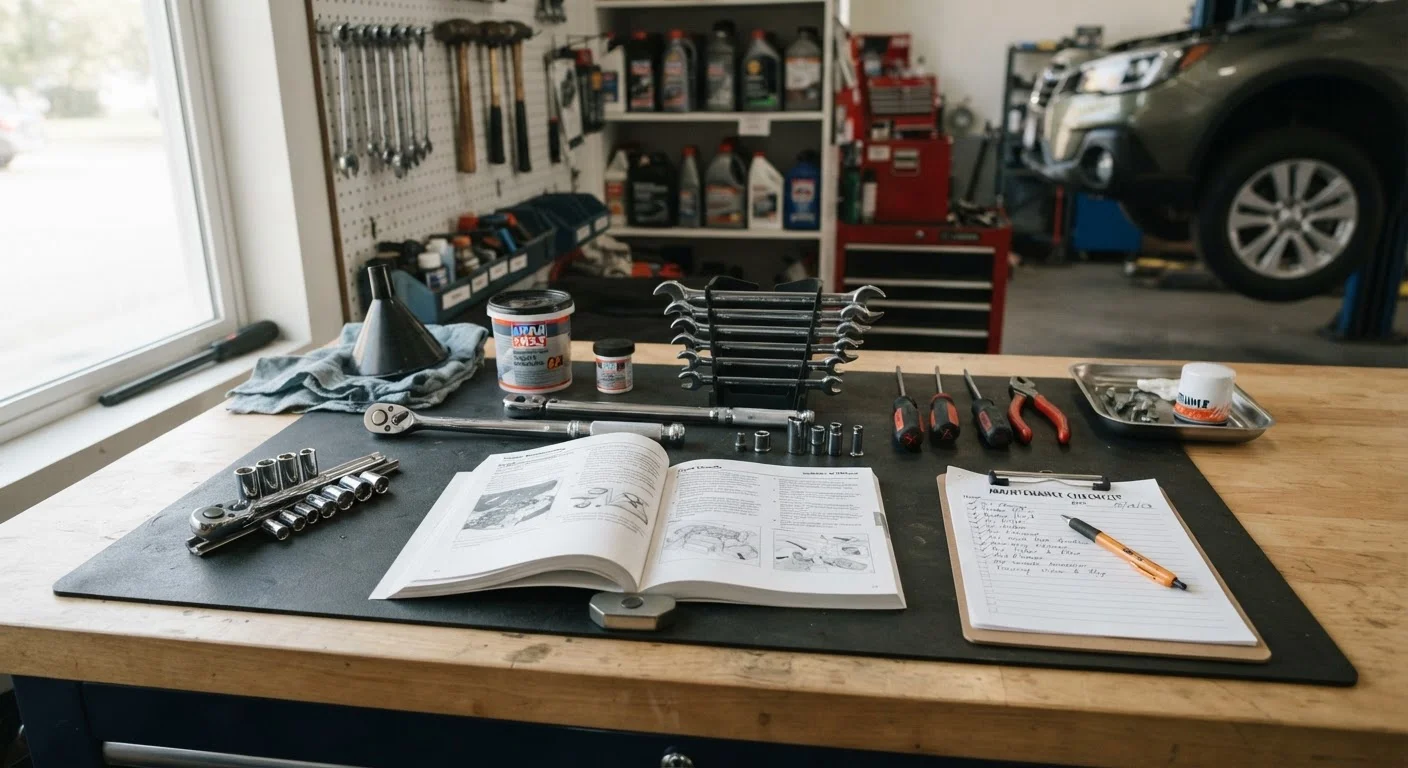
When reviewing your manual, locate the maintenance schedule table and cross-reference it with your current odometer reading and the date of your last service. If you're unsure what's been done - common with used vehicle purchases - a full inspection by a qualified mechanic can establish a baseline. You can also reference typical maintenance costs by vehicle type to plan ahead financially.
For anything that involves warning indicators, understanding your dashboard warning lights is a useful companion to your maintenance schedule - some lights flag issues that fall outside normal scheduled service. And if you're weighing which tasks you might handle yourself, knowing which jobs require a professional helps you make that call safely.