How Dashboard Warning Lights Are Organized
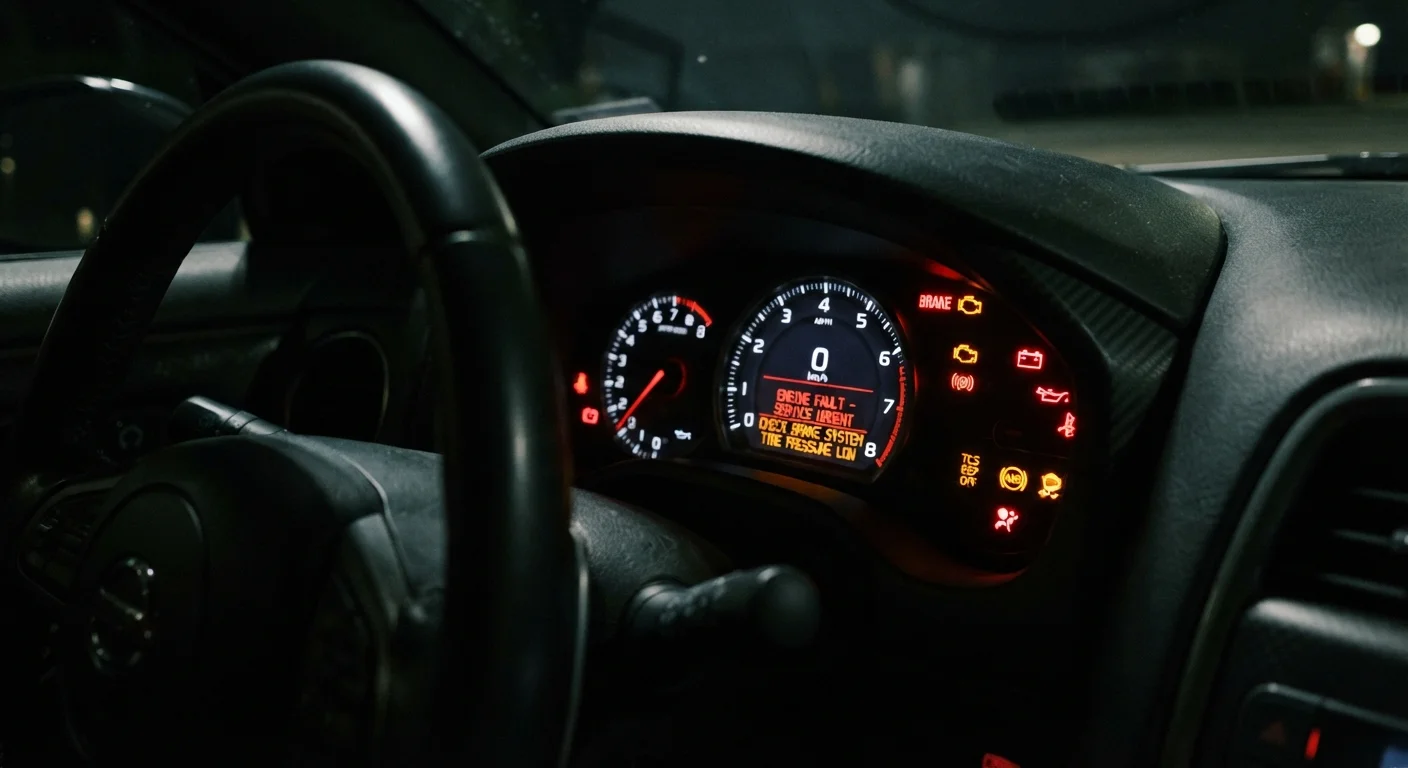
Automakers follow a broadly consistent color system for warning lights, though symbols can vary by manufacturer. Understanding the color tier helps you react appropriately before you even know which light is on.
- Red: Immediate attention required. These lights flag conditions that can cause injury, leave you stranded, or permanently damage your vehicle. Pull over safely when it is practical to do so.
- Yellow or Amber: A caution or service reminder. The vehicle is likely still drivable, but the underlying issue needs professional attention within a reasonable timeframe - not weeks from now.
- Green or Blue: Informational only. These confirm that a system (headlights, turn signal, cruise control) is active. No action needed.
Your owner's manual is the definitive guide to your specific vehicle's icons, since symbols are not fully standardized across all makes and models. When you're unsure, treat an unfamiliar red or amber light as urgent until confirmed otherwise.
| Red light urgency | Stop or pull over safely as soon as possible |
| Yellow/amber light urgency | Service needed soon; continue driving with caution |
| TPMS threshold | Triggers at 25% below recommended tire pressure (NHTSA TPMS final rule) |
| OBD-II standardized since | Model year 1996 (US) (EPA/CARB mandate) |
| Check engine causes | Hundreds of possible fault codes - scanner required to diagnose |
| Oil pressure drop danger | Engine can sustain permanent damage within seconds of losing oil pressure |
The Warning Lights You're Most Likely to See
Below are the most common dashboard indicators, what triggers them, and how urgently you should respond.
Check Engine (Malfunction Indicator Lamp)
This amber engine icon can mean anything from a loose gas cap to a misfiring cylinder. The vehicle's OBD-II system has logged a fault code that a scanner must read to identify the specific cause. A steady light generally means drive to a shop soon; a flashing check engine light signals an active misfire that can damage the catalytic converter - reduce speed and get it inspected promptly. See your car's maintenance schedule guide for context on how routine service can prevent some of these faults.
Oil Pressure Warning
A red oil can symbol means the engine is not receiving adequate oil pressure - not merely that oil is low, but that circulation has dropped dangerously. Stop the engine as soon as you can safely do so. Running an engine without oil pressure causes rapid, expensive, and often irreversible internal damage.
Engine Temperature Warning
A red thermometer in liquid indicates the engine is overheating. Turn off the air conditioning, pull over, and let the engine cool before opening the hood or checking coolant. For a deeper look at how coolant works, see Car Fluids 101.
Battery / Charging System
A red battery icon usually signals a problem with the charging circuit - often the alternator - rather than the battery itself. The vehicle is running on stored battery power only and may stall. Limit electrical loads (climate controls, heated seats) and drive directly to a shop.
Brake System Warning
If this red light appears with the parking brake fully released, it can indicate low brake fluid or a hydraulic fault. Do not ignore it. Brake warning signs explained covers related symptoms in more detail.
Tire Pressure (TPMS)
An amber icon showing an exclamation point inside a tire cross-section activates when at least one tire is 25% or more below recommended pressure. Check all four tires with a gauge - the light alone does not tell you which tire or by how much.
Scanner Tools Are Widely Available
Inexpensive OBD-II scanners (plug into the port under your dashboard) can read fault codes at home, giving you context before visiting a shop. Many auto parts retailers also read codes for free. A code alone doesn't replace a mechanic's diagnosis, but it narrows the conversation and helps you avoid being overcharged for unrelated repairs.
Traction Control / Stability Control
A flashing light here means the system is actively working - normal on slippery roads. A steady amber light means the system has been disabled or has a fault, reducing your vehicle's ability to manage slides and loss of traction.
Airbag / SRS Warning
An amber seated-figure icon means the supplemental restraint system has detected a fault. Airbags may not deploy correctly in a collision. This requires professional diagnosis - it is not a DIY repair.
OBD-II
On-Board Diagnostics, second generation - a standardized system built into most vehicles sold in the US after 1996. It monitors engine and emissions performance and stores fault codes that a mechanic's scanner can read.
Fault Code (DTC)
Diagnostic Trouble Code - an alphanumeric code stored by the vehicle's computer when a sensor detects a problem. Mechanics retrieve these codes to pinpoint the source of a warning light.
Limp Mode
A protective state some vehicles enter when the engine or transmission computer detects a serious fault. The vehicle limits power and speed to prevent further damage until the issue is diagnosed and repaired.
Coolant Temperature
The operating temperature of the liquid circulating through your engine to prevent overheating. A rising temperature gauge or warning light signals the cooling system needs immediate attention.
TPMS
Tire Pressure Monitoring System - a federally mandated sensor system on US vehicles sold after September 2007 that warns the driver when one or more tires falls significantly below the recommended pressure.
Alternator
A generator driven by the engine that recharges the battery and powers electrical systems while the vehicle is running. A failing alternator can leave you stranded even with a healthy battery.
What to Do After a Warning Light Appears
Once a light comes on, your response should follow a simple sequence:
- Identify the color and symbol. Red means act now; amber means schedule service.
- Check for obvious causes first. A loose or improperly seated gas cap, for example, commonly triggers a check engine light and clears within a day or two of being properly tightened.
- Get the fault code read. An OBD-II scanner or a free reading at many auto parts retailers gives you a starting point before you walk into any shop.
- Have a qualified mechanic diagnose and repair the underlying issue. Clearing a code without fixing the root cause only turns off the light temporarily.
On higher-mileage vehicles, warning lights sometimes reflect wear-related failures that are predictable. High-mileage vehicle maintenance explains which systems deserve closer monitoring as odometers climb. If you're evaluating a used car and wondering about its warning light history, reading a vehicle history report can surface past repair patterns worth asking about.
1 in 3
US vehicles driving with a check engine light on
According to CarMD's annual Vehicle Health Index, roughly one-third of vehicles on the road have an active check engine light at any given time.
$400+
Average repair cost linked to check engine light
CarMD's Vehicle Health Index reports the average repair tied to a check engine light diagnosis consistently exceeds $400 including parts and labor.