The Most Common Reasons Brakes Squeal
Brake noise is your car's most direct way of communicating a problem - or sometimes, no problem at all. Understanding the difference starts with recognizing the most frequent causes.
Surface Rust After Sitting
Overnight or after rain, a thin layer of rust forms on iron rotors. The first few brake applications scrub it off, often producing a brief squeal or light grinding. If the noise disappears within a minute of driving, this is almost certainly the cause and requires no action.
Worn Brake Pad Wear Indicators
Most brake pads are manufactured with a small metal tab called a wear indicator. When pad thickness drops to roughly 2-3mm, this tab contacts the rotor and produces a persistent, high-pitched squeal specifically designed to alert the driver. This noise won't go away on its own - it's a deliberate signal that pad replacement is due soon.
Brake Pad Composition
Semi-metallic brake pads, which contain a higher proportion of metal fibers, tend to run noisier than ceramic or organic alternatives - particularly in cold temperatures or during light braking. This is a known characteristic of that pad type, not necessarily a defect.
Debris or Dust
Small stones, road grit, or excessive brake dust can temporarily wedge between pad and rotor, causing squealing or even a scraping sound. This usually resolves quickly once the debris is cleared by normal braking.
The Cold-Morning Test
Listen carefully during your first brake application of the day. If the squeal is brief - gone within a few stops - surface rust is the likely culprit. If the noise persists through your entire commute and returns every time you brake, that's a wear indicator doing its job. Don't ignore the difference.
When Brake Noise Signals a Real Safety Issue
Not all brake noise is created equal. Certain sounds indicate conditions that compromise your ability to stop safely.
Continuous Squealing During Normal Braking
If the squeal is present every time you apply the brakes - not just the first stop of the day - your wear indicators are almost certainly in contact with the rotor. This means pad replacement should be scheduled promptly, not deferred. Most mechanics advise acting within a few weeks at most.
Grinding or Metal-on-Metal Sounds
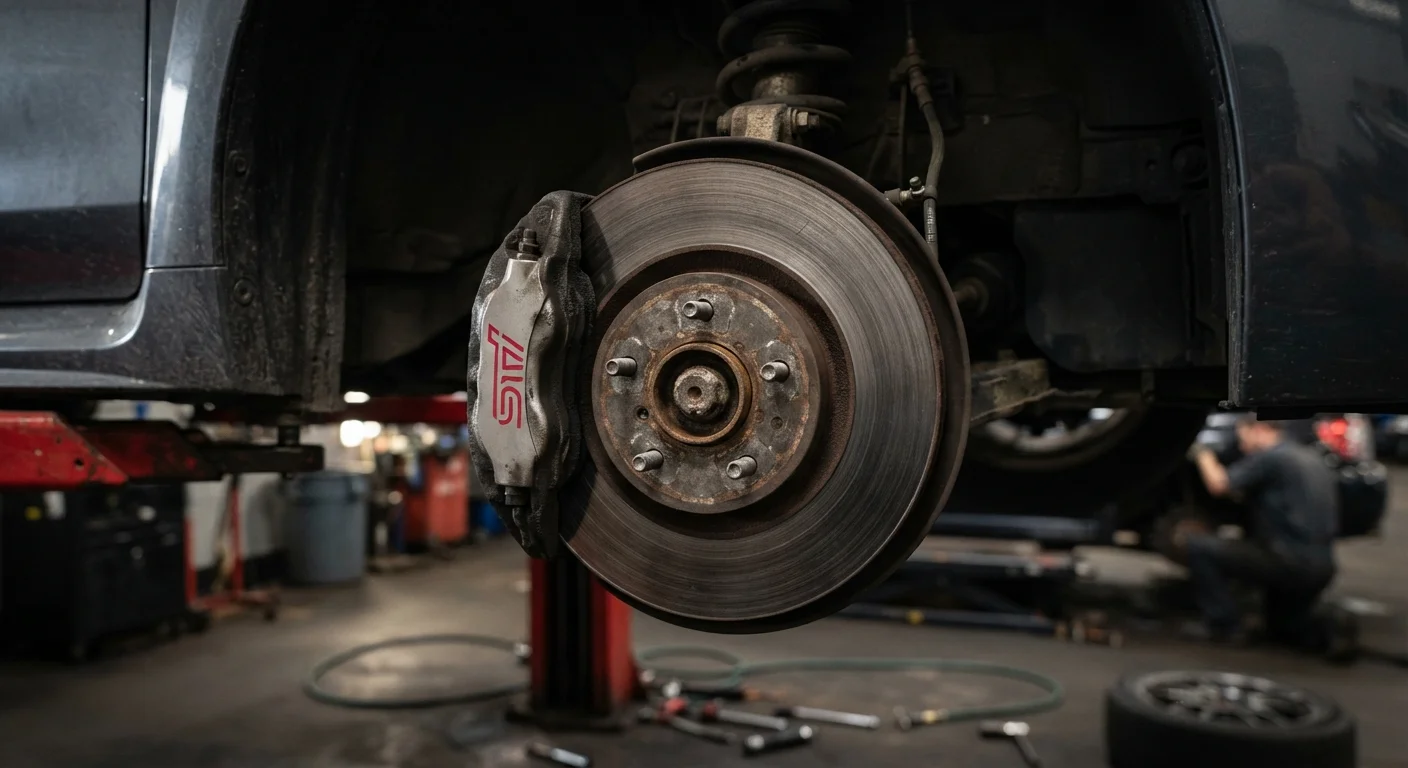
A grinding noise during braking is a more serious escalation. It typically means the pad material has worn through completely and bare metal is contacting the rotor. At this stage, stopping distances can increase, and rotor damage accumulates rapidly with each mile driven. Have the vehicle inspected immediately - this is not a wait-and-see situation.
Squealing Combined With Other Symptoms
Brake noise paired with any of the following warrants urgent attention:
- The brake pedal feels soft, spongy, or sinks closer to the floor than usual
- The vehicle pulls noticeably to one side when braking
- You feel pulsing or vibration through the brake pedal
- A dashboard warning light has illuminated
If you're seeing warning lights alongside unusual brake behavior, our guide on dashboard warning lights can help you interpret what your vehicle is communicating.
~$150-$300
Typical brake pad replacement cost per axle
Industry repair estimates suggest pad-only replacement is substantially less expensive than pad-plus-rotor jobs, which can run $400-$600 or more per axle depending on vehicle and market.
3mm
Minimum safe brake pad thickness
Most automotive technicians recommend inspection at 3mm and replacement before pads wear to 2mm, a threshold at which stopping distance begins to degrade measurably.
~25%
Increase in stopping distance with severely worn pads
Vehicle safety research consistently shows that braking performance degrades significantly once pad material is exhausted, increasing the risk of rear-end collisions in emergency stops.
What To Do - and What It Costs to Wait
The financial case for acting on brake noise early is straightforward: brake pads are significantly less expensive to replace than rotors. When worn pads grind against a rotor long enough, the rotor surface becomes scored and often needs resurfacing or replacement - a repair that can cost several times more than pads alone.
For most drivers, brake inspection is something a qualified mechanic should perform. Brake systems involve hydraulic components, precise clearances, and safety-critical tolerances that make visual inspection from outside the wheel insufficient. Understanding when a job requires professional hands is its own skill - and our article on DIY maintenance vs. shop repairs covers how to think through that decision.
Brake Fluid Is Part of the Picture
Brake squeal is about friction components, but don't overlook brake fluid. Old or moisture-contaminated fluid can contribute to spongy pedal feel and reduced braking performance. Most manufacturers recommend inspection every two years or at specified mileage intervals - check your owner's manual for guidance specific to your vehicle.
When you do take the car in, ask the mechanic to show you the pad thickness measurement. Pads are typically measured in millimeters; anything at or below 3mm is in replacement territory, and below 2mm is urgent. This transparency helps you make an informed decision rather than relying solely on the shop's recommendation.
This article is for general informational purposes only. Brake system inspection and repair should be carried out by a qualified mechanic. Do not delay professional inspection if you have concerns about your vehicle's braking performance.