Why the DIY vs. Shop Decision Actually Matters
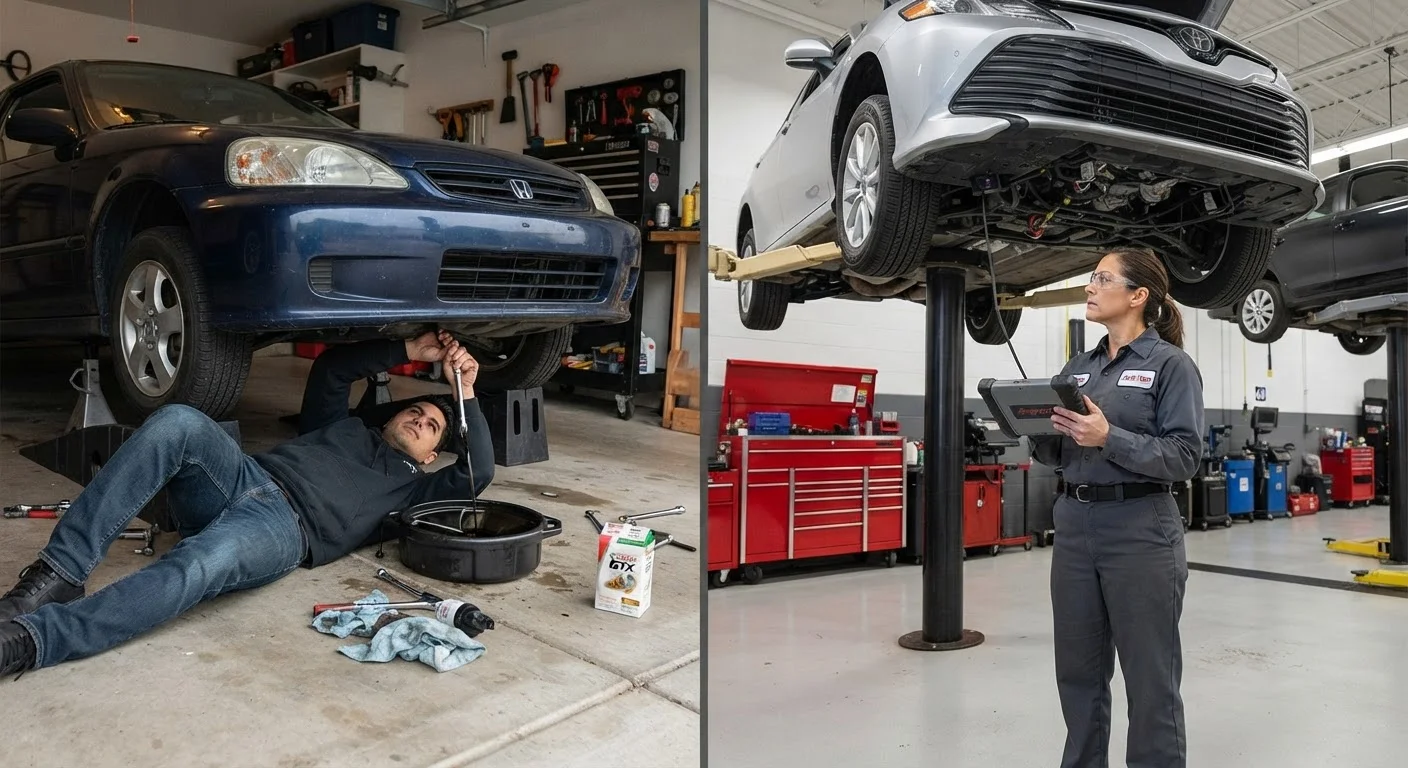
For most drivers, vehicle maintenance sits somewhere between a mystery and a chore. The question isn't just about saving money - it's about making the right call for your specific situation. An oil change done incorrectly can damage an engine. A brake job attempted without the right tools can be genuinely dangerous. At the same time, paying a shop to swap wiper blades or replace a cabin air filter is an unnecessary expense that takes minutes with no mechanical skill required.
The decision comes down to three factors: task complexity, tools required, and the consequences of getting it wrong. Understanding the real ongoing costs of vehicle ownership starts with knowing which maintenance dollars you actually need to spend on labor.
| DIY Maintenance | Professional Shop | |
|---|---|---|
| Upfront cost | Lower parts cost, no labor fee | Higher total cost including labor |
| Tools required | Basic hand tools for simple tasks | Specialized equipment available on-site |
| Safety risk if done incorrectly | Low for simple tasks; high for brakes/suspension | Minimal - licensed technicians accountable |
| Warranty considerations | May affect coverage if undocumented | Typically preserves warranty documentation |
| Best task types | Filters, wipers, fluids, battery terminals | Brakes, diagnostics, suspension, transmission |
| Time investment | Variable; depends on experience level | Predictable; shop handles scheduling |
Tasks Most Drivers Can Safely Handle at Home
Several routine maintenance items require little more than basic tools, a clean workspace, and attention to your owner's manual. These are generally low-risk jobs where a mistake is easy to identify and correct before it causes harm.
- Engine and cabin air filter replacement: Both are typically accessible without special tools. Filters are inexpensive and swapping them takes under 15 minutes on most vehicles.
- Windshield wiper blades: Replacement blades come with instructions and fit most vehicles with no tools at all.
- Tire pressure checks and top-offs: A quality gauge costs a few dollars. Maintaining correct pressure affects fuel economy and tire wear.
- Checking and topping off fluids: Washer fluid, coolant reservoir levels, and power steering fluid are generally visible and accessible. Do not attempt to open a pressurized radiator cap when the engine is hot.
- Battery terminal cleaning: Corrosion buildup on terminals can cause starting problems. With gloves, eye protection, and a terminal brush, this is manageable at home - but know that disconnecting the battery may reset vehicle electronics.
For a fuller picture of what each service milestone involves, see your car's maintenance schedule, explained.
Start With Your Owner's Manual
Before attempting any maintenance task, consult your vehicle's owner's manual for specifications, fluid types, and torque values. Manufacturer guidance is more reliable than generic online tutorials, which may not account for your specific model year or trim level. Many automakers also publish digital versions of owner's manuals on their websites at no cost.
When the Shop Is the Right Call
Some jobs look approachable until you're halfway through them. Others involve systems where an error has immediate safety consequences. These are the areas where professional service is not just convenient - it's the responsible choice.
- Brake system repairs: Pad replacement may seem simple, but brake systems involve hydraulic pressure, rotor condition, and precise torque specs. Improper brake work is a direct safety risk to you and others on the road.
- Suspension and steering components: Control arms, tie rods, and wheel bearings require alignment work after installation. Misaligned steering affects vehicle handling and tire wear in ways that may not be immediately obvious.
- Transmission service: Fluid changes on some automatic transmissions involve drain plugs and specific fill procedures that vary significantly by vehicle. Overfilling or using the wrong fluid type causes serious damage.
- Check engine light diagnosis: While consumer OBD-II readers can pull a fault code, interpreting it accurately requires understanding the full system context. A code pointing to an oxygen sensor, for example, may actually trace back to a vacuum leak.
- Timing belt or chain service: This is engine-critical work with precise sequencing. An error can bend valves or total the engine.
Neglecting these systems often leads to compounding failures. The maintenance tasks drivers skip that lead to expensive repairs covers exactly how deferred service escalates costs over time.
Don't Underestimate Brake and Suspension Work
Brake and suspension repairs are among the most commonly attempted DIY jobs - and among the most frequently done incorrectly. Both systems directly affect vehicle control at speed. If you're unsure about any step of the process, or lack a torque wrench and vehicle lift, have a qualified mechanic perform the work. The cost of a professional repair is far lower than the cost of an accident caused by failed components.
Understanding the True Cost of Each Approach
DIY savings are real - but only when the job is done correctly. Factor in the cost of specialty tools you may only use once, the time investment, and the risk of parts damaged during an incorrect procedure. A stripped drain plug or a cracked plastic clip can turn a $10 filter replacement into a $150 shop visit.
On the shop side, labor rates in the US vary widely by region and shop type - dealerships typically charge more per hour than independent mechanics, though both are bound by the same repair standards. Before approving any estimate, it pays to understand what you're actually being charged for. How a mechanic reads a repair estimate walks through labor rates, parts markups, and the right questions to ask.
One cost factor often overlooked: warranty implications. On newer vehicles, certain repairs may need to be performed or documented by a licensed shop to preserve powertrain or bumper-to-bumper coverage. Review your warranty terms before doing any DIY work on a vehicle still under coverage.
Oil type is another area where research pays off. Synthetic vs. conventional motor oil outlines when a more expensive fluid is genuinely warranted versus when it isn't.
~35%
Of vehicle repairs DIY-capable by most drivers
Industry estimates suggest roughly a third of routine maintenance tasks fall within reach of a capable home mechanic with basic tools.
$100-$200/hr
Typical dealership labor rates in the US
Labor rates vary significantly by region and shop type; independent shops often charge less per hour than franchise dealerships.