
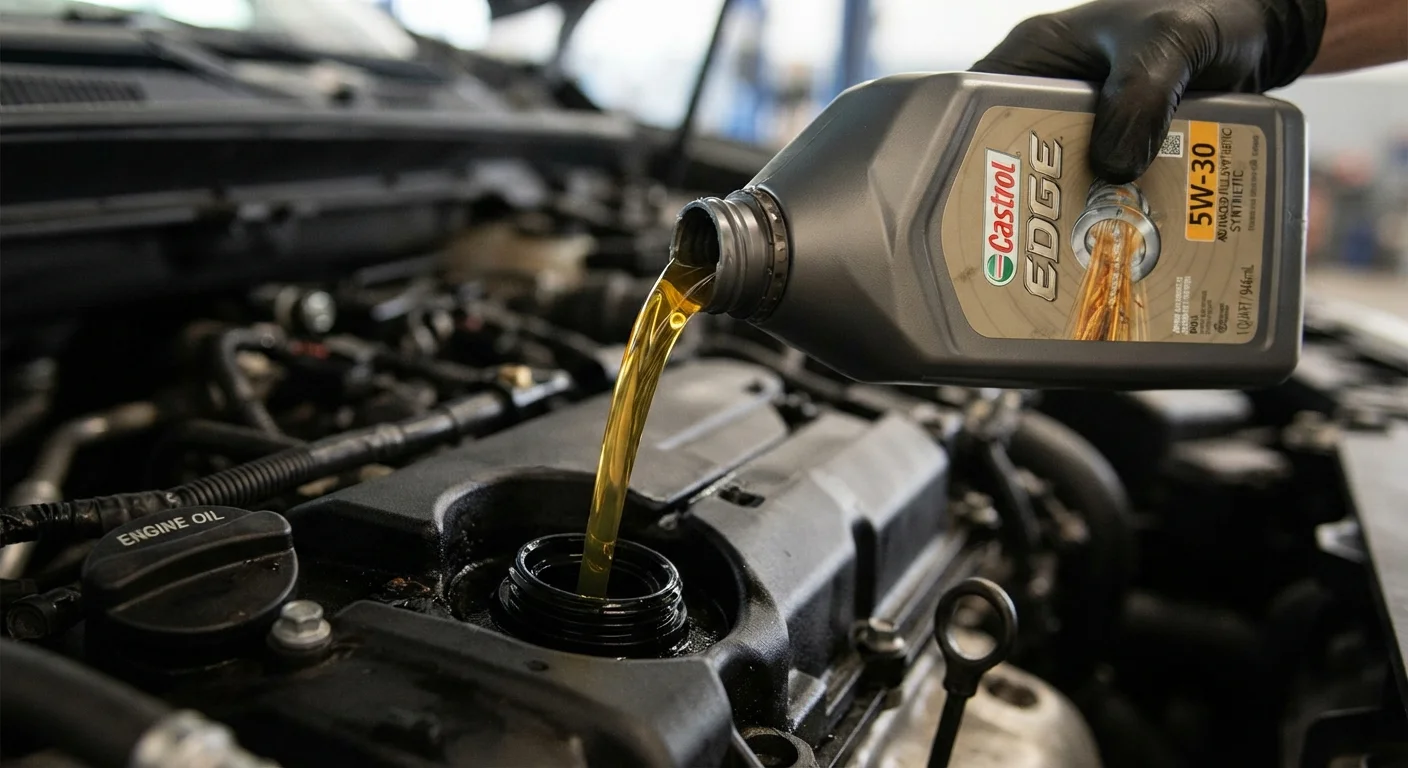
How the Two Oil Types Are Made
Conventional motor oil starts as crude oil extracted from the ground and then refined to remove impurities. Because the refining process is imperfect, the resulting molecules vary in size and shape - which affects how the oil behaves under heat and pressure.
Synthetic motor oil, by contrast, is chemically synthesized, typically from a base stock such as polyalphaolefin (PAO) or Group III hydrocracked oil. The manufacturing process produces uniform, purpose-built molecules that are engineered to lubricate more consistently. Additives are blended into both types to fight oxidation, reduce wear, and handle temperature extremes, but synthetics generally start from a stronger molecular foundation.
This difference in origin explains most of the performance gap between the two - and why they carry different price tags at the shop.
| Criterion | Synthetic Motor Oil | Conventional Motor Oil |
|---|---|---|
| Base stock origin | Chemically engineered molecules | Refined crude oil |
| Molecular consistency | Highly uniform | Variable |
| Cold-weather flow | Flows faster at low temps | Thickens more in cold |
| Heat resistance | Higher thermal stability | Breaks down faster under heat |
| Typical change interval | 7,500-10,000+ miles (varies) | 3,000-5,000 miles (varies) |
| Cost per quart | Generally higher | Generally lower |
| Suited for modern engines | Yes - often required | Sometimes, check manual |
| Suited for older engines | Usually compatible | Traditionally standard choice |
Where Performance Differences Actually Show Up
The practical gap between synthetic and conventional oil narrows considerably under normal driving conditions in a well-maintained older engine. The differences become more significant in specific scenarios:
- Cold starts: Synthetic oil flows more readily at low temperatures, which means it reaches engine components faster when you first turn the key on a cold morning - a period when much engine wear occurs.
- High operating temperatures: Synthetic oil resists thermal breakdown longer, making it better suited for turbocharged engines, towing, or stop-and-go city driving that generates sustained heat.
- Change intervals: Many synthetic oils are rated for longer intervals between changes - sometimes 7,500 to 10,000 miles or more, compared to conventional oil's typical 3,000-5,000 mile range. Always verify what your owner's manual specifies rather than relying on general rules.
~70%
New vehicles specifying synthetic oil
Industry estimates suggest the majority of new passenger vehicles sold in the US now call for full synthetic or synthetic-blend oil per manufacturer specifications.
5W-20 / 5W-30
Most commonly specified viscosity grades
These two viscosity grades cover the largest share of US passenger vehicle applications, according to industry formulation data.
For routine maintenance decisions like this, see our guide to DIY vs. professional car maintenance to determine when it makes sense to handle an oil change yourself and when to leave it to a technician.
How to Know Which Oil Your Engine Needs
The single most authoritative source is your vehicle's owner's manual. Manufacturers specify both the oil type (conventional, synthetic, or synthetic blend) and the viscosity grade - such as 5W-30 or 0W-20 - based on how the engine was designed and what its tolerances require.
Synthetic Blends: A Middle Option
Synthetic-blend oils mix conventional base stock with synthetic base stock, offering some performance improvement over straight conventional oil at a lower cost than full synthetic. Many manufacturers specify blends for trucks and SUVs designed for moderate towing or hauling. Check your manual to see if a blend meets your vehicle's requirements - do not assume a blend is equivalent to full synthetic where the latter is specified.
A few practical rules of thumb:
- If your manual calls for full synthetic, use it. Substituting conventional oil may void powertrain warranty coverage and could leave engine components under-lubricated.
- If your manual says conventional oil is sufficient, switching to synthetic is unlikely to cause harm in most cases - but it will cost more and may not deliver meaningful gains in a simple, older engine.
- If you have an older vehicle with no clear specification, a qualified mechanic can assess your engine's condition and recommend the appropriate oil type.
Viscosity grade matters as much as oil type. Using the wrong viscosity - even a premium synthetic - can reduce protection rather than improve it.