Why Car Fluids Matter
A modern vehicle isn't held together by metal alone - it depends on a carefully balanced network of fluids to keep moving parts lubricated, temperatures regulated, and safety systems responsive. Skip or delay fluid maintenance, and friction, heat, and corrosion quietly do their damage long before a warning light flickers on.
The good news: monitoring most fluids requires no tools and only a few minutes. Understanding what each fluid does - and what happens when it's low or degraded - is the foundation of proactive car ownership. See our maintenance schedule guide for how fluid checks fit into broader service milestones.
Hydraulic fluid
A liquid used to transmit force through a system. In cars, brake fluid and power steering fluid work this way - pressing the pedal or turning the wheel moves fluid to activate mechanical components.
Viscosity
A measure of how thick or thin a fluid is. Engine oil viscosity ratings (like 5W-30) describe how the oil flows at different temperatures - thinner when cold for easy starting, thicker when hot to protect engine parts.
Coolant (Antifreeze)
A specially formulated liquid that circulates through the engine to absorb heat and prevent both freezing and boiling. It typically contains ethylene glycol and corrosion inhibitors.
DOT Rating (Brake Fluid)
A classification system for brake fluid (DOT 3, DOT 4, DOT 5) based on boiling point and chemical composition. Using the wrong type can compromise brake performance - check your owner's manual for the correct specification.
Sealed Transmission
A transmission design with no dipstick for owner checks. Fluid service on these systems typically requires a mechanic and specialized equipment.
The Six Essential Fluids and What They Do
Engine Oil
Engine oil lubricates hundreds of moving metal components, reduces friction, carries heat away from the engine, and helps suspend combustion byproducts until the next oil change. Without adequate oil, engine components can seize within minutes.
Coolant (Antifreeze)
Coolant circulates through the engine and radiator to prevent overheating in summer and freezing in winter. It also contains corrosion inhibitors that protect metal components. A 50/50 mix of coolant and distilled water is standard in most climates.
Brake Fluid
Brake fluid transmits the force from your brake pedal through hydraulic lines to the brake calipers. It must withstand very high temperatures without boiling. Because brake fluid absorbs moisture over time, degraded fluid can compromise stopping performance - a direct safety concern.
Transmission Fluid
This fluid lubricates and cools the transmission's gears and clutches. Automatic and manual transmissions typically use different fluid specifications, so checking your owner's manual before topping off is essential.
Power Steering Fluid
Hydraulic power steering systems use this fluid to make turning the wheel easier. Many newer vehicles use electric power steering and don't have this reservoir at all - check your manual if you're unsure.
Windshield Washer Fluid
While not mechanical, washer fluid directly affects visibility. It's formulated to cut road grime and, in winter blends, resist freezing on contact with cold glass. Plain water can freeze in the reservoir and lines - use the correct rated fluid for your climate. Seasonal vehicle prep covers how to adapt fluid choices as temperatures shift.
Your Owner's Manual Is the Final Word
Fluid specifications vary significantly between makes, models, and model years. Using the wrong coolant type or oil viscosity can void warranties or cause premature wear. Before topping off any fluid, confirm the correct specification in your vehicle's owner's manual - it takes less than a minute and prevents costly mistakes.
How and When to Check Each Fluid
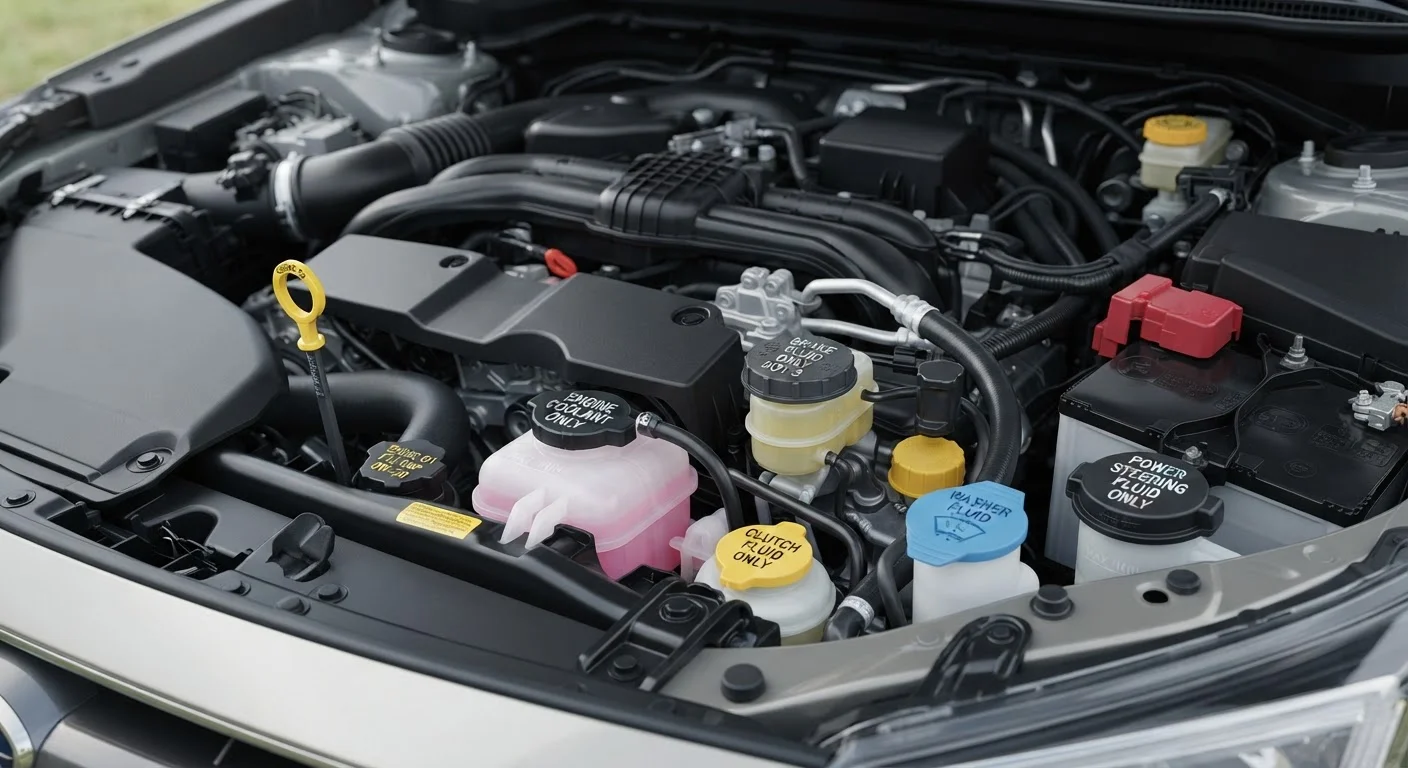
Most fluid reservoirs are clearly labeled under the hood with icons or color-coded caps. Always check fluids when the engine is cold (or as directed in your manual) and park on level ground for accurate readings.
| Fluid | Check Frequency | Change Interval (general guidance) |
|---|---|---|
| Engine Oil | Monthly | Per manufacturer spec (often 5,000-10,000 miles for synthetic) |
| Coolant | Every 3 months | Every 30,000-50,000 miles or per manual |
| Brake Fluid | Annually | Every 2-3 years or if moisture-tested as degraded |
| Transmission Fluid | Per manual | Every 30,000-60,000 miles (varies widely) |
| Power Steering Fluid | Every 3 months | Rarely changed; top off as needed |
| Washer Fluid | As needed | Refill as needed |
Intervals above are general reference ranges. Always follow the intervals in your vehicle's owner's manual, which accounts for your specific engine and operating conditions.
Synthetic vs. Conventional Oil Intervals Differ
Conventional motor oil has historically been changed every 3,000 miles, but that interval is outdated for most modern vehicles using full synthetic oil. Many manufacturers now specify 7,500 to 10,000 miles or more between oil changes for synthetic formulations. Rely on your owner's manual or an oil life monitoring system - not the sticker from your last oil change shop - for accurate guidance.
Warning Signs You Shouldn't Ignore
Fluids communicate problems before mechanical failure sets in - if you know what to look for. Spots under your parked car, unusual smells, or changes in how your vehicle handles are all worth investigating promptly.
- Sweet smell or steam from the hood: A possible coolant leak. Do not continue driving; overheating can cause severe engine damage.
- Burning oil smell: Oil may be dripping onto hot engine components. Check the level and inspect for leaks.
- Soft or spongy brake pedal: Could indicate low brake fluid or air in the lines - a serious safety issue requiring immediate professional attention.
- Whining when turning the wheel: Often signals low power steering fluid or a failing pump.
- Slipping or delayed gear changes: May point to low or degraded transmission fluid.
Dashboard warning lights are another layer of this system. Our dashboard warning lights guide explains what illuminated indicators mean and how urgently to respond. Routine fluid checks are also a meaningful way to manage long-term ownership costs - see our annual car ownership cost checklist for the full picture.
Never Ignore a Brake Fluid Warning
Brake fluid leaks or a suddenly soft pedal are safety emergencies - not items to schedule for next week. If you suspect a brake fluid problem, do not drive the vehicle until a qualified mechanic has inspected the system. Reduced hydraulic pressure means reduced stopping ability, which puts everyone on the road at risk.