What a Vehicle History Report Actually Contains
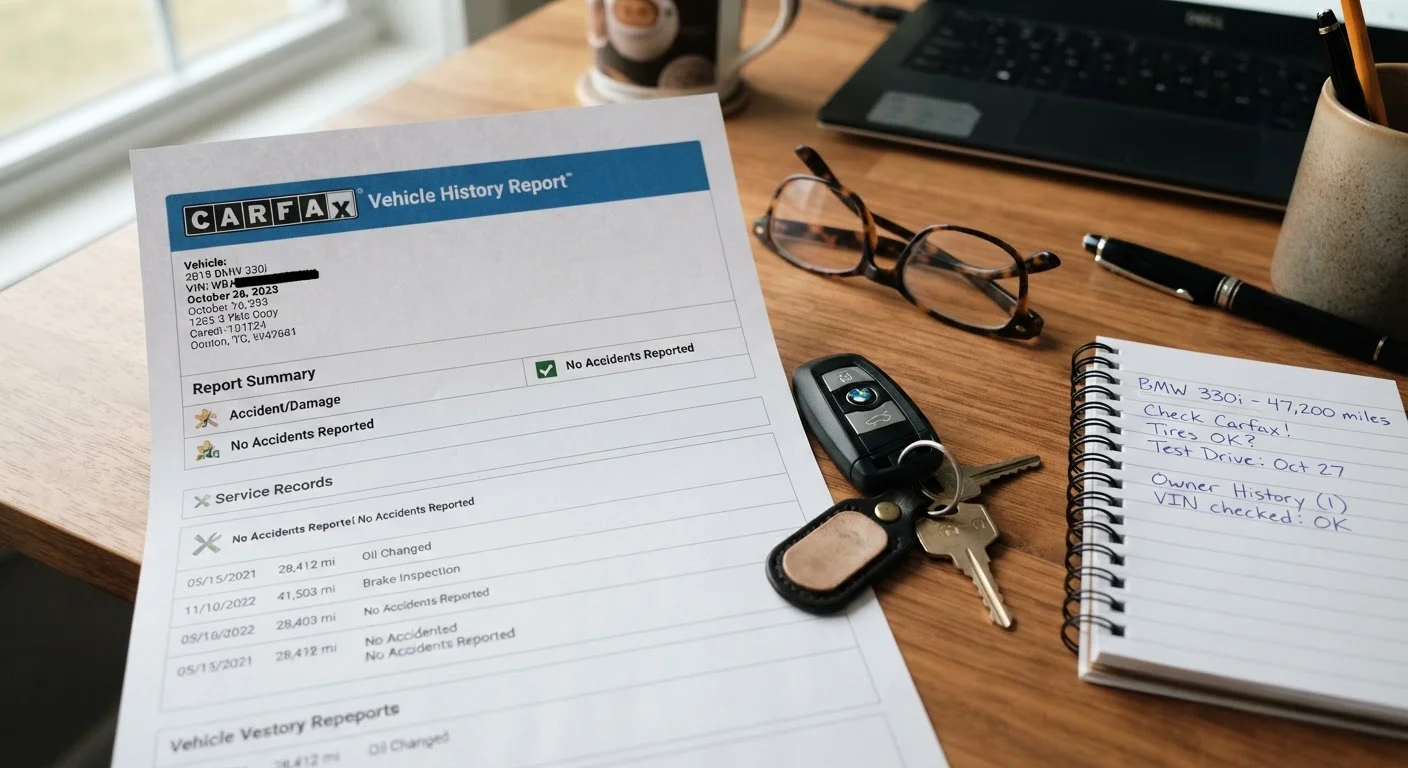
A vehicle history report is a compiled summary of publicly and commercially reported data tied to a specific VIN. Information is aggregated from sources such as state DMV records, insurance companies, salvage auctions, law enforcement, and participating repair facilities. No single report is guaranteed to be complete, but a thorough one can surface major red flags before you commit to a purchase.
Understanding what each section actually means - and what it can't tell you - is the difference between using a report effectively and being falsely reassured by one. This guide is part of a broader look at what happens when you buy a used car, from initial research through title transfer.
What you will need
If you're weighing whether to buy used in the first place, the new vs. used trade-offs guide covers depreciation, financing, and reliability factors worth considering before you start shopping.
How to Read Each Section of the Report
Cross-Check the VIN Before You Start
Before pulling or reviewing any report, confirm that the 17-character VIN on the report matches the VIN stamped on the vehicle's dashboard (visible through the windshield) and on the door jamb sticker. A mismatch is a serious red flag that warrants immediate caution.
Verify the VIN Matches the Vehicle
Every vehicle history report is tied to a specific 17-character VIN. Before reviewing a single line of data, confirm this number matches the VIN physically stamped on the car - typically on the dashboard (driver's side, visible through the windshield) and on the door jamb label. Also check the title document if available.
Any discrepancy between the report's VIN and the vehicle's VIN should stop the process entirely until explained.
Review the Title History Section
Title status is one of the most consequential sections in any vehicle history report. Look for the following designations:
- Clean title: No major incidents on record that changed the legal status of the vehicle.
- Salvage title: An insurer declared the vehicle a total loss at some point. It may have been repaired but carries lasting legal and financial implications.
- Rebuilt/reconstructed title: A salvage vehicle was repaired and reinspected. Rules governing this designation vary by state.
- Flood/water damage title: The vehicle sustained significant water intrusion. Electrical and mechanical corrosion can persist long after repairs.
- Lemon law buyback: The manufacturer repurchased the vehicle due to recurring defects under a state's lemon law.
Any non-clean title designation warrants serious additional scrutiny.
Examine Accident and Damage Records
Accident entries in a report come from insurance claims, police reports, and repair facility records - but not all incidents are captured. For entries that do appear:
- Note the severity level if listed (minor, moderate, severe).
- Check whether airbags deployed - this typically indicates a significant impact and may mean structural components were stressed.
- Look for mentions of frame or structural damage, which can affect handling and safety even after repair.
- Identify the date and mileage at the time of the incident relative to current mileage - recent accidents near the current odometer reading deserve more attention.
Check Odometer Readings Over Time
Reports typically compile odometer readings from state inspections, title transfers, and service visits. Review these readings chronologically to confirm the mileage has increased consistently over time.
Watch for:
- Mileage that decreases between consecutive entries - a strong indicator of odometer rollback.
- Large unexplained gaps in mileage over a short period, or suspiciously low mileage for the vehicle's age.
- Inconsistencies between reported mileage and the current odometer displayed on the vehicle.
Analyze Ownership History
The ownership section shows how many individuals or entities have held the title and where the vehicle was registered. Key things to evaluate:
- Number of owners: Multiple owners over a short period may indicate dissatisfaction or recurring problems.
- Commercial or fleet use: A vehicle used as a rental, taxi, or fleet car typically accumulates miles under varied conditions and may have higher wear relative to mileage.
- Geographic history: Registration in high-rust regions (especially the upper Midwest and Northeast, where road salt is common) can indicate greater corrosion risk even if the vehicle now lives in a drier climate.
Look for Service and Maintenance Records
Some reports include service history sourced from dealerships or repair chains that participate in data-sharing programs. While incomplete, this data can show whether the vehicle received regular oil changes, manufacturer-recommended maintenance intervals, or significant repairs.
A consistent service history suggests attentive ownership. Conversely, no service records at all - especially on a higher-mileage vehicle - is not a clean slate; it's a gap that warrants questions. Ask the seller for any physical maintenance records to supplement what appears in the report. Our guide on why maintenance records matter explains what a complete service paper trail looks like.
A Report Is Not a Guarantee
Vehicle history reports only reflect events that were formally reported and entered into available databases. Accidents repaired privately, unreported flood damage, or undisclosed mechanical issues may never appear. Always treat the report as one layer of due diligence - not a clean bill of health. A pre-purchase inspection by a qualified mechanic is an essential second step.
Branded Titles Are Hard to Reverse
A salvage, rebuilt, or flood-branded title follows the vehicle permanently in most US states. Financing and insuring a vehicle with a branded title is often difficult, and resale value is substantially lower than a clean-title equivalent. If you're considering a branded-title vehicle, consult your insurance provider before purchasing to confirm coverage eligibility.
Once you've reviewed the report thoroughly, document any flags - title concerns, accident entries, mileage inconsistencies, or ownership gaps - and bring them to a qualified mechanic before finalizing your decision. A pre-purchase inspection is the most reliable way to surface mechanical issues that a report cannot capture. After purchase, tracking your own vehicle service records protects your investment going forward, and understanding the full cost of ownership helps you budget realistically from day one.