When Mileage Starts Costing More
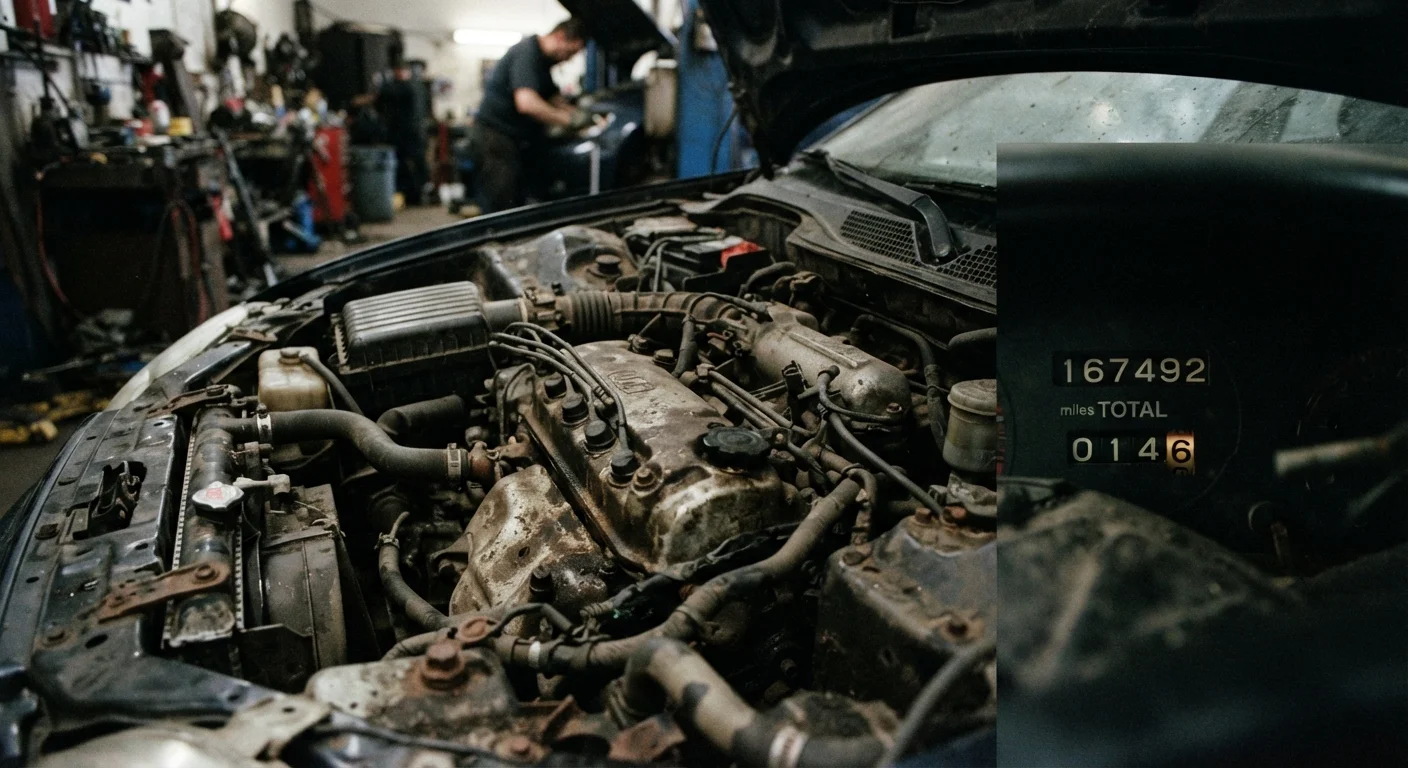
Buying and insuring a car are just the beginning. For most drivers, the sharpest ownership costs don't arrive in the early years - they show up once a vehicle crosses into high-mileage territory, typically around 60,000 miles and beyond. These aren't random breakdowns; many are predictable, wear-driven expenses tied directly to how far a vehicle has traveled.
Understanding which costs tend to spike - and roughly when - gives budget-conscious owners a real advantage. You can set aside funds in advance, negotiate repair decisions from a position of knowledge, and avoid the gut-punch of a four-figure repair bill that could have been anticipated. For a broader view of recurring annual expenses, see the annual car ownership cost checklist that covers registration, insurance, and more.
Timing Belt or Timing Chain Service
Many engines rely on a timing belt - a reinforced rubber belt that synchronizes the crankshaft and camshaft. Most manufacturers recommend replacing it between 60,000 and 105,000 miles, depending on the engine. Skipping this service isn't just risky for your wallet; a snapped timing belt can cause severe internal engine damage in what are called interference engines.
The belt itself is not expensive, but the labor involved in accessing it typically pushes the total cost into the $500-$1,000 range or higher for some vehicles. Timing chains, found on many newer engines, are designed to last longer but are not immune to wear - especially if oil changes have been infrequent. Rattling noises at startup are a common early warning sign.
A snapped timing belt can cause severe internal engine damage - this is one service you can't afford to delay.
Transmission Service and Repair
Automatic transmissions are among the most expensive components in a vehicle. Between 90,000 and 120,000 miles, many vehicles begin showing signs of transmission wear: delayed engagement, rough shifting, or slipping gears. A full transmission fluid flush - often overlooked in routine maintenance - can cost $150-$300, while a rebuild or replacement can run from $2,500 to over $5,000 depending on the vehicle.
Manual transmissions generally last longer but are not immune. Clutch assemblies in manual vehicles typically need replacement somewhere between 60,000 and 100,000 miles, with costs commonly ranging from $1,000 to $1,500 for parts and labor.
Transmission rebuilds or replacements rank among the highest single repair costs any high-mileage driver may face.
Suspension and Steering Components
Shocks, struts, ball joints, tie rod ends, and control arm bushings all degrade with mileage and road stress. Most suspension components begin showing wear around 75,000-100,000 miles, though vehicles driven frequently on rough roads or in cold climates may see earlier deterioration. Worn struts affect braking distances and handling, making this a safety issue as much as a comfort one.
Replacing a pair of front struts commonly runs $600-$900 including labor. Ball joints and tie rod ends are typically less expensive individually but often present in sets, and alignment work is usually required after replacement, adding to the total cost.
Worn suspension components affect braking and handling - treating this as a pure comfort issue underestimates the safety risk.
Cooling System Overhaul
Coolant hoses, the water pump, thermostat, and radiator all have finite service lives. Water pumps are frequently replaced alongside timing belts since both require similar disassembly - a mechanic may recommend bundling the jobs to save on labor. Coolant hoses become brittle and prone to cracking over time, often deteriorating noticeably around 80,000-100,000 miles.
A failed water pump or blown hose can lead to rapid overheating, which risks warping the cylinder head - a repair that can easily exceed $2,000. Flushing the coolant system at manufacturer-recommended intervals helps extend component life but doesn't eliminate eventual replacement.
Bundling water pump replacement with a timing belt service is a common cost-saving strategy worth discussing with your mechanic.
Catalytic Converter Degradation
The catalytic converter reduces harmful exhaust emissions and is required for passing emissions tests in most US states. These components can last well over 100,000 miles with proper engine maintenance, but oil burning, coolant leaks, or persistent misfires can contaminate and prematurely destroy the catalyst. Replacement costs vary widely - from around $500 for a modest vehicle to over $2,000 for some foreign makes or trucks requiring OEM parts.
A failed oxygen sensor or persistent check engine light related to catalytic efficiency is often the first indicator of degradation. Addressing underlying engine issues promptly can extend converter life significantly.
Catalytic converter failures often trace back to ignored engine problems - early diagnosis saves far more than the converter itself.
Fuel Economy Decline and Its Hidden Cost
High-mileage engines often become less fuel-efficient due to worn piston rings, fuel injector deposits, and degraded oxygen sensors. While the drop in miles-per-gallon may seem gradual, even a reduction of two or three mpg represents a meaningful annual cost increase for drivers who commute regularly. Fuel injector cleaning, spark plug replacement, and oxygen sensor service can partially restore efficiency, but some decline is inherent to engine age.
Tracking fuel economy over time - most modern vehicles display this in the instrument cluster - gives a concrete signal that the engine may need attention beyond routine service.
A slow drop in fuel economy is easy to ignore, but over thousands of miles it quietly becomes a significant added expense.
Planning Around These Cost Milestones
Not every vehicle will experience every expense on this list - make, model, driving conditions, and maintenance history all play a role. But the categories above represent the most common cost spikes that mechanics and automotive data consistently flag in high-mileage vehicles. Treating them as expected milestones rather than surprises changes how you budget for ownership.
Build a High-Mileage Repair Reserve
Consider setting aside a fixed monthly amount specifically for high-mileage repairs once your vehicle passes 60,000 miles. Even $50-$75 per month accumulates enough to cover many of the service events described here without derailing your regular budget. Tracking actual repair spending year-over-year also helps you make a more informed decision about when repair costs begin to outweigh the vehicle's remaining value.
Pairing this knowledge with routine upkeep is equally important. The scheduled maintenance costs by vehicle type breaks down typical service intervals so you can stay ahead of wear rather than react to it. And if you want longer-term strategies for managing vehicle spending, the financial habits that hold up over time offers approaches grounded in ownership reality. More foundational upkeep knowledge is available at the car maintenance hub.
This article is for general informational purposes only. Actual repair costs vary by vehicle make, model, region, and service provider. Consult a qualified mechanic for diagnosis and repair decisions specific to your vehicle.