Why seasons affect more than just your wardrobe
Most people swap out their coats and switch up their grocery lists as the seasons change - but skin and wellness routines often go untouched year-round. That's a missed opportunity. Temperature, humidity, UV intensity, and daylight hours all shift meaningfully across seasons, and each of those shifts creates real, measurable effects on skin barrier function, hydration, sleep, and energy.
The good news: seasonal adjustments don't require a full routine overhaul. In many cases, targeted swaps - a richer moisturizer in winter, a lighter SPF formula in summer, adjusted sleep cues in shorter days - are all it takes to keep your routine working with your body rather than against it. Pairing these changes with a weekly self-care audit makes it easier to catch when something isn't working.
General information, not medical advice
The guidance in this article reflects general, evidence-informed wellness practices for healthy adults. It is not a substitute for professional medical or dermatological advice. If you experience persistent skin concerns, significant mood changes tied to seasons, or other health symptoms, consult a qualified healthcare provider.
Six seasonal adjustments worth building into your routine
Reinforce your skin barrier in winter
Cold outdoor air holds less moisture, and indoor heating systems actively reduce relative humidity - a combination that strains the skin's natural barrier. When the barrier is compromised, water escapes the skin more rapidly, a process dermatologists call transepidermal water loss (TEWL).
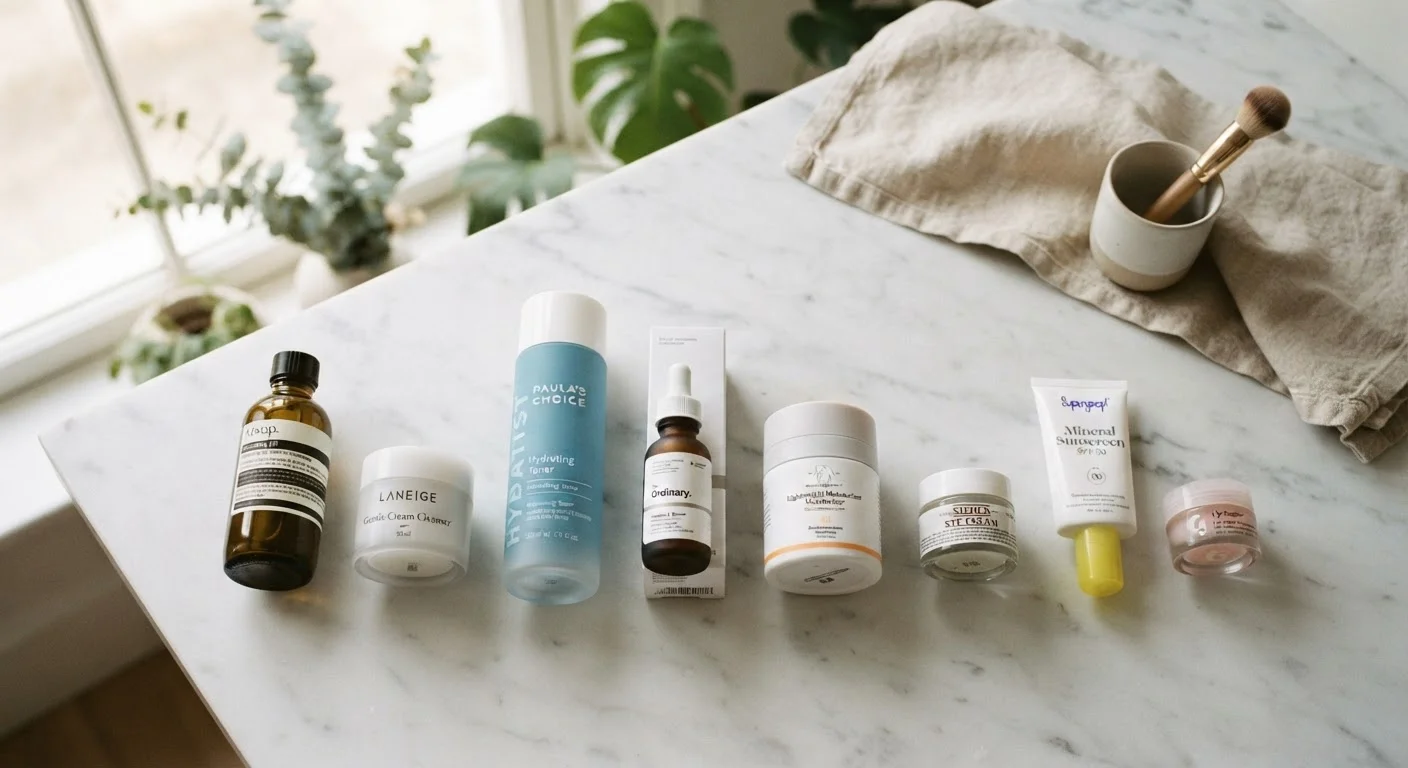
A practical response is shifting from lightweight gel or water-based moisturizers to richer formulas that contain barrier-supporting ingredients such as ceramides, glycerin, or petrolatum. These help seal moisture in rather than simply adding it. Applying immediately after bathing - while skin is still slightly damp - improves ingredient absorption. If dryness persists despite consistent moisturizing, the formulation or application method may be working against you; see why your moisturizer isn't fixing your dry skin for a closer look at common missteps.
Applying a richer moisturizer right after bathing helps lock in moisture before it escapes.
Adjust your SPF habits by season - but don't drop them
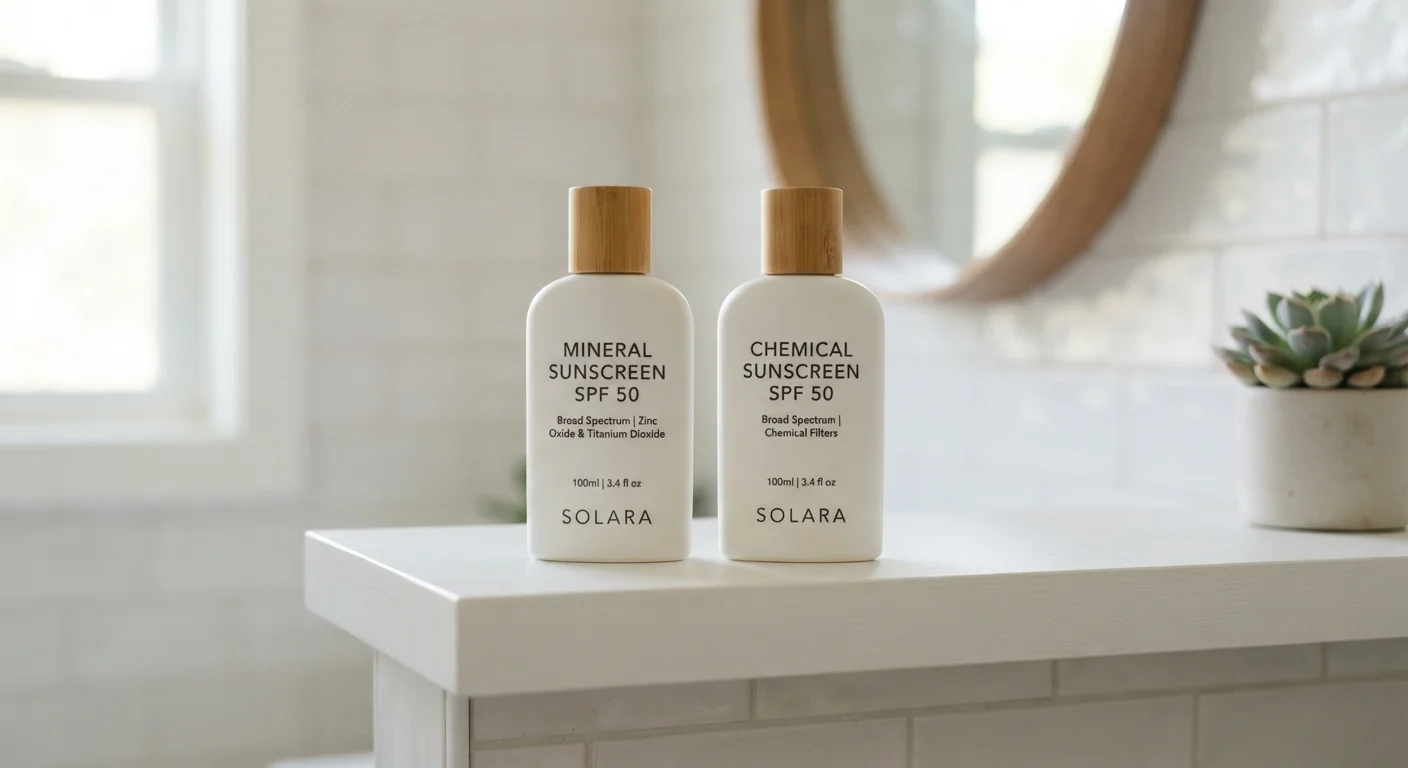
UV radiation is strongest in summer, but it's present year-round - including on overcast winter days. The seasonal shift worth making isn't about whether to wear sunscreen, but how you integrate it. In summer, higher UV index values mean broad-spectrum SPF 30 or above applied daily becomes especially critical, including on days spent mostly indoors near windows, which don't block UVA rays.
In winter, some people find that SPF-containing moisturizers offer a practical combination. What matters more than the season is consistent, adequate application - roughly a quarter-teaspoon for the face alone. Foundational skincare knowledge can help you build SPF into a sustainable daily routine rather than treating it as a seasonal extra.
UV rays are present year-round - the season changes intensity, not the need for protection.
Recalibrate hydration as temperature and activity shift
Thirst signals can be unreliable, and fluid needs genuinely vary with ambient temperature, humidity, and physical output. In summer, sweating increases fluid loss significantly; in winter, people often drink less water because they feel less thirsty - even while heated indoor environments quietly dehydrate them.
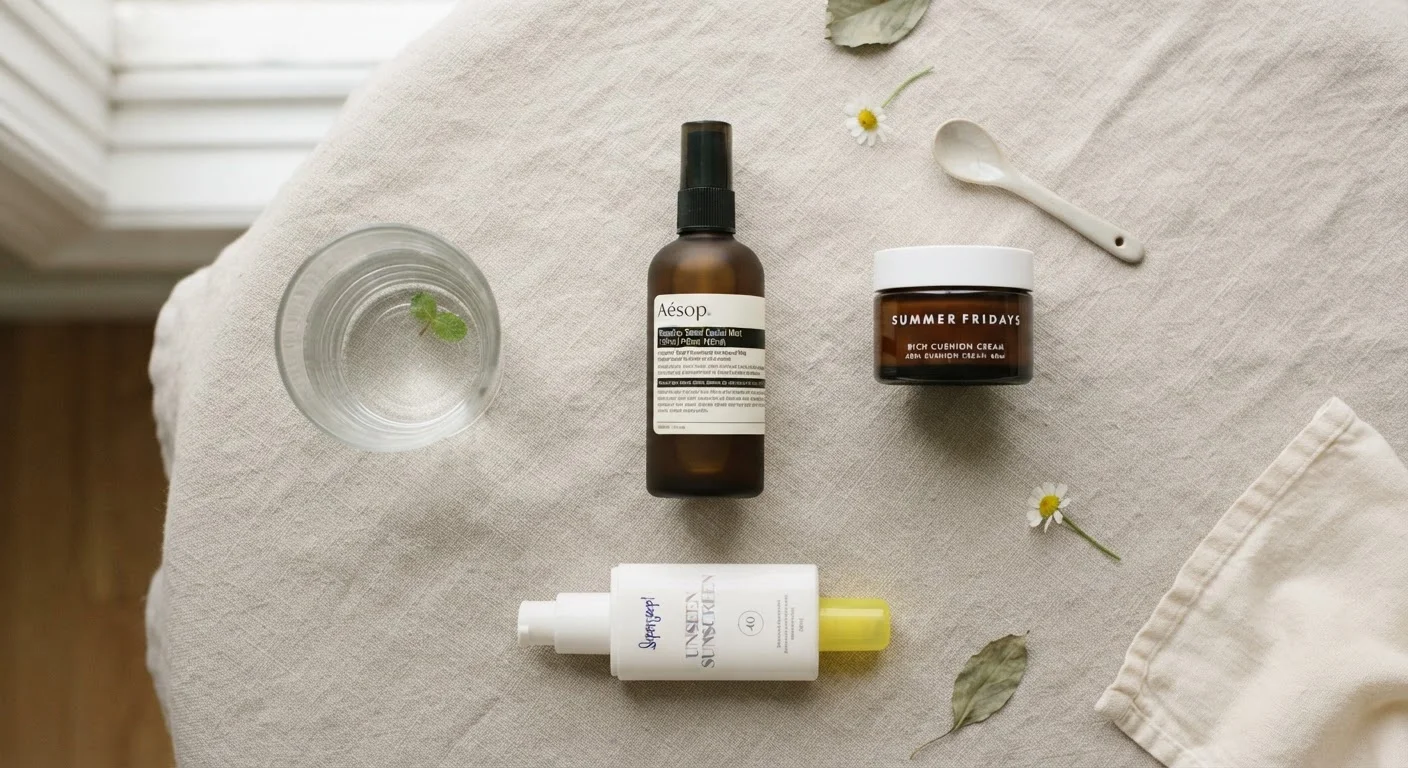
Consistent hydration supports skin plumpness, energy regulation, and kidney function. Rather than chasing a fixed daily target (blanket rules like "eight glasses a day" lack solid universal backing), a practical gauge is urine color: pale yellow generally indicates adequate hydration. What staying hydrated actually means for your body and skin explains the nuances that broad rules tend to miss.
Hydration needs are dynamic - temperature, humidity, and activity level all influence how much fluid you actually need.
Adapt your sleep routine to shifting daylight hours
The body's internal clock - the circadian rhythm - is heavily cued by light exposure. As daylight shortens in fall and winter, some people notice earlier fatigue, disrupted sleep timing, or low mood. In summer, extended daylight can push bedtimes later, fragmenting sleep for those sensitive to light.
Practical seasonal adjustments include using blackout curtains in summer to prevent early light exposure, and prioritizing morning light exposure in winter to help anchor the body clock. Consistent wake times across the week matter more than any single tactic. For a practical look at evening habits that support sleep quality regardless of season, see evening wind-down habits that support better sleep.
Consistent wake times and deliberate light exposure help anchor your body clock as daylight shifts.
Lighten your skincare formulas in summer heat
Higher humidity and heat in summer mean the skin produces more sebum and retains more surface moisture on its own. Heavy creams that work well in winter can feel occlusive, contribute to clogged pores, or simply sit uncomfortably on the skin in warm weather.
Switching to lighter humectant-based formulas - those featuring ingredients like hyaluronic acid or niacinamide - tends to work better in humid conditions. It's also worth reviewing how your skin actually behaves in each season, since perceived oiliness or dryness can shift meaningfully across the year. How skin types are actually defined offers useful context on what those changes mean and how to respond to them.
In humid summer heat, lighter formulas help your skin breathe without sacrificing adequate moisture.
Reassess your body care as seasons change
Body skin faces many of the same seasonal stressors as facial skin - windburn, dryness from heating systems, sweat and friction in summer - but it often gets less attention. Adjusting body lotion texture seasonally (thicker in winter, lighter in summer), paying attention to areas prone to dryness like elbows, knees, and shins, and being mindful of shower temperature all contribute to overall skin comfort.
Hot showers in winter can feel restorative but can disrupt the skin's lipid barrier; cooler or lukewarm water is generally gentler. What cold and warm showers each do for recovery and mood breaks down the trade-offs if you're weighing this habit. For broader body care context across life stages, how body care needs change across every life stage is worth a read.
Hot winter showers feel comforting but can disrupt the skin's protective lipid barrier.
Building a routine that moves with the calendar
Seasonal wellness isn't about following a rigid checklist - it's about staying observant. Notice how your skin feels in the first week of a new season. Track whether your sleep feels off as daylight shifts. Small feedback loops like these are more useful than any blanket rule.
If you're newer to thinking about skincare systematically, building foundational skincare knowledge is a useful starting point for understanding what your routine should accomplish at each time of year. And because life stage affects how skin responds to seasonal changes, wellness routines across the decades provides helpful context on why the same season may feel different as you get older.
This article is for general informational purposes only and does not constitute medical or dermatological advice. Consult a qualified healthcare professional for personalized guidance.
Start with one swap, not a full reset
Changing your entire routine at once makes it hard to know what's actually helping. Pick the single most relevant adjustment for the current season - often moisturizer weight in winter or SPF integration in summer - and give it two to four weeks before evaluating. Incremental changes are easier to sustain and troubleshoot.