Why Morning Routines Have a Specific Job
A morning skincare routine has a fundamentally different purpose than an evening one. While your PM routine focuses on repair and treatment - working with the skin's natural overnight renewal cycle - your AM routine is about protection and preparation. The goal is to reinforce the skin barrier, hydrate, and defend against the environmental stressors you'll encounter throughout the day: UV radiation, pollution, and fluctuating temperatures.
This distinction shapes which ingredients and products belong in the morning. As explored in our guide on why evening routines work differently, certain high-potency actives are deliberately reserved for nighttime, making the AM routine cleaner and more focused by design.
Understanding the job your morning routine is doing - rather than just following a list of steps - helps you make smarter product choices and avoid overloading your skin. For a broader look at how skincare fits into daily self-care, see our piece on building a sustainable personal wellness routine.
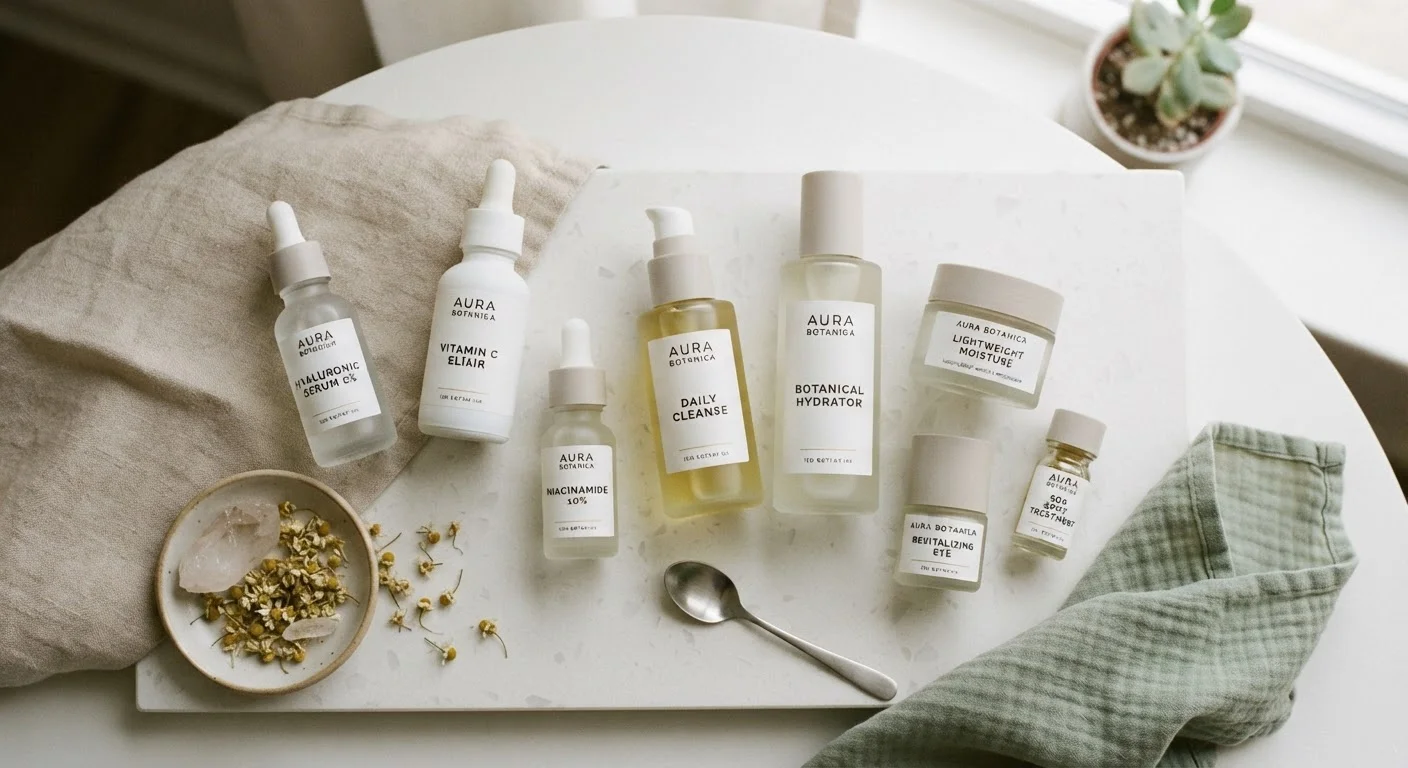
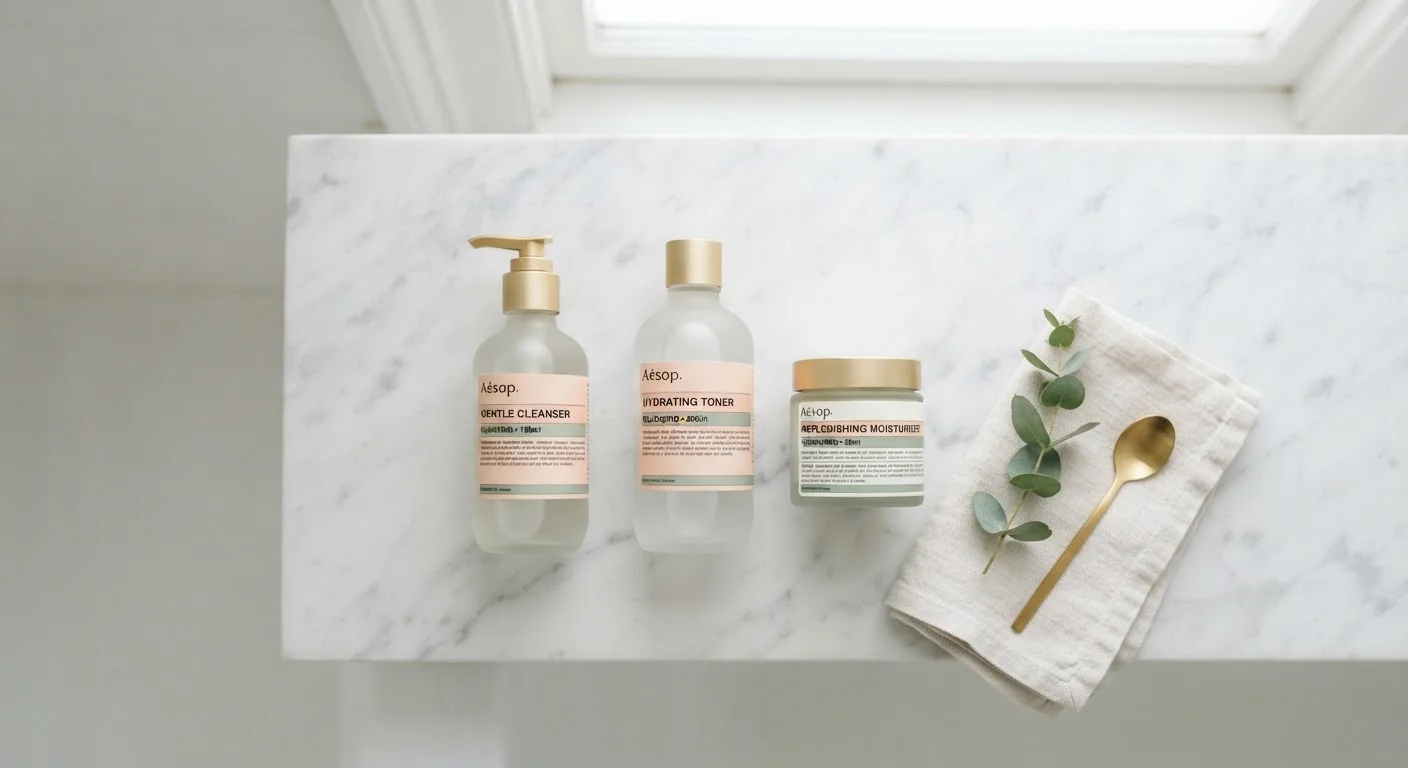
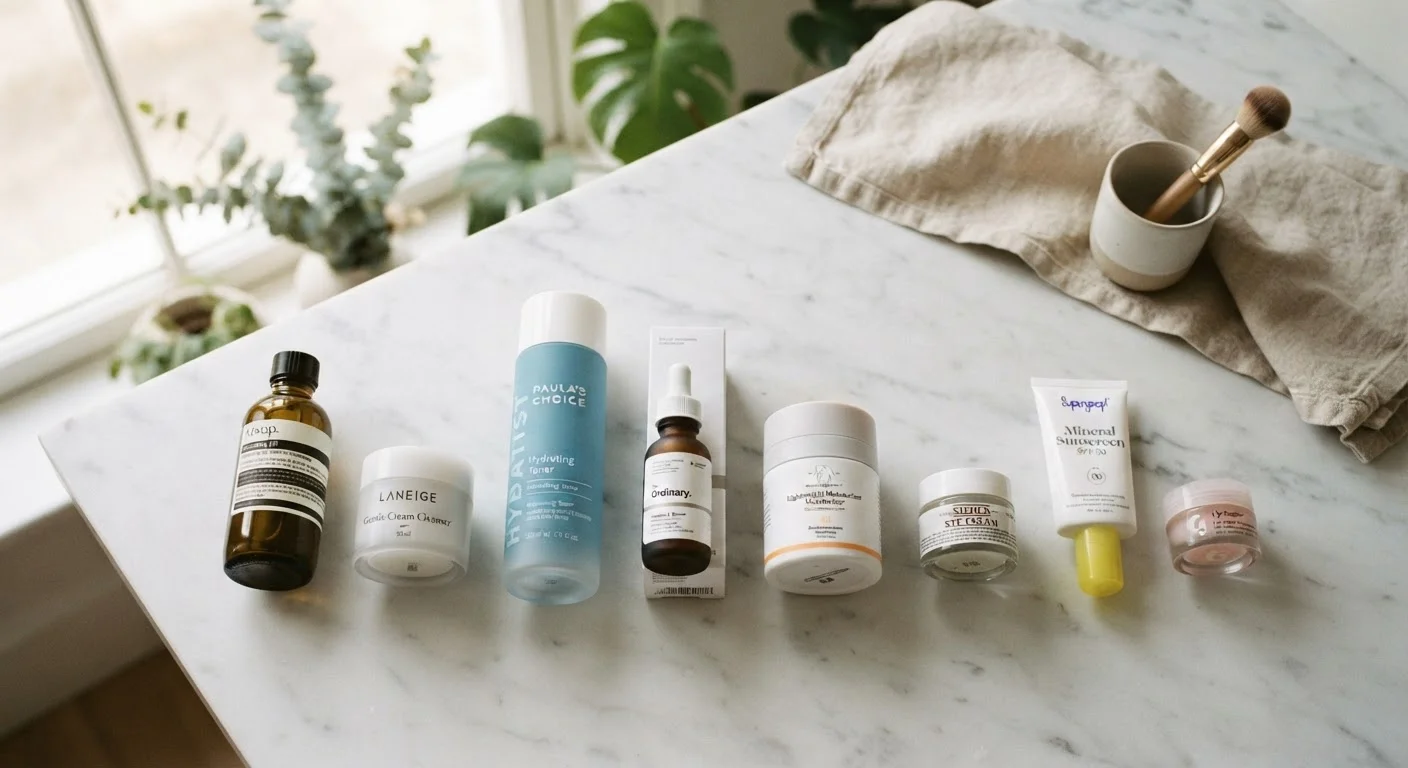
What you will need
Setting Up Your Step Sequence
Skincare products are designed to be applied in a specific order - and departing from that order reduces how well they work. The general rule is to layer from thinnest to thickest consistency: water-based formulas go on before oil-based ones, and lightweight serums go on before heavier moisturizers. This allows each product to absorb properly without being blocked by a denser formula applied first.
For a deeper look at the science behind this principle, our article on why product order matters in skincare walks through the mechanism in detail.
Gentle Facial Cleanser
Removes overnight sebum and residue without stripping the skin barrier.
Hydrating Toner
Restores moisture balance and preps skin to absorb subsequent products more effectively.
Vitamin C Serum
Provides antioxidant protection against environmental stressors during daytime hours.
Eye Cream
Addresses the delicate under-eye area with targeted hydration or brightening ingredients.
Facial Moisturizer
Seals in hydration and supports the skin's protective barrier throughout the day.
Broad-Spectrum Facial Sunscreen (SPF 30+)
Shields skin from UVA and UVB damage as the final layer in a morning routine.
The steps below follow this layering logic from start to finish. Not every step will apply to every person - a complete beginner can start with just cleanser, moisturizer, and sunscreen, then add steps as their skin's needs become clearer.
Don't Stack Conflicting Actives in the Morning
Certain ingredients - particularly retinoids, AHAs, and BHAs - are best reserved for nighttime use. In the morning, they can increase photosensitivity and reduce their own effectiveness when exposed to daylight. If your routine includes these ingredients, use them in your PM steps and keep your AM lineup focused on hydration and protection.
Cleanse Gently - Don't Over-Strip
In the morning, your skin hasn't been exposed to pollution or heavy makeup, so a mild cleanse is all that's needed. Use a gentle, low-lather cleanser suited to your skin type - gel formulas work well for oily or combination skin, while cream or milk cleansers suit dry and sensitive types. Massage into damp skin for 30-60 seconds, then rinse with lukewarm water. Pat (don't rub) dry with a clean towel.
Some people with dry or sensitive skin prefer to rinse with water alone in the morning, reserving cleanser for evenings. Both approaches are valid - the goal is to start with a clean, balanced surface, not a squeaky-clean, tight one.
Apply Toner (If It's Part of Your Routine)
Toner is an optional but useful step for many skin types. Modern hydrating toners - often containing hyaluronic acid, glycerin, or niacinamide - add a thin layer of moisture and help prime skin to absorb what comes next. Apply with clean hands or a cotton pad, patting lightly rather than wiping.
Skip toners labelled as 'astringent' or containing high concentrations of alcohol in the morning - these can over-dry skin and compromise the protective barrier you want intact going into the day.
Apply Serum Targeted to Daytime Use
If your routine includes a serum, the morning is the right time for antioxidant-focused formulas. Vitamin C (L-ascorbic acid) is one of the most researched antioxidants for daytime skin protection - it helps neutralize free radicals generated by UV exposure and environmental pollutants, making it a logical partner to sunscreen.
Apply a few drops to clean skin after toner, pressing gently into the face and neck. Allow it to absorb for about 60 seconds before moving to the next step. Reserve treatment serums containing retinoids, exfoliating acids (AHAs/BHAs), or prescription-strength actives for nighttime - they don't belong in a morning routine.
Apply Eye Cream (Optional)
If you use an eye cream, apply it after your serum and before moisturizer - the under-eye area is thinner and more delicate than the rest of the face, and it benefits from targeted hydration. Use your ring finger to gently tap (not drag) a small amount along the orbital bone. Morning formulas often contain caffeine or peptides to temporarily reduce puffiness.
Eye cream is genuinely optional. If your moisturizer is gentle and non-irritating, it can do the job in that area without a separate product.
Moisturize to Lock In Hydration
Moisturizer serves as a functional step in the morning, not just a comfort one. It reinforces the skin barrier, seals in the hydration delivered by previous steps, and creates a smooth base for sunscreen. Apply while skin is still slightly damp from your serum or toner for better absorption.
Texture matters here: those with oily or acne-prone skin typically do better with lightweight, oil-free gels or fluids; dry skin types benefit from richer creams. Combination skin can use a lighter lotion overall, or spot-apply different formulas to different zones.
Finish with Sunscreen - Every Single Day
Sunscreen is the most critical step in any morning routine and should always come last (before makeup, if you wear it). Apply a broad-spectrum formula - meaning it protects against both UVA and UVB rays - with at least SPF 30. For most adults, about a quarter-teaspoon is needed for adequate facial coverage.
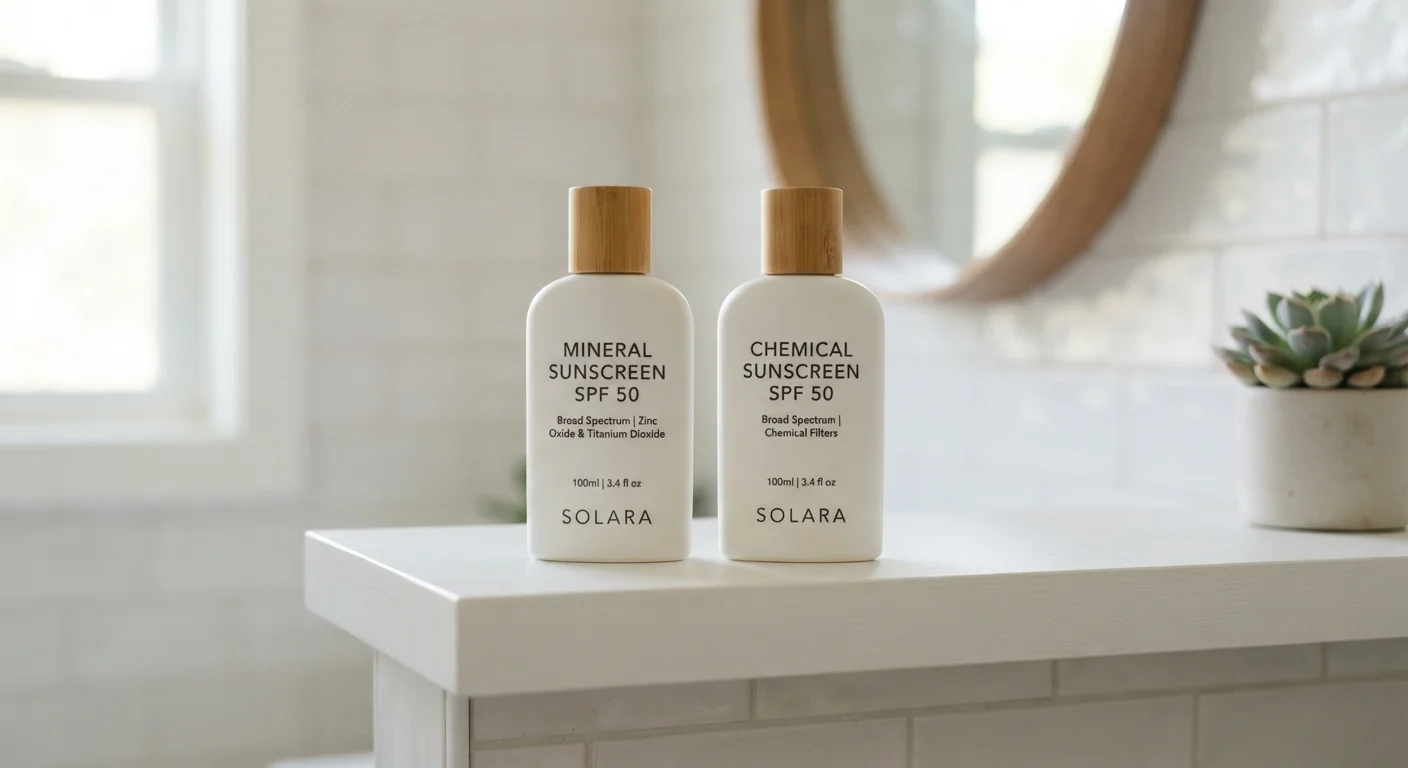
Chemical sunscreens (containing ingredients like avobenzone or oxybenzone) absorb UV rays and typically sit seamlessly under makeup. Mineral sunscreens (zinc oxide, titanium dioxide) physically deflect UV and tend to suit sensitive skin, though some formulas leave a white cast. Hybrid formulas blend both. Whichever type you choose, consistent daily application is what delivers results - not which formula is 'best.'
Consistency Beats Complexity Every Time
Research in dermatology consistently shows that a simple routine followed daily produces better skin outcomes than an elaborate one followed sporadically. If your current routine takes more than 10 minutes, consider which steps you reliably skip - those are candidates to cut. See signs you may be overcomplicating your routine for a practical checklist.
Maintaining Your Routine Over Time
Building a routine is one thing; keeping it consistent is another. Dermatologists generally recommend giving any new routine at least four to six weeks before evaluating results - skin cell turnover takes time, and products often don't show their full effect immediately. Resist the urge to add new products frequently, which can make it difficult to identify what's helping or causing a reaction.
Pay attention to how your skin behaves across seasons. Skin that's oily in summer may need a richer moisturizer in winter. Adjusting for climate and environment is sensible; overhauling your entire routine isn't usually necessary.
If your routine has crept up to seven or eight products, it's worth pausing to ask whether each one is earning its place. More products introduce more opportunities for irritation, ingredient conflicts, and inconsistency. Our editorial on signs your skincare routine is too complicated offers a practical framework for editing it down.
Sunscreen Is Not Optional
UV exposure is the leading environmental cause of premature skin aging and skin damage, and it occurs even on overcast days and through windows. Applying a broad-spectrum SPF 30 or higher every morning - as the very last skincare step, before makeup - is the single most evidence-supported habit in any AM routine. No other product in your lineup compensates for skipping it.
This article is for general informational purposes only and is not a substitute for advice from a licensed dermatologist or healthcare professional. If you have a skin condition, persistent irritation, or concerns about a specific ingredient, consult a qualified professional before making changes to your routine.