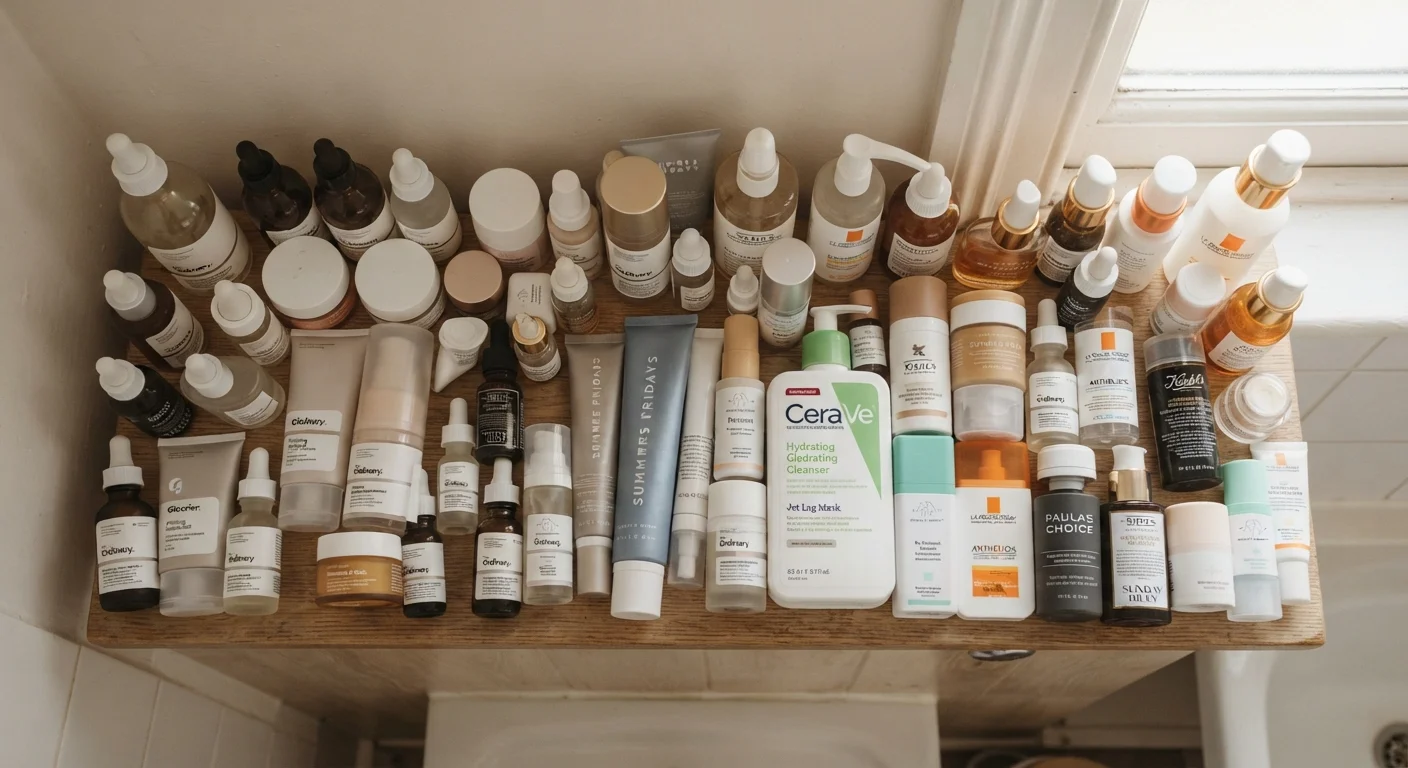
More products don't always mean better skin. Discover the signals that your routine has grown beyond what your skin can actually benefit from.
Key Takeaways
More skincare steps do not automatically lead to better skin - they can backfire.
Persistent irritation, breakouts, or dryness may signal product overload rather than product deficiency.
A simplified routine built on a few well-chosen steps is often more effective than a complex one.
Your skin barrier is the foundation of healthy skin - overloading it can compromise its function.
Auditing your routine regularly helps you identify what is genuinely working versus what is adding noise.
Why Routine Complexity Becomes a Problem
Building a skincare routine often starts with good intentions - a cleanser here, a serum there - and gradually expands into a multi-step ritual that takes 20 minutes and a spreadsheet to track. But more steps do not always translate into better skin. In fact, layering too many active ingredients, using conflicting formulas, or disrupting your skin's natural processes can cause more harm than a bare-minimum routine ever would.
The skin barrier - a thin but critical layer of lipids and proteins that keeps moisture in and irritants out - is particularly vulnerable to over-treatment. When this barrier is repeatedly disrupted by harsh actives, excessive exfoliation, or incompatible products, skin tends to respond with redness, flaking, breakouts, or increased sensitivity. These are the same symptoms many people try to treat by adding more products, which deepens the cycle.
Understanding when you have gone too far is a skill in itself. The checklist below gives you a structured way to audit your current routine and identify the signals that simplification might serve your skin better than expansion.
Check whether your skin is consistently red, tight, or sensitive even when you have not changed products - chronic low-grade irritation is a hallmark of over-treatment.Must
Notice if you are experiencing more breakouts than usual despite using products marketed for acne - layering multiple actives can disrupt the skin microbiome and trigger congestion.Must
Look for flakiness or peeling that is not explained by weather or dehydration - this often signals the skin barrier is compromised from over-exfoliation.Must
Assess whether your skin feels oilier than expected - over-stripping the skin with too many cleansing or drying steps can trigger compensatory oil production.Should
Take note if skin products sting or burn on application more than they used to - this can indicate a sensitized or compromised barrier.Must
Routine Complexity Audit
Count the number of steps in your morning and evening routines - if either exceeds six distinct products, review whether each one has a clear, non-overlapping purpose.Must
List all the active ingredients (such as retinoids, AHAs, BHAs, vitamin C, benzoyl peroxide, and niacinamide) in your current routine and flag any known incompatible pairs being used at the same time.Must
Identify how many products contain exfoliating acids - using more than one acid-based product in the same routine is rarely beneficial and often counterproductive.Must
Check whether you are using both a morning and evening retinoid or vitamin C without a break - high-frequency use of potent actives needs to be earned gradually.Should
Review whether you have a product for every perceived flaw - chasing multiple concerns simultaneously with multiple actives is a common path to irritation.Should
Behavioral and Habit Signals
Reflect on how long your routine actually takes - if it consistently exceeds 15 minutes morning or evening, complexity may be reducing consistency, the single biggest driver of results.Should
Ask yourself whether you frequently skip your full routine because it feels like too much effort - an unsustainable routine is as ineffective as no routine at all.Must
Consider whether you have introduced more than one new product in the last two weeks - doing so makes it impossible to isolate what is helping or hurting your skin.Should
Notice if you are shopping for new products before giving current ones a fair trial - most evidence-based skincare actives require at least four to eight weeks of consistent use to show meaningful change.Should
Simplification Readiness Check
Identify the one to three products in your routine that you have used consistently for more than eight weeks and that appear to be helping - these are your keepers.Must
Set aside any product you have not used in the past two weeks - if it does not fit consistently into your routine, it may not belong there.Should
Confirm that you have a daily broad-spectrum SPF as part of your morning routine - this single step has more evidence behind it than almost any other skincare product.Must
Plan a two-to-four week period using only cleanser, moisturizer, and SPF if your skin is currently showing multiple signs of irritation - a reset gives you a clean baseline.Nice to have
What to Do If You Recognize These Signs
If several items on the checklist above apply to you, the most practical first step is a skin reset: stripping your routine back to three core steps - a gentle cleanser, a basic moisturizer, and a broad-spectrum SPF in the morning. Give this simplified routine two to four weeks before reintroducing any actives. This waiting period allows your barrier time to repair itself and gives you a clearer baseline to evaluate what your skin actually needs.
Don't Quit Active Ingredients Too Abruptly
If you are currently using a prescription-strength active such as a retinoid prescribed by a dermatologist, do not stop use without consulting them first. Prescription skincare has specific protocols for pausing or tapering. Over-the-counter actives can generally be set aside safely, but if you are uncertain, a quick check with a skincare professional is always worth it.
When you do reintroduce products, add only one new item at a time, spaced at least two weeks apart. This is the only reliable way to know which ingredient is delivering results - or causing problems. Keep notes if that helps you track changes.
If you are building or rebuilding your morning routine from scratch, our morning skincare routine walkthrough offers a practical, step-by-step structure. For evenings, the needs differ - skin's repair processes behave differently at night, so it is worth reading our guide to nighttime skincare before loading up your PM steps. And if persistent dryness is part of what drove you to add more products, why your moisturizer isn't fixing your dry skin may help identify the real culprit.
This article is for general informational and educational purposes only. It is not a substitute for professional dermatological or medical advice. If you are experiencing persistent skin symptoms, consult a qualified dermatologist or healthcare provider.
Beauty Editorial Team is the collective byline for our editorial team and contributor network. Articles published under this byline or an editorial pen name are researched, written, and reviewed according to our editorial standards for clarity, consistency, and independence before publication.
The content on this site is for informational purposes only and is not a substitute for professional advice. Always consult a qualified professional for guidance specific to your situation.