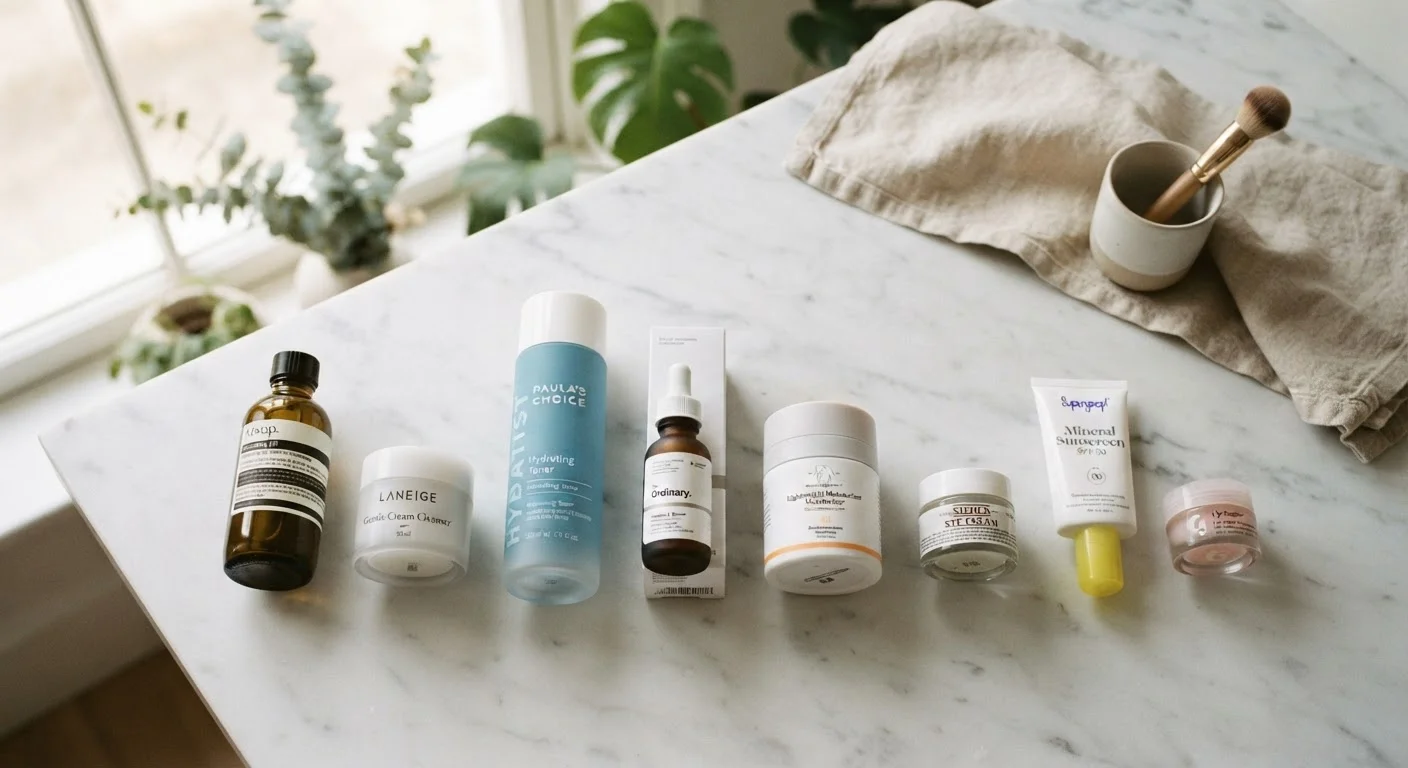
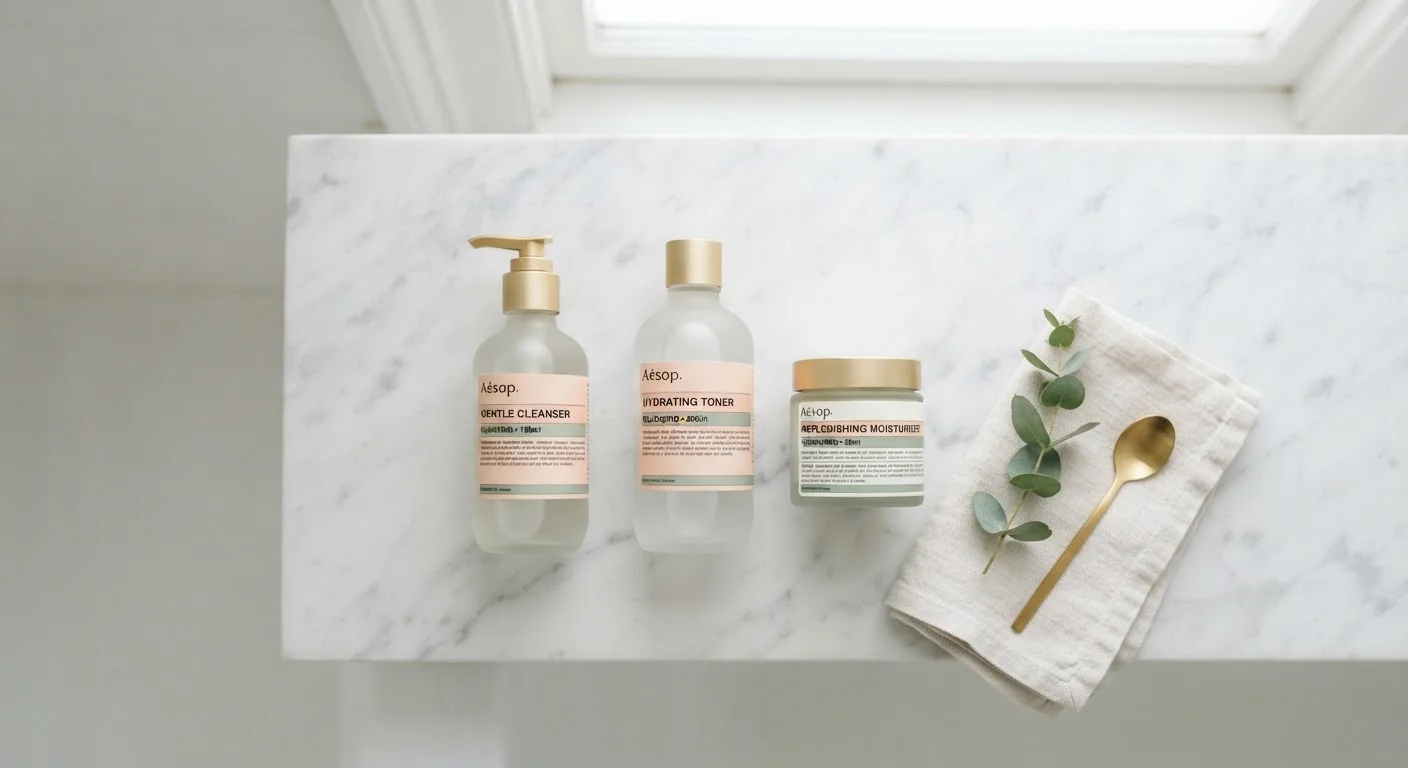
Why Sequence Is a Science, Not Just a Suggestion
Most skincare missteps aren't about choosing the wrong product - they're about applying the right product at the wrong moment. Skin is a layered organ with a semi-permeable surface, and what you put on first influences whether what comes next can penetrate, sit on top, or get blocked entirely.
The foundational principle is straightforward: move from thinnest to thickest. Water-based, lightweight formulas absorb into skin more easily when applied to a clean, unobstructed surface. Heavier creams and oils form a partial seal over the skin, which is exactly what they're designed to do - but that seal also slows or stops the absorption of anything applied afterward.
Think of it like priming a wall before painting. Skipping or reordering steps doesn't necessarily ruin everything, but it does mean you're not getting the full benefit of the products you've paid for. If you're trying to build a routine that actually works, starting with the essentials is the clearest path forward.
~20 min
Recommended wait time between active layers
Dermatologists commonly suggest allowing 10-20 minutes between applying treatment serums and moisturizer to allow absorption - though this varies by formulation and skin type.
2 steps
Minimum effective routine (cleanser + moisturizer)
Dermatology guidelines consistently indicate that a basic two-step routine of gentle cleansing and moisturizing can maintain a healthy skin barrier for most people.
pH 4.5-5.5
Healthy skin surface pH range
Research published in dermatology literature indicates the skin's surface is mildly acidic; using high-pH cleansers can temporarily disrupt this balance, affecting how well subsequent products perform.
Step One: Cleanser Sets the Foundation
No active ingredient - no matter how well formulated - can work efficiently on skin covered in sunscreen residue, excess sebum, or environmental pollutants. Cleansing is the non-negotiable first step because it creates a clean, receptive surface.
In the morning, a gentle, low-pH cleanser removes overnight oil buildup without stripping the skin barrier. In the evening, cleansing (sometimes double cleansing if you've worn sunscreen or makeup) removes the day's accumulation before treatment products are applied.
The goal isn't to scrub aggressively - it's to clear the surface so everything that follows can actually reach the skin. Over-cleansing, particularly with harsh foaming formulas, can disrupt the skin's natural moisture barrier, making skin more reactive and less able to retain hydration. For evening-specific considerations, see how PM routines work differently.
Cleanse Gently to Protect Your Barrier
Look for cleansers labeled 'low-pH' or 'gentle' with a short, straightforward ingredient list. Foaming cleansers with sulfates can be effective but may be too stripping for dry or sensitive skin types. If your skin feels tight or uncomfortable immediately after cleansing, that's a signal the formula may be disrupting your barrier rather than simply cleaning it.
Step Two: Toner Prepares, Doesn't Just Refresh
Toner is one of the most misunderstood steps in a skincare routine. Older formulations were often alcohol-heavy astringents that stripped the skin - but modern toners serve a genuinely useful purpose when chosen correctly.
Contemporary toners broadly fall into two categories: hydrating toners, which add a layer of water-binding ingredients (like glycerin or hyaluronic acid) to plump skin before serums; and exfoliating toners, which contain low concentrations of acids (like AHAs or BHAs) to gently resurface skin and refine texture. To understand how these acids work, a plain-English guide to exfoliating acids is worth reading before adding one to your routine.
Toner is applied after cleansing - to slightly damp skin for hydrating formulas, or to fully dry skin for exfoliating ones. It's optional, but when it fits your skin's needs, it helps condition the surface and improve how well subsequent products absorb.
Step Three: Moisturizer Locks It All In
Moisturizer's job is to support the skin's natural barrier and reduce water loss - a process called transepidermal water loss (TEWL). It goes near the end of your routine because it helps trap the ingredients you've applied beneath it, extending their contact time with the skin.
A common frustration is applying moisturizer consistently but still experiencing dryness. This often comes down to timing or application order. If moisturizer goes on before a serum, the serum's active ingredients have to push through the moisturizer layer to reach the skin - which reduces absorption significantly. Why your moisturizer might not be fixing dry skin explores this further.
In the morning, moisturizer is followed by sunscreen - always the final step, since layering over SPF disrupts the protective film it forms. At night, a slightly richer moisturizer or a facial oil can be used as the last step to support overnight recovery. For a structured look at the full morning sequence, see building a morning skincare routine that holds up through the day.
Sunscreen Is Not Optional in the Morning
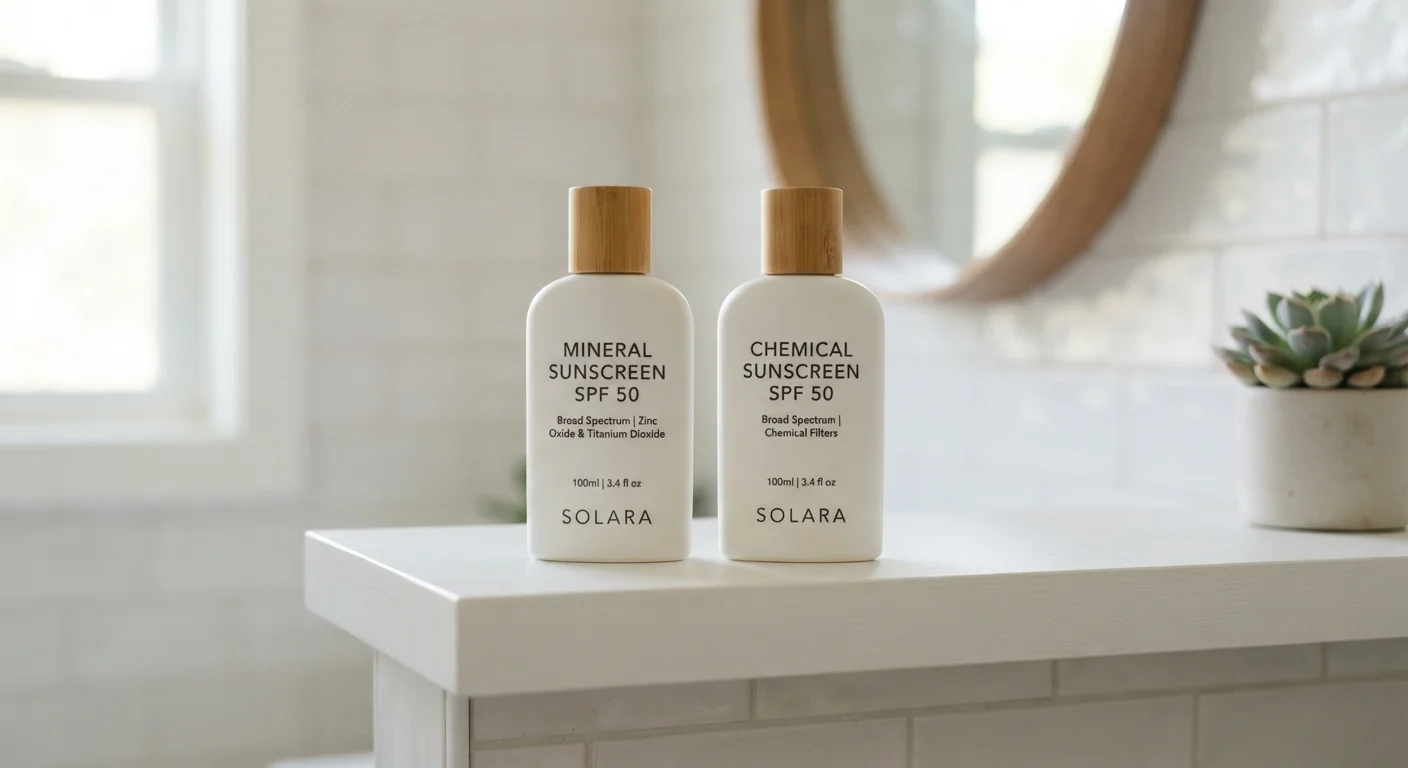
Sunscreen belongs at the end of your morning routine - after moisturizer, before makeup if you wear it. It's not interchangeable with moisturizer, even if a moisturizer contains SPF. Standalone sunscreen applied last gives you more reliable, tested protection. Reading ingredient labels can help you identify what's actually in SPF-labeled moisturizers.
Where Serums and Treatments Fit
For anyone using targeted treatments - a vitamin C serum in the morning, a retinol product at night - these go between toner and moisturizer. Serums are formulated to deliver a high concentration of active ingredients into the skin, which means they need direct, unobstructed contact with the skin's surface.
Layering multiple actives in a single routine requires some care. Certain combinations can cause irritation when applied together: retinol and strong exfoliating acids, for example, are typically better used on alternate evenings rather than simultaneously. Understanding how retinoids work can help you decide when and how to incorporate them. If your routine is growing complex, it's worth checking whether you're overcomplicating your routine before adding more steps.
This article is for general informational and educational purposes only. It is not a substitute for personalized advice from a qualified dermatologist or skincare professional. If you have a skin condition or sensitivity, consult a healthcare provider before starting or changing your skincare routine.