Why Skin Behaves Differently at Night
During the day, your skin is in defense mode. It's managing UV exposure, pollution, temperature shifts, and humidity changes. By the time evening arrives, that protective focus shifts - and the biology changes along with it.
Research in chronobiology (the study of biological rhythms) shows that skin cell proliferation - the process of generating new cells - peaks during the nighttime hours. Skin also experiences higher rates of water loss overnight, a process called TEWL. These two facts together explain why your PM skincare choices carry more weight than many people realize.
This isn't a marketing concept. It reflects how circadian rhythms govern the skin's activity cycle. Understanding this helps you see your evening routine not as a repeat of the morning's steps, but as a distinct opportunity.
Evening Routines and Your Overall Wind-Down
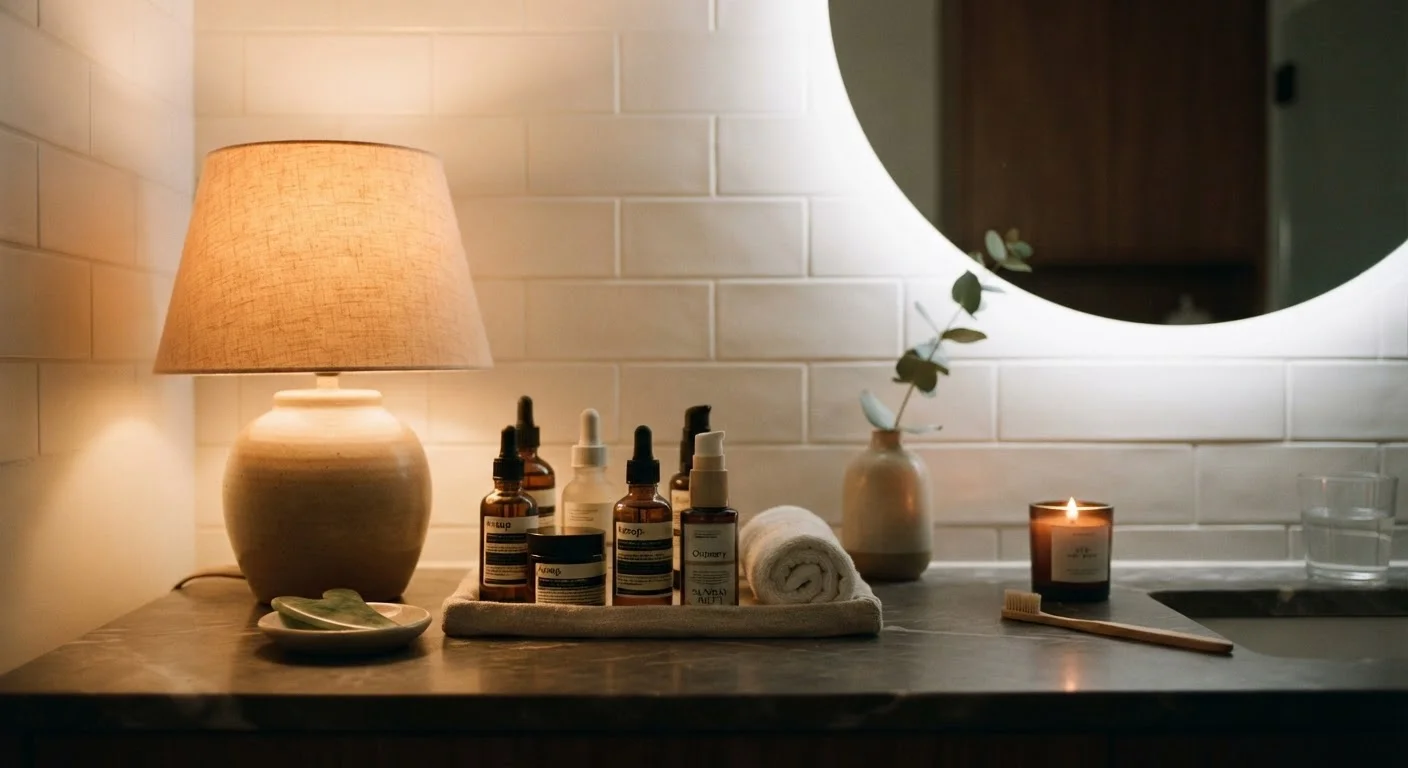
Skincare isn't just functional - for many people, it's part of a broader pre-sleep ritual that signals the body it's time to rest. The act of completing a consistent PM routine can itself contribute to a calmer transition to sleep. This connection between skincare habits and wider wellness is worth considering when building your evening routine.
For a broader look at how evening habits affect your body's wind-down process, see our guide to evening wind-down habits.
What an Evening Routine Is Actually Trying to Do
Morning routines are largely about protection: applying SPF, antioxidants, and lightweight hydration before facing the day. Evening routines have a different job: repair and replenishment.
That means prioritizing steps that:
- Remove the day's accumulation of sunscreen, pollutants, makeup, and sebum
- Deliver active ingredients that work best undisturbed overnight
- Lock in moisture to compensate for increased nighttime water loss
The contrast with your AM steps is worth understanding directly. Our article on building a morning skincare routine walks through the AM logic - comparing the two helps clarify why PM steps are structured the way they are.
~11 PM
Peak window for skin cell renewal
Chronobiology research suggests skin cell proliferation is highest between approximately 11 PM and midnight, aligning with why PM routines can be especially effective.
25-30%
Increase in transepidermal water loss during sleep
Studies on skin barrier function indicate that TEWL rises meaningfully overnight, supporting the case for richer nighttime moisturizers.
The Role of Cleansing - and Why It Matters More at Night
Cleansing is arguably the most important PM step, and it deserves more credit than it usually gets. Throughout the day, your skin accumulates SPF residue, environmental particles, natural oils, and - if you wear it - makeup. None of these belong on your skin overnight.
Leaving them in place doesn't just risk breakouts. It actively interferes with what comes next. Active ingredients applied over a film of buildup are less able to reach the skin cells they're designed to support.
If you wear SPF or makeup, a double cleanse is a widely used approach: an oil-based cleanser first to dissolve oil-based residue, followed by a water-based cleanser to clear the skin more thoroughly. If your day was light - no makeup, minimal SPF - a single gentle cleanse is typically sufficient.
Once cleansing is done, the sequence of what follows matters. Our guide to product layering order explains the reasoning behind the sequence so you can apply it to your own routine.
PM-Specific Ingredients Worth Understanding
Several skincare ingredients are specifically recommended for nighttime use. Understanding why helps you make sense of product instructions rather than just following them blindly.
Retinol and Retinoids
These vitamin A derivatives are among the most studied ingredients in skincare. They're linked to supporting cell turnover and collagen production. They're recommended for PM use because UV light degrades retinol and increases the risk of sun sensitivity. For a deeper look at how these two forms compare, see our article on retinol versus retinoids.
AHAs and BHAs
Alpha-hydroxy acids (like glycolic and lactic acid) and beta-hydroxy acids (like salicylic acid) are chemical exfoliants. AHAs in particular can increase photosensitivity, making them better suited to evening use followed by SPF in the morning.
Peptides and Richer Moisturizers
Peptides support the skin's structural proteins and are generally well-tolerated at any time, but pairing them with a richer overnight moisturizer at night takes advantage of the skin's elevated absorption and repair activity.
Start Simple, Then Build
If you're new to evening skincare, start with just two steps: a cleanser and a moisturizer. Once that feels consistent, add one targeted treatment - like a retinol or an exfoliating acid - and give your skin several weeks to adjust before assessing whether to add anything else.
Keeping It Manageable
A common mistake is treating the PM routine as the time to use every product you own. More steps don't automatically mean better skin - and layering too many actives together can irritate rather than improve. If you're noticing redness, sensitivity, or a routine that's become burdensome, it may be worth simplifying. Our piece on signs you're overcomplicating your skincare routine covers the indicators to watch for.
A sustainable PM routine for most people involves: thorough cleansing, one targeted treatment (if needed), and a moisturizer appropriate to your skin type. Consistency with a simple sequence tends to produce more reliable results than an elaborate routine followed sporadically.
As seasons shift, the products you choose may need to shift too. Heavier emollients in winter, lighter textures in summer - our article on seasonal skin adjustments covers how to adapt.
This article is for general informational purposes only and is not a substitute for personalized advice from a qualified dermatologist or healthcare professional. If you have specific skin concerns or conditions, consult a licensed professional.