
How Each Method Works
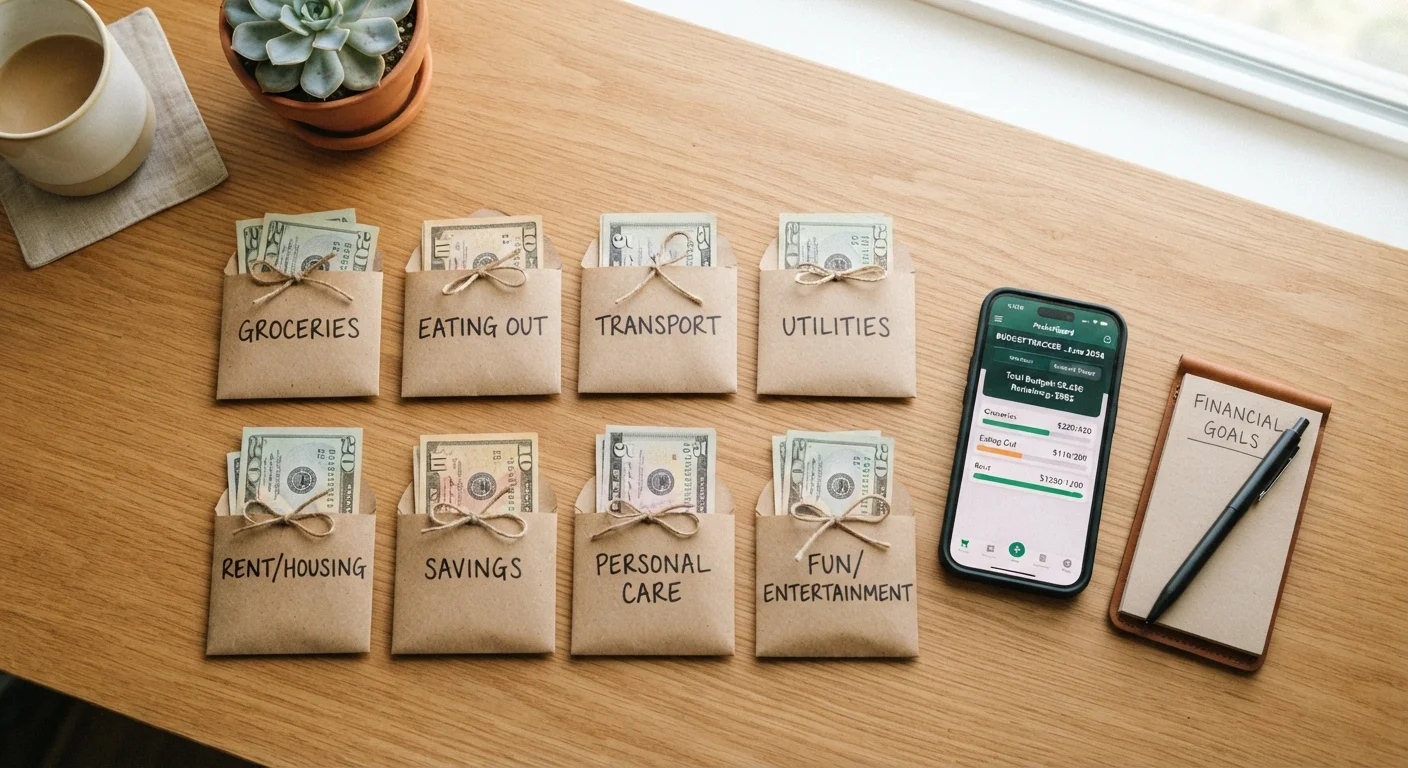
Envelope budgeting is a cash-based system where you divide your take-home pay into physical envelopes, each labeled for a spending category - groceries, gas, dining out, entertainment. When an envelope is empty, spending in that category stops until the next pay period. No exceptions. This friction is the point: handling cash makes spending feel real in a way that swiping a card often doesn't.
Digital spending trackers - apps and tools that link to your bank accounts and cards - pull transaction data automatically and sort it into categories. You set spending targets, and the app flags when you're approaching or over your limits. The appeal is convenience: there's no cash to handle, and your full financial picture updates in near real-time.
If you're new to either approach, the fundamentals of personal budgeting are a useful starting point before choosing a system.
Where Each Method Breaks Down
Cash envelopes struggle the moment spending moves online. Subscriptions, bill autopayments, and online purchases don't fit neatly into a physical envelope. Managing cash also requires more effort - trips to the ATM, making change, keeping envelopes organized. For people with irregular income, resetting envelopes each pay period can feel cumbersome when the paycheck amount changes.
Digital trackers have a different failure point: passive awareness doesn't equal changed behavior. Many users check their app, see they've overspent on restaurants, feel a moment of concern, and then continue the same pattern. The app records everything but changes nothing on its own. There's also a security consideration - linking financial accounts to third-party apps carries data-sharing implications worth understanding before you connect.
Awareness Alone Won't Change Spending
Digital trackers are powerful data tools, but data doesn't automatically change behavior. If you find yourself regularly reviewing your app, seeing overspending, and continuing the same patterns, the tracker is functioning correctly - but the budget isn't working. Consider pairing it with a more restrictive mechanism, like cash envelopes, for the categories where the pattern repeats.
A related challenge for both methods is irregular expenses - annual insurance premiums, medical co-pays, car repairs - that fall outside monthly categories. Explore spending categories most budgets overlook to account for these in advance.
Side-by-Side Comparison
The table below compares envelope budgeting and digital trackers across the criteria that matter most to everyday budgeters.
| Envelope Budgeting | Digital Spending Tracker | |
|---|---|---|
| Setup effort | Moderate - requires cash withdrawals and envelope prep | Low - links to accounts automatically |
| Works for online purchases | Poorly - cash doesn't translate to digital spend | Yes - tracks card and bank transactions seamlessly |
| Overspending prevention | Strong - empty envelope physically stops spending | Weak - alerts inform but don't block spending |
| Visibility into full finances | Limited - only covers cash categories | High - aggregates accounts in one place |
| Suits irregular income | Challenging - resetting envelopes each period varies | Better - flexible category adjustments month to month |
| Learning curve | Minimal - intuitive and tactile | Low to moderate - depends on app complexity |
| Data security considerations | None - no accounts linked | Requires sharing login credentials with third-party apps |
For a broader look at how different budgeting frameworks stack up, the 50/30/20 rule vs. zero-based budgeting comparison covers two other widely used approaches.
Choosing the Right Fit - or Combining Both
The most honest answer is that the better system is the one you'll actually use consistently. Research on habit formation consistently shows that friction reduction improves follow-through - which is why digital tools attract users who find cash management tedious, while envelope systems attract people who need spending to feel concrete and final.
Try a Targeted Hybrid Approach
You don't have to choose one method for everything. Assign cash envelopes only to the one or two categories where your spending reliably runs over. Use a digital tracker for fixed expenses, bills, and card-based purchases. This combination gives you behavioral guardrails where they matter most without the logistical burden of managing all spending in cash.
A hybrid approach works well for many people: use cash envelopes only for the two or three categories where you chronically overspend (typically dining, entertainment, or clothing), and let a digital tracker handle fixed bills and subscriptions. This concentrates the discipline where it's most needed without requiring you to manage all spending in cash.
It's also worth acknowledging that strict budgeting of any kind involves tradeoffs. The tradeoffs of strict budgeting are worth understanding so you can design a system that's firm where it needs to be and flexible enough to sustain. Once you have a method, plugging it into a complete budgeting framework helps ensure your day-to-day tracking connects to longer-term financial goals.
This article is for general informational and educational purposes only and does not constitute personalized financial advice. Consider consulting a qualified financial professional for guidance specific to your situation.