
The Core Definition: What a Budget Actually Is
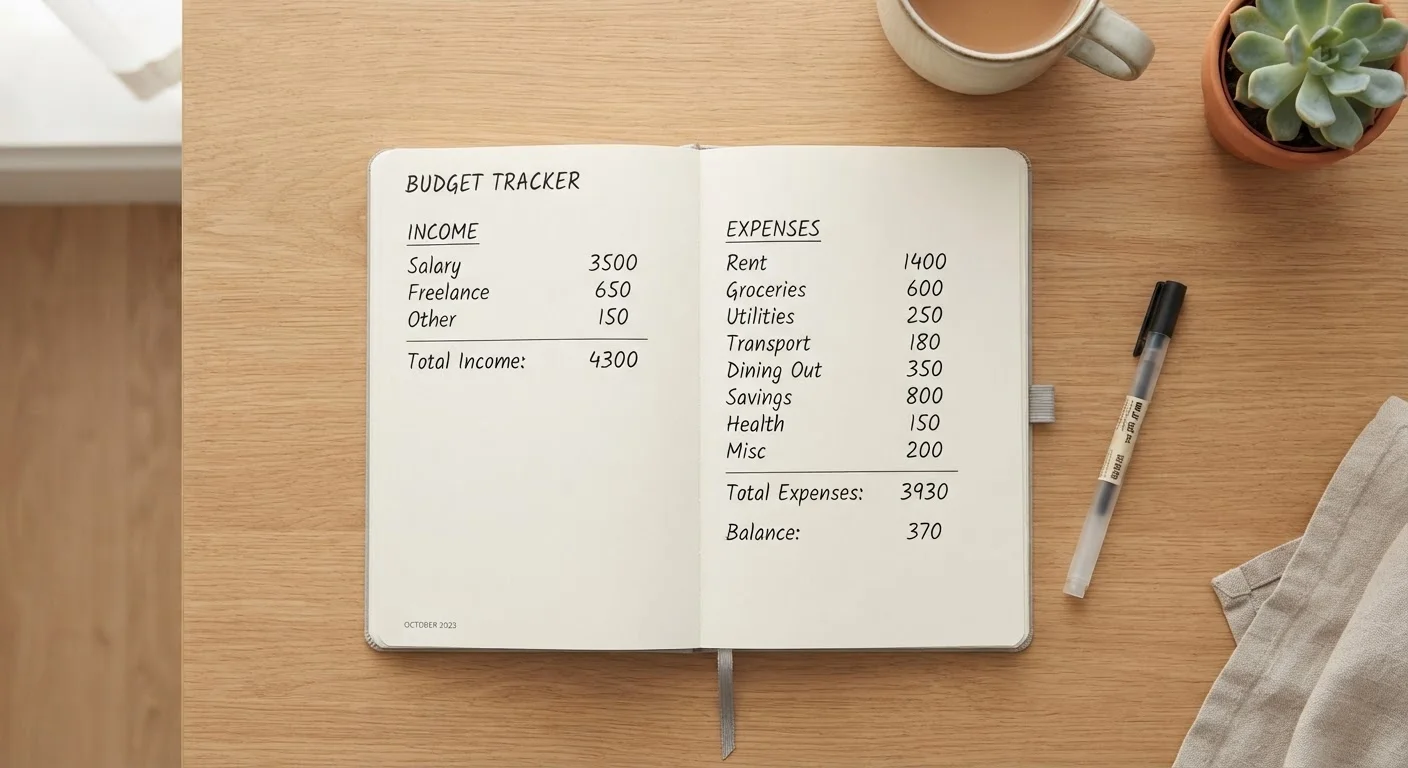
Strip away the apps, spreadsheets, and financial jargon, and a budget is simply this: a plan that tells your money where to go before you spend it. You list what you expect to earn in a given period, list what you expect to spend, and make sure those two numbers work together.
That's it. A budget doesn't have to be complicated. It doesn't require software, a finance degree, or hours of calculation. At its most basic, it's a written answer to the question: Do I have enough money to cover what I need and want this month?
The key word is plan. A budget is forward-looking. You create it before spending happens, which is what separates it from simply reviewing your bank statement after the fact. If you've ever looked at your account at the end of the month and wondered where everything went, you've experienced what life without a budget feels like.
Budgets Are Plans, Not Records
A common source of confusion is mixing up budgeting with expense tracking. Your budget is created before the month starts; tracking happens during and after. Many people find that combining both - planning ahead and recording actual spending - gives them the most complete picture of their finances.
Ready to put this definition into practice? See our beginner's guide to personal budgeting for a step-by-step walkthrough of building your first budget from scratch.
What a Budget Is Not
Misunderstanding what a budget isn't is often what stops people from using one. Several persistent myths make budgeting seem more restrictive or more complicated than it actually is.
- A budget is not a restriction on your freedom. It's a description of your priorities. If eating out matters to you, your budget can include it - just deliberately, not accidentally.
- A budget is not the same as tracking your spending. Tracking records what already happened; a budget decides what should happen next. Both are valuable, but they're not interchangeable.
- A budget is not a guarantee. Planning to spend $200 on groceries doesn't mean you will spend exactly $200. Life is unpredictable. A budget improves your odds of staying on course - it doesn't eliminate surprises.
- A budget is not a one-time document. It's a living plan that should be revisited, usually monthly, and revised when your income or expenses change.
If you've heard that budgeting means deprivation or that it only matters if you're struggling financially, those are misconceptions worth examining. Our article on common budgeting myths addresses these ideas directly.
Start With What You Already Know
You don't need perfect data to start a budget. Look at one recent month of bank or card statements to identify your typical spending categories and amounts. An imperfect budget built on real numbers beats a perfect budget that never gets made. Adjust as you learn more about your actual patterns.
The Building Blocks: Income, Expenses, and the Gap Between Them
Every budget rests on two inputs: income (money coming in) and expenses (money going out). Understanding how these interact is the practical foundation of all budgeting.
Income includes wages, freelance payments, benefits, side income - anything reliably deposited in your account. Use your take-home pay, the amount after taxes and deductions, not your gross salary.
Expenses fall into two broad categories. Fixed expenses are consistent each month - rent, loan payments, insurance premiums. Variable expenses fluctuate - groceries, fuel, entertainment. Knowing which category each cost falls into helps you identify where flexibility exists. For a plain-language breakdown of these categories, see our reference guide to fixed and variable expenses.
The gap between income and expenses is your margin. A positive margin means you have money available to save, invest, or pay down debt. A negative margin signals that adjustments are needed - either reducing expenses, increasing income, or both. Neither outcome is a moral verdict; it's just information that helps you make better decisions.
~33%
US adults who follow a formal budget
According to a Gallup survey, only about one-third of American households maintain a detailed household budget, suggesting most people manage money without a deliberate plan.
65%
Americans living paycheck to paycheck at some point
Various consumer financial surveys, including research cited by the American Payroll Association, have consistently found that a substantial majority of US workers report little financial cushion between paychecks.
Why the Definition Matters for Real Financial Life
Getting clear on what a budget is - and isn't - matters because the wrong mental model leads to the wrong behavior. People who think of a budget as a punishment tend to abandon it the first time they overspend in a category. People who understand it as a flexible plan are more likely to adjust and keep going.
A budget doesn't solve every financial problem. It won't raise your income, eliminate debt overnight, or protect you from unexpected costs. What it does is give you the clearest possible picture of your financial situation so you can make informed choices - about spending, saving, and prioritizing.
Think of a budget the way you'd think of a road map. The map doesn't drive the car for you, and it doesn't prevent detours. But without it, you're far more likely to end up somewhere you didn't intend to go.
For a comprehensive framework that takes you from this foundational understanding through goal-setting and monthly review, explore our complete personal budgeting framework.
This article is for general informational purposes only and does not constitute personalized financial advice. For guidance specific to your financial situation, consider consulting a qualified financial professional.