
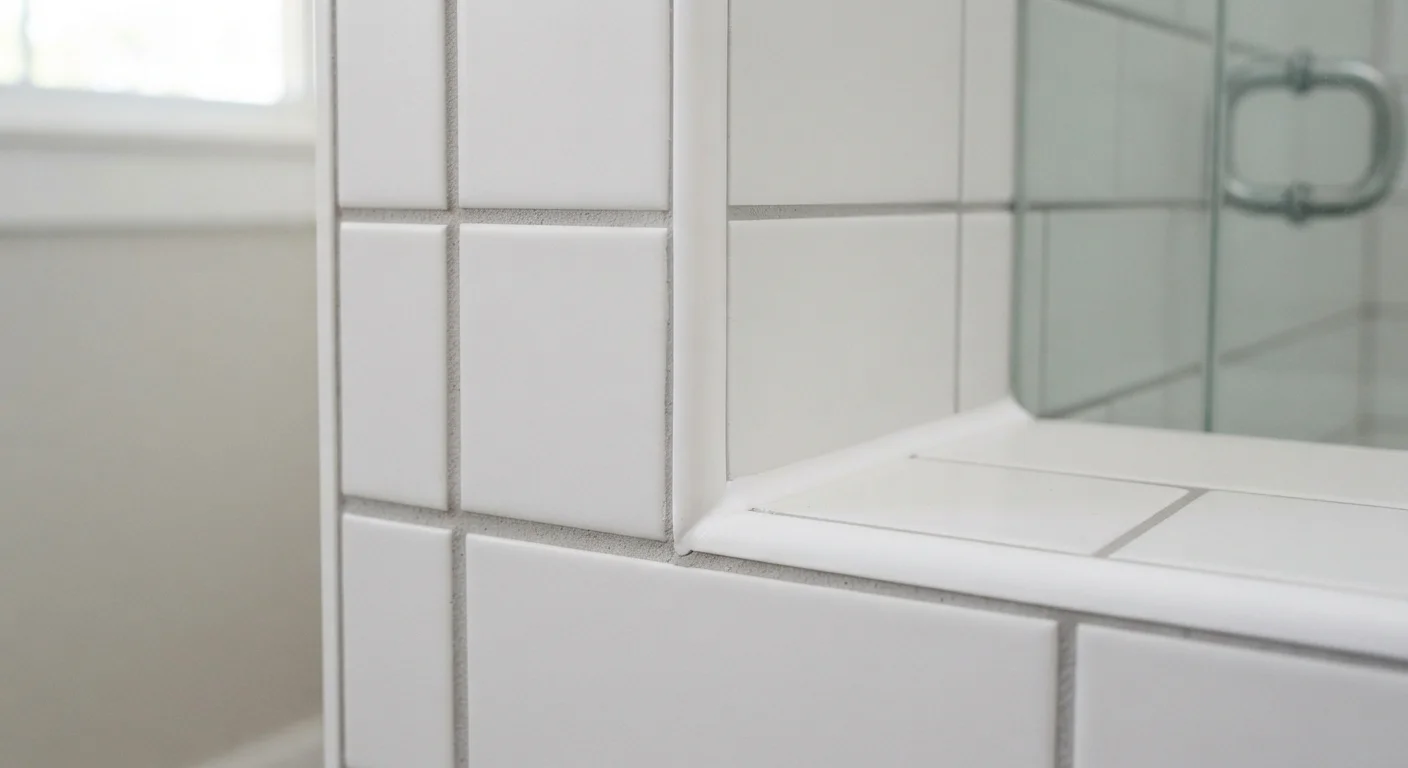
What Each Material Is Designed to Do
Caulk and grout are both sealants, but they solve different problems. Grout is a cement-based (or epoxy-based) filler designed to occupy the narrow gaps between tiles that sit on the same flat surface. It creates a rigid, finished appearance and prevents debris from settling between tiles - but it does not flex.
Caulk, by contrast, is a pliable compound - typically silicone, latex, or a hybrid of both - that stays somewhat soft after curing. This elasticity is its core advantage: it can stretch and compress slightly as surfaces move without cracking or losing its seal.
Understanding this one distinction - rigid versus flexible - makes most placement decisions straightforward. If the joint will ever move, even a tiny amount, it needs caulk. If the joint sits between two tiles on a stable, flat plane, grout is the correct choice.
| Criterion | Caulk | Grout |
|---|---|---|
| Flexibility | Flexible; absorbs movement | Rigid; no flex |
| Waterproofing | Highly waterproof (especially silicone) | Porous unless sealed |
| Best placement | Change-of-plane joints, corners | Between tiles on one flat plane |
| Appearance | Smooth bead; subtle | Uniform filled joint; decorative |
| Lifespan | 5-10 years before reapplication | 10-20+ years with sealing |
| Paintable | Latex: yes; Silicone: generally no | Yes, with appropriate paint |
| Skill level | Beginner-friendly | Moderate; mixing required |
Where Each Material Belongs in Your Home
Use grout: between tiles on floors, on shower walls, on backsplashes, or on any tiled surface where the tiles share a single plane. Grout comes in sanded and unsanded varieties - sanded grout is typically used for joints wider than 1/8 inch, while unsanded grout suits narrower gaps and polished stone that could be scratched by sand particles.
Use caulk: at every change-of-plane joint. Common locations include:
- The seam where a bathtub or shower pan meets the tiled wall above it
- Inside corners in a tiled shower
- Where a tile backsplash meets a countertop
- Transitions between tile and a different flooring material
- Around fixtures like faucets and drains where they penetrate a tiled surface
If you're planning a broader bathroom refresh, it's worth identifying every change-of-plane joint before you start - see our bathroom refresh guide for a fuller checklist of high-impact updates.
~70%
Bathroom leaks traced to failed sealant joints
Industry estimates from tile installation professionals suggest the majority of moisture intrusion behind bathroom tile originates at improperly sealed or failed change-of-plane joints.
1-2 years
Recommended grout sealer reapplication interval
Tile and grout manufacturers generally recommend resealing cement-based grout in wet areas every one to two years to maintain moisture resistance.
Choosing the Right Type of Caulk or Grout
Not all caulk is the same. Silicone caulk is the most waterproof and durable option for wet areas like tubs and showers, but it is harder to smooth and tool than latex formulas. Latex (acrylic) caulk is easier to work with and paintable, making it a good choice for dryer areas like baseboards or trim, though it is less moisture-resistant. Sanded caulk is formulated to match the appearance of sanded grout - useful when you're caulking an inside corner that would otherwise look visually mismatched against grouted joints nearby.
For grout, the main choices are cement-based (the most common and affordable) and epoxy-based (more stain- and chemical-resistant, but more difficult to apply). Epoxy grout is often worth considering in high-traffic or heavily stained areas, such as kitchen floors, though it requires more careful technique.
Color-Matching Caulk to Your Grout
Many caulk manufacturers offer their product in colors formulated to match popular grout shades. When caulking an inside shower corner that sits adjacent to grouted joints, choosing a color-matched sanded caulk creates a visually seamless result. Bring a tile or grout sample to the hardware store to compare against available caulk swatches before purchasing.
Application and Maintenance Tips
Before applying either material, the joint must be clean and dry. Old caulk should be fully removed with a utility knife or oscillating tool; applying new caulk over old is a common mistake that leads to poor adhesion and premature failure. Old grout that is cracked or crumbling should be raked out to a depth of at least 1/8 inch before re-grouting.
When applying caulk, cut the nozzle at a 45-degree angle to match the joint width and press the bead firmly into the gap. Smooth immediately with a wet finger or a caulk tool. Allow the full cure time listed on the product label - typically 24 hours for latex and up to 72 hours for silicone - before exposing the joint to water.
Both materials need periodic maintenance. Inspect caulk joints annually for cracking, discoloration, or separation. Grout should be sealed with a penetrating sealer every year or two in wet areas to reduce moisture absorption and resist staining. Catching small failures early prevents the much larger problem of water infiltrating behind your tile and damaging the substrate beneath.