Understanding What Each Floor Is Made Of
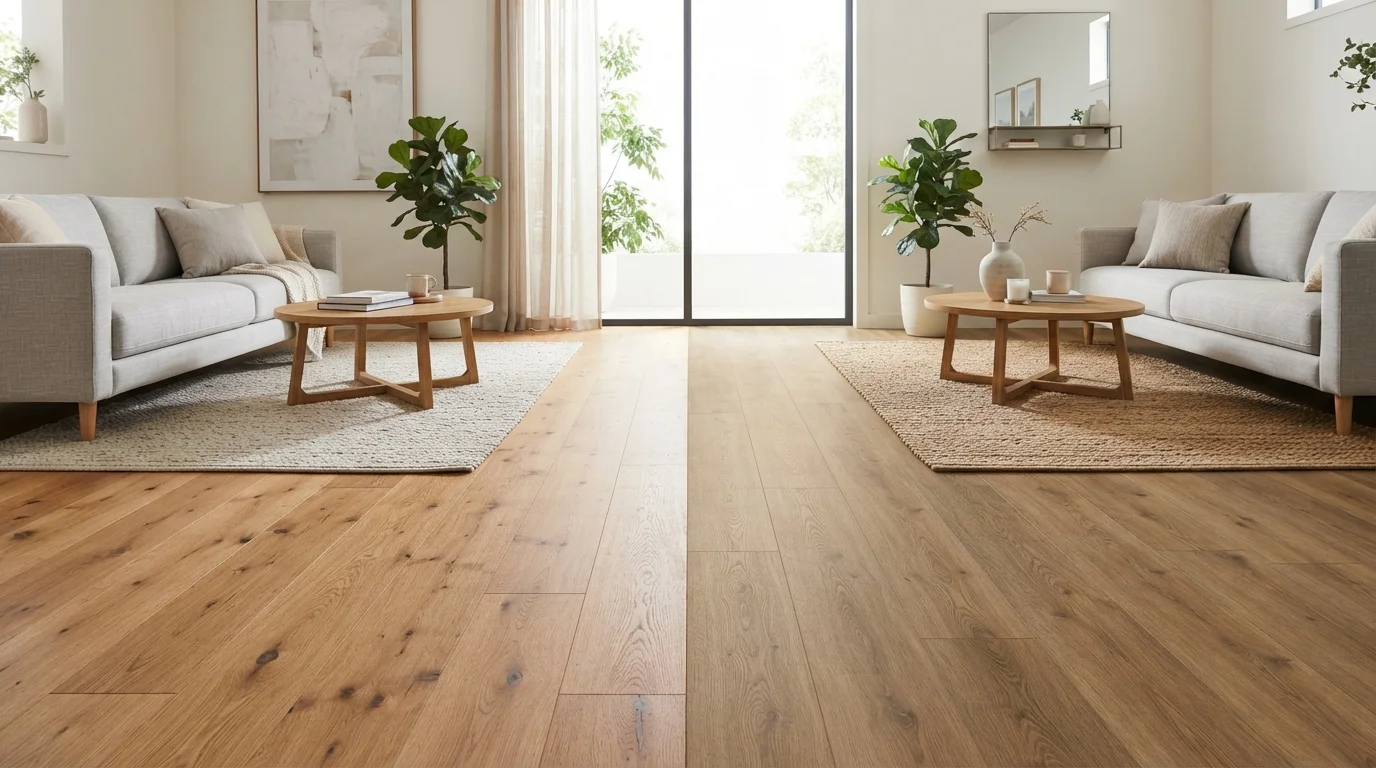
Solid hardwood flooring is milled from a single piece of wood - typically oak, maple, hickory, or walnut - and generally runs between ¾-inch thick. Engineered hardwood, a close relative, layers a real wood veneer over plywood, giving it slightly better dimensional stability. Both age naturally, showing character over time.
Luxury vinyl plank (LVP) is a synthetic product built in layers: a rigid or semi-rigid core, a photographic film layer that mimics wood grain, and a protective wear layer on top. Modern LVP can be remarkably convincing visually, but it is fundamentally a plastic composite - an important distinction when weighing durability, repairability, and environmental considerations.
| Hardwood | Luxury Vinyl Plank | |
|---|---|---|
| Material | Natural wood (solid or engineered) | Synthetic multi-layer composite |
| Moisture resistance | Low - avoid wet areas | High - waterproof in most products |
| Refinishable | Yes - multiple times | No - damaged planks replaced |
| DIY installation | Difficult - often needs a professional | Accessible - click-lock floating system |
| Typical lifespan | 50+ years with care | 15-25 years under normal conditions |
| Upfront cost | Higher material and labor cost | Lower material and labor cost |
| Pet and child friendliness | Scratches show; moisture is a concern | Scratch-resistant; waterproof surface |
Durability, Moisture, and Everyday Wear
Hardwood is durable but sensitive to moisture. Prolonged exposure to humidity fluctuations, spills, or standing water can cause boards to warp, cup, or swell. This makes hardwood a risky choice in kitchens, full bathrooms, basements, or any space prone to dampness. On the positive side, surface scratches and dents can be sanded out and the floor refinished - solid hardwood can typically be refinished several times over its life.
LVP, by contrast, is fully waterproof in most formulations, making it genuinely suitable for moisture-prone spaces. Its wear layer resists scratches well, which is a practical advantage in homes with dogs, cats, or young children. However, if an LVP plank is deeply gouged or damaged, the individual plank must usually be replaced rather than refinished - though many floating-floor systems allow plank-level replacement without tearing up the entire floor.
Test Your Subfloor Before Choosing
Before purchasing either floor type, check your subfloor for moisture and levelness. A simple moisture test - available at most home improvement stores - can reveal whether your concrete slab is suitable for LVP or engineered hardwood. Subfloor unevenness greater than 3/16 inch over 10 feet typically needs correction before any flooring goes down, regardless of the material you choose.
Installation: What to Expect
Hardwood installation is more demanding. Solid hardwood must acclimate to your home's humidity for several days before installation, and it typically requires nailing or stapling to a wood subfloor - meaning concrete slabs are not compatible without extensive preparation. Many homeowners hire a flooring professional for hardwood work, particularly for sanding, staining, and finishing in place.
LVP is considerably more DIY-friendly. Most products use a click-lock floating system that can go over concrete, existing tile, or plywood without adhesive. Acclimation time is shorter, and the forgiving installation method means errors are easier to correct. That said, both floor types benefit from a flat, level subfloor - high or low spots can cause clicking, gapping, or uneven wear regardless of the material.
¾ inch
Typical solid hardwood plank thickness
This thickness allows for multiple sand-and-refinish cycles across decades of use.
12 mil+
Wear layer thickness recommended for high-traffic LVP
Flooring industry guidance generally suggests a minimum 12-mil wear layer for busy households with pets or children.
Cost, Resale Value, and Long-Term Thinking
Hardwood generally carries a higher upfront cost - both for materials and professional installation - than LVP. However, a well-maintained hardwood floor can last for generations, potentially offsetting its initial price over time. In real estate, hardwood floors are often viewed positively by buyers, though market preferences vary by region and no specific value increase can be guaranteed.
LVP costs less upfront and installation labor is lower, especially for DIY projects. Its lifespan is typically shorter than hardwood - most quality LVP products are rated for 15-25 years under normal conditions. When a floor does reach end-of-life, LVP replacement is straightforward, but the material is not biodegradable or easily recyclable, which matters to some homeowners from a sustainability standpoint.
Before making a final decision, consider the specific room, your household's daily demands, your subfloor type, and your long-term plans for the home. A licensed flooring professional can assess your subfloor and help you choose a product appropriate for your actual conditions.