Why Looking Past the Obvious Pays Off
The most visited US cities - New York, Los Angeles, Chicago, Miami - earn their reputations. But the concentrated volume of tourism in those places can actually work against the kind of discovery that makes travel memorable. Mid-sized and smaller cities often deliver something harder to find: a coherent sense of identity, a food culture that grew organically rather than for an audience, and neighborhoods that still feel like they belong to the people who live in them.
None of the cities on this list are secrets. They have airports, hotels, and functioning tourism infrastructure. What they share is a tendency to be underweighted in the travel conversation relative to what they actually offer. Whether your travel style leans toward deep cultural immersion or a more structured sightseeing approach, each of these cities has enough depth to sustain a meaningful trip.
Plan Around Local Events for a Richer Visit
Each of these cities has signature events - Tucson's All Souls Procession, Boise's Treefort Music Festival, Providence's WaterFire - that offer a window into local culture you simply can't get from sightseeing alone. Checking a city's official events calendar before you finalize your dates can meaningfully shape the quality of your trip.
Five Cities Worth Booking a Trip Around
Pittsburgh, Pennsylvania
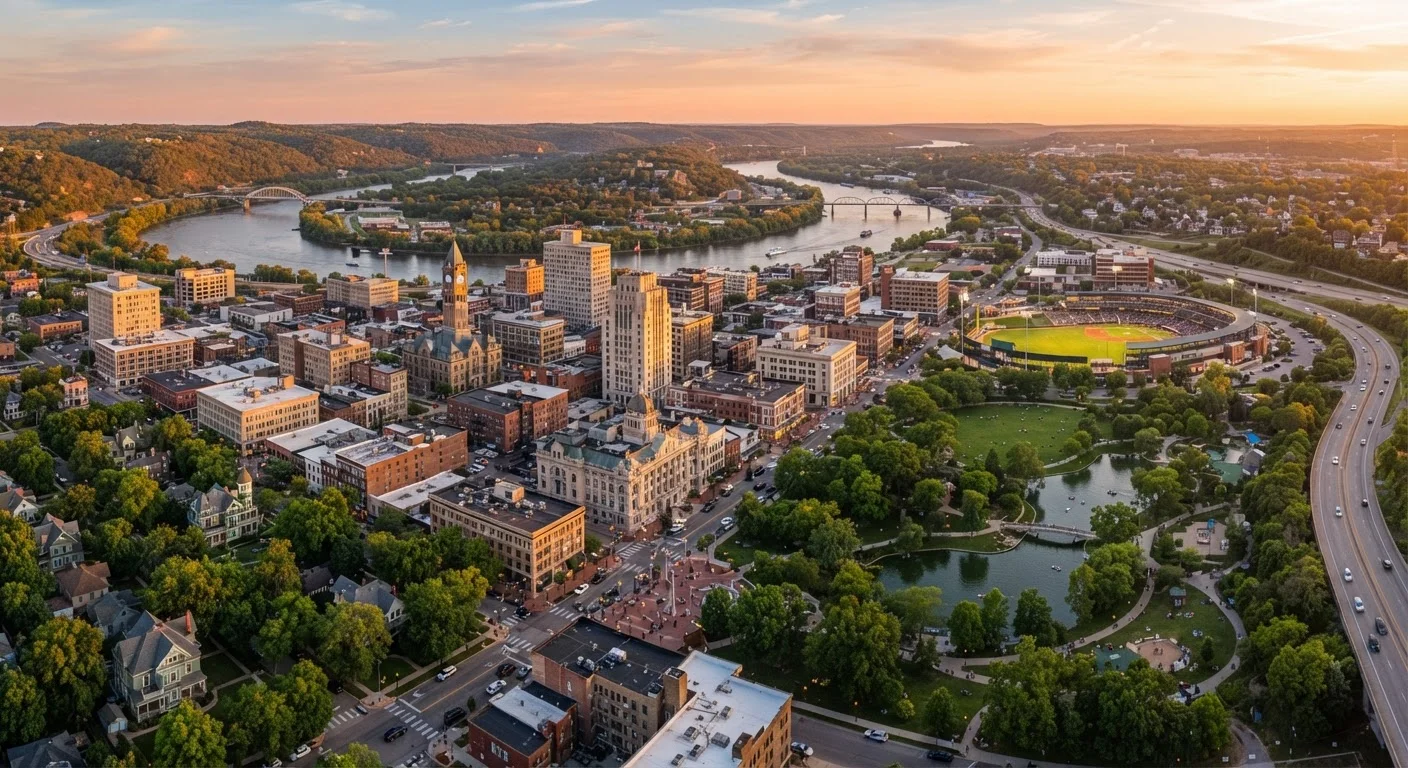
Pittsburgh has quietly reinvented itself from a steel-industry powerhouse into one of the country's most compelling mid-sized cities. Its dramatic topography - 90 neighborhoods spread across hills, valleys, and three converging rivers - gives it a sense of place that's almost impossible to replicate. The Strip District hums with market life on weekend mornings, while neighborhoods like Lawrenceville have evolved into hubs for independent galleries and creative businesses. The city's museum scene is legitimately world-class: Carnegie Museums of Pittsburgh houses both a natural history museum and a fine arts collection under one sprawling roof. Architecture enthusiasts should make time for Fallingwater, the Frank Lloyd Wright masterpiece about an hour south of the city. Pittsburgh rewards slow exploration - the kind of curious, immersive travel that goes well beyond checking off landmarks.
Pittsburgh's dramatic topography and neighborhood diversity make it one of America's most distinctive mid-sized cities.
Tucson, Arizona
Tucson occupies a different emotional register than most US cities - quieter, older-feeling, and deeply shaped by the Sonoran Desert surrounding it. The city carries layers of Indigenous, Spanish colonial, and Mexican cultural history that surface constantly: in its architecture, its food traditions, and its festivals. Tucson was designated a UNESCO Creative City of Gastronomy, recognizing a culinary culture built on heritage ingredients like tepary beans and Sonoran wheat. Foodies will find the local food scene genuinely distinctive - not trendy reinvention but something more rooted. Saguaro National Park (split into two districts on either side of the city) puts iconic desert landscapes within easy reach. The University of Arizona anchors a lively arts and music presence downtown. Travelers who enjoy eating their way through a destination will find Tucson unusually rich ground.
Tucson's UNESCO gastronomy designation reflects a food culture built on centuries of Indigenous and Mexican heritage.
Savannah, Georgia
Savannah is a city that seems designed for wandering. Its 22 historic squares - park-like public spaces shaded by ancient live oaks draped in Spanish moss - are scattered throughout a walkable downtown grid that dates to a remarkably thoughtful 1733 city plan. The architecture is stunning: Federal, Regency, and Victorian buildings line streets that feel genuinely preserved rather than restored for effect. But Savannah isn't a museum piece. The Starland District and the Victorian District pulse with working studios, independent restaurants, and the SCAD Museum of Art, which draws both student work and major international exhibitions. The city's proximity to Tybee Island means a beach day is always feasible. Savannah consistently rewards the kind of travel described in living like a local vs. doing the tourist circuit: the slower you go, the more it gives back.
Savannah's 22 historic squares and intact architecture create a walkable city that rewards slow, deliberate exploration.
Boise, Idaho
Boise has grown substantially in recent years, but it retains a character that larger Western cities have largely lost - approachable, outdoors-oriented, and genuinely community-focused. The Boise River Greenbelt stretches over 25 miles along the river, threading through parks and connecting neighborhoods in a way that makes cycling or walking feel like a civic pleasure rather than an afterthought. The downtown arts scene is anchored by the Treefort Music Festival each spring and a year-round calendar of gallery openings and theater productions. Basque heritage runs deep here - Boise has one of the largest Basque communities outside Europe, and the Basque Block downtown is a legitimate cultural landmark worth an afternoon. For travelers curious about less conventional travel formats, Boise pairs well with Idaho's wider outdoor geography.
Boise's Basque Block is one of the most unexpected and genuine cultural districts in the American West.
Providence, Rhode Island
Providence punches well above its weight for a city of roughly 190,000 people. It's home to one of the country's most respected art and design schools (the Rhode Island School of Design, known as RISD), and that creative energy spills into the city's galleries, restaurants, and public spaces. WaterFire - a fire-and-music installation that takes place on the rivers running through downtown - is the kind of distinctive civic event that defines a place. The Federal Hill neighborhood is widely regarded as one of New England's best Italian-American dining districts, and College Hill's colonial-era architecture makes for a genuinely atmospheric walk. Providence sits between Boston and New York on Amtrak's Northeast Corridor, making it accessible from either city as a day trip or short stay. It's a city with real creative depth that rarely gets the attention it deserves.
Providence's RISD-fueled creative culture makes it one of New England's most artistically vibrant and underrated cities.
Verify Entry and Travel Conditions Independently
Travel conditions, seasonal closures, and local events can change. Before booking, check official city tourism sites and any relevant government sources for current information on accessibility, hours, and local requirements. Prices and availability mentioned anywhere in travel content are subject to change and should be confirmed directly with providers.
How to Approach These Destinations
One thing these cities have in common: they respond well to slower travel. Building in time to explore neighborhoods on foot, eat at spots that don't appear in national publications, and talk to locals will consistently surface things that no itinerary can pre-plan. That approach is at the heart of what the Travel Experiences hub covers - the idea that how you travel shapes what you get out of it as much as where you go.
For practical planning - thinking through timing, logistics, and what to prioritize - the Trip Planning Tips hub offers a useful starting point. These underappreciated cities are genuinely rewarding to research before you go: the more you understand what makes each one distinct, the more clearly you'll be able to match a destination to what you're actually looking for from a trip.