What Each Approach Actually Means
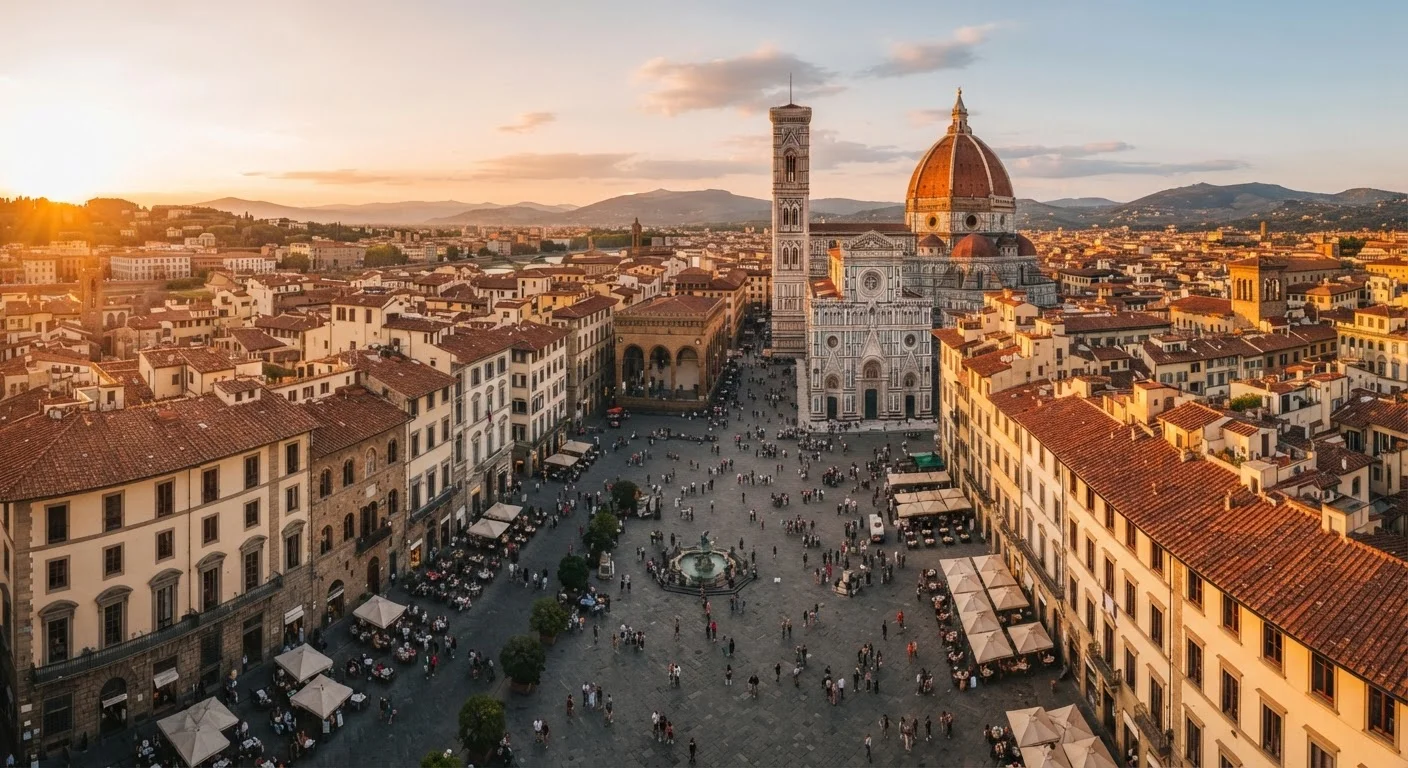
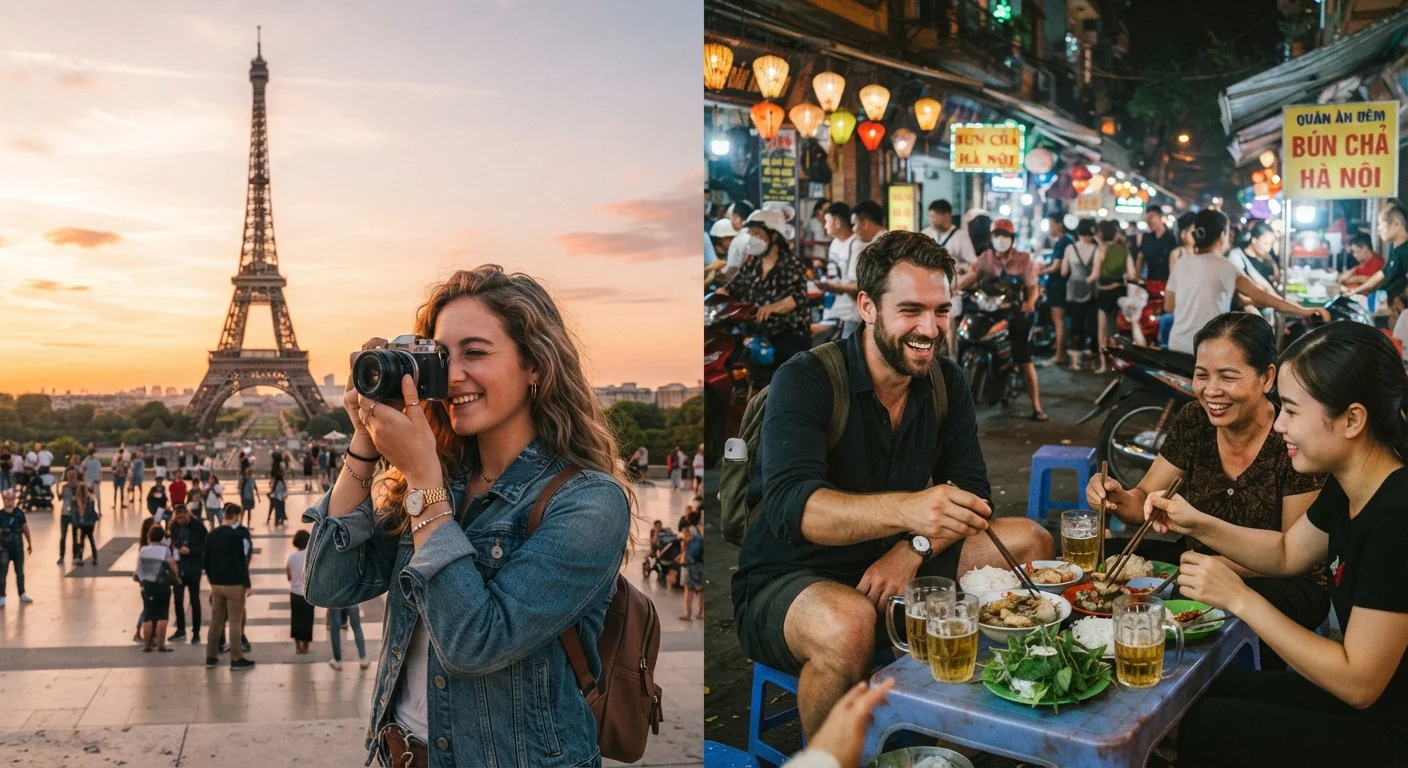
Sightseeing is what most people picture when they imagine a trip abroad: the Eiffel Tower, the Grand Canyon rim walk, the Vatican Museums, Times Square at dusk. It's a fundamentally visual and logistical mode of travel - you arrive, you see, you photograph, you move on. The experience is curated, efficient, and often deeply satisfying. There's real value in standing in front of something you've seen only in pictures.
Cultural immersion operates differently. It's less about checking items off a map and more about participating in the texture of daily life - shopping at a neighborhood market, learning a local craft, attending a religious ceremony, or simply sitting in a square long enough to notice how people actually interact. It trades breadth for depth, and spectacle for familiarity.
These two styles aren't mutually exclusive, but they do reflect different priorities. Understanding their trade-offs helps you design trips that match what you actually want from travel. For a broader look at pace and planning philosophy, see our comparison of slow travel vs. packed itineraries.
How They Stack Up Side by Side
The differences between sightseeing and cultural immersion show up most clearly when you compare the specifics: how time is used, what kind of planning is required, and what kind of memories you leave with.
| Criterion | Cultural Immersion | Sightseeing |
|---|---|---|
| Primary goal | Understand daily life and local context | Witness iconic landmarks and attractions |
| Ideal trip length | Several weeks or extended stays | A few days to two weeks |
| Planning style | Flexible, open-ended, locally led | Structured itinerary, timed entry, maps |
| Social interaction | Deep engagement with locals and community | Mostly fellow tourists and guide-led groups |
| Comfort with uncertainty | High - spontaneity is part of the appeal | Low - experience is largely predictable |
| Typical costs | Often lower daily spend; longer total trip | Entry fees, tours; higher short-term spend |
| What you take home | Relationships, habits, nuanced understanding | Visual memories, photos, checked experiences |
Sightseeing tends to reward advance research - knowing opening hours, booking timed entry tickets, and mapping logical routes between sites. Immersion, on the other hand, often rewards flexibility and a willingness to follow unexpected invitations. Both require real effort; they just demand different things from the traveler.
The Real Trade-Offs Worth Knowing
Sightseeing has one undeniable advantage: it's reliably legible. You know what you're going to see, roughly how long it takes, and what the experience is likely to feel like. That predictability matters - especially for first-time visitors, families with children, or anyone on a tight schedule. Famous sites are famous for good reasons, and there's nothing shallow about wanting to witness them firsthand.
Cultural immersion carries more uncertainty, and that's both its challenge and its appeal. You might spend an afternoon at a neighborhood festival and come away with stories you'll tell for years. Or you might feel slightly adrift without a structured plan. Immersion asks you to tolerate ambiguity, and not every traveler - or every trip - is suited for that.
72%
Travelers seeking authentic local experiences
According to Booking.com's Sustainable Travel Report, a large majority of travelers express a desire for more authentic, locally connected experiences when they travel.
4-7 days
Average US international trip length
US Travel Association data consistently shows most Americans take relatively short international trips, which structurally favors sightseeing over deep immersion.
There's also a practical gap worth naming: genuine immersion often takes more time than most vacation schedules allow. A long weekend in Osaka can get you through the castle, Dotonbori, and a famous ramen spot. It almost certainly won't get you into a local home or a neighborhood cultural center. If immersive depth is your goal, trip length becomes a genuine planning variable. See our guide to living like a local vs. the tourist circuit for an honest look at both sides.
Blending Both Styles Intentionally
The most satisfying trips often combine both approaches - not accidentally, but by design. You might spend your first two days in a city doing structured sightseeing: the major museum, the historic district, the viewpoint everyone talks about. Then you deliberately slow down. You find a neighborhood café and return two mornings in a row. You ask your accommodation host where they actually eat lunch. You wander without a destination.
Food-focused travel is one of the most accessible bridges between sightseeing and immersion - a market visit or a home-cooking class delivers cultural texture while still feeling like a tangible, planned activity. Similarly, less conventional travel formats like heritage trails or community-based stays are designed specifically to close the gap between observation and participation.
What you're really choosing between isn't "good travel" and "bad travel" - it's different orientations toward a place. Sightseeing says: I want to witness this. Immersion says: I want to understand this. Both are honest and worthwhile. Knowing which one you're after - and being intentional about mixing them - is what separates a memorable trip from a merely pleasant one.
If you're curious whether a group tour can actually deliver depth, our piece on why group tours often feel shallow - and how to do better is worth reading before you book.
A Note on "Authentic" Travel
The word "authentic" gets used loosely in travel marketing. Genuine cultural immersion isn't about avoiding tourist sites entirely - it's about also engaging with the parts of a place that exist independently of tourism. A neighborhood hardware store, a community sports match, or a public library can tell you as much about a city as any museum. Be skeptical of experiences marketed as "authentic" by tour operators without evidence of real community involvement.