Why the Trip Format Matters as Much as the Destination
Most people plan a vacation by picking a place first - a city, a beach, a country - and then figuring out what to do there. That works fine, but it leaves a rich layer of travel largely untouched: the format itself. How you structure a trip determines your pace, your depth of connection, and what you actually take away from it.
If you've ever returned from a trip feeling like you rushed through a checklist, or stayed too long in a comfort bubble, the issue probably wasn't the destination. It was the format. The good news is there are several underused travel structures worth considering - each offering something genuinely different from the standard fly-stay-sightsee loop. For a grounded look at how pace alone changes a trip, the comparison between slow travel and packed itineraries is a helpful starting point.
The Workation
A workation blends remote work with genuine travel - not a vacation squeezed around meetings, but a deliberate stay in a new environment where your regular schedule continues while the surroundings shift. The appeal is real: you extend your time abroad without burning through all your PTO, and you get the slow-immersion benefits that a week-long trip rarely delivers.
The key to making it work is choosing a destination with reliable infrastructure - consistent internet, time zone compatibility with your team, and accommodation suited to focus. Cities in Portugal, Mexico, and parts of Southeast Asia have become popular among remote workers for these practical reasons. That said, any location that meets your logistical needs can work. Just verify connectivity before you commit to a longer stay.
A workation extends your time abroad without exhausting your vacation days.
Heritage and Cultural Trail Travel
Rather than basing yourself in a single city, heritage trail travel structures a journey around a thematic thread - a historic pilgrimage route, a network of Indigenous cultural sites, a trail connecting colonial-era towns, or a literary landscape tied to a particular author or movement.
This format gives a trip a narrative arc that standard sightseeing rarely provides. You're moving through connected context rather than accumulating disconnected highlights. The Camino de Santiago in Spain is one well-known example, but heritage trails exist across every continent and at every scale. The difference between cultural immersion and sightseeing becomes very clear once you've traveled this way.
Heritage trail travel gives your journey a narrative arc that pure sightseeing rarely provides.
River Journey Travel
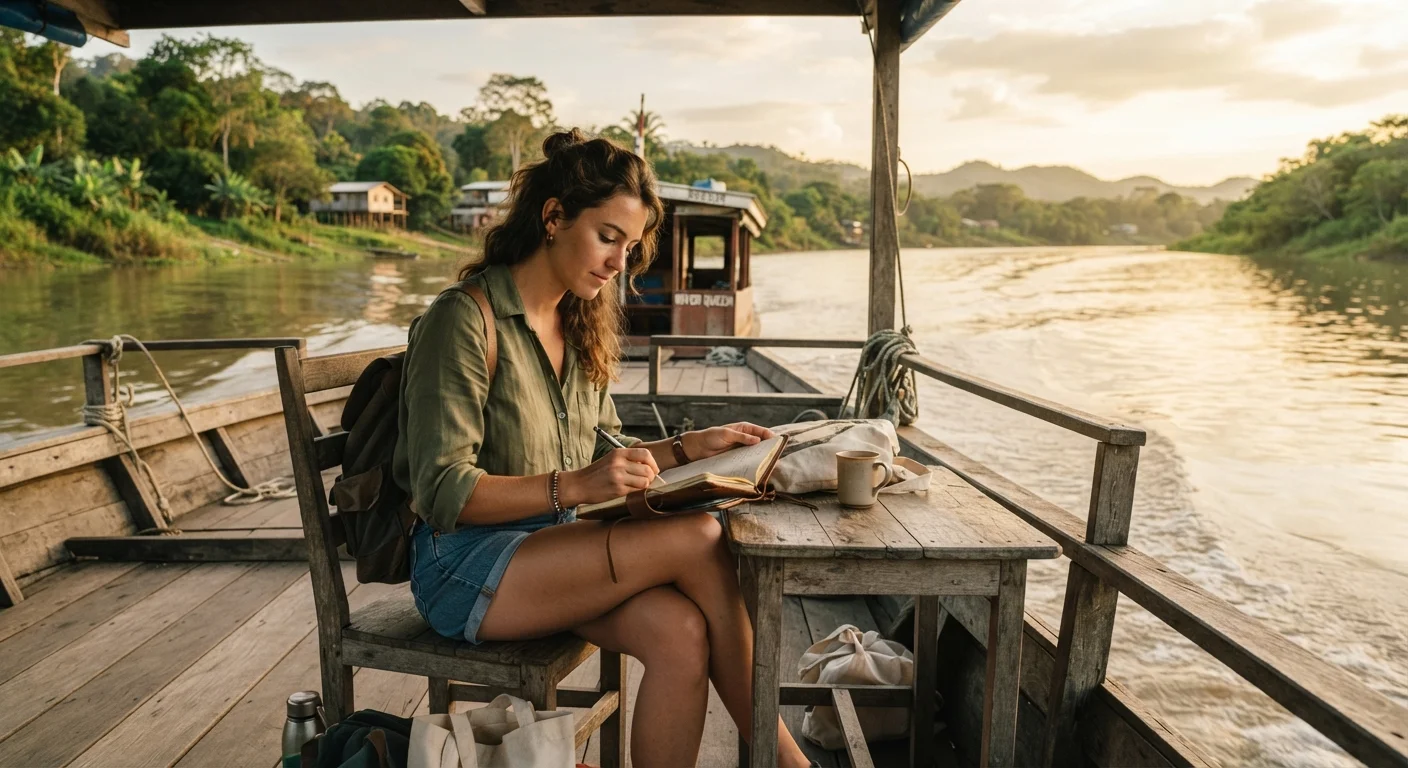
River journeys - whether by small expedition vessel, traditional wooden boat, or houseboat - offer a fundamentally different relationship with geography. Rivers are corridors through landscapes that roads often bypass: remote wetlands, riverside villages, dense jungle interiors, agricultural heartlands. The pace is determined by the current and the schedule, not by your to-do list.
This format suits travelers who want immersion without constant logistical decision-making. Meals, movement, and accommodation are largely handled; the experience becomes one of sustained attention to what's passing outside. From the Amazon to the Mekong to the Mississippi, river travel reveals a country from an angle that land-based itineraries simply can't replicate.
Rivers move through landscapes that roads routinely miss - and that changes what you see entirely.
Volunteer and Skills-Exchange Travel
This format centers a trip around a specific contribution - teaching, conservation work, construction, or professional skills-sharing - in exchange for accommodation, meals, and deep community access. It's distinct from packaged volunteer tourism, which has attracted criticism for prioritizing the traveler's experience over genuine local benefit.
Meaningful versions of this format tend to involve longer commitments (weeks rather than days), clear agreements about what skills are actually needed, and organizations with verifiable community relationships. It's not suitable for every traveler, but for those with applicable skills and genuine flexibility, it produces a quality of connection that purely tourist-facing formats rarely match. Research any program carefully and ask specific questions about how local partners benefit before committing.
Skills-exchange travel builds a quality of connection that tourist-facing formats rarely match.
Long-Distance Cycling and Walking Routes
Dedicating a trip to a long-distance cycling or walking route restructures how you experience landscape and distance. Progress is felt in the body, not just clocked on a map. You stop in places too small or too uneventful to appear on standard itineraries - roadside cafes, small guesthouses, farm stands - and those stops often become the most memorable parts of the trip.
Routes exist at every difficulty level, from accessible rail trails through flat countryside to more demanding mountain passes. If you're new to this format, starting with a shorter, well-marked route gives you a realistic sense of the daily rhythm before committing to something multi-week. The planning gaps travelers commonly miss - like buffer days and physical recovery time - matter especially here.
Long-distance cycling routes take you through places too small to appear on standard itineraries.
Wellness Retreat Travel
A wellness retreat is a structured stay organized around physical or mental restoration - yoga intensives, silent meditation programs, spa-focused escapes, digital detox retreats, or nature immersion experiences. What makes this a distinct travel format rather than just a different kind of accommodation is that the program itself is the destination. The surrounding place supports the focus rather than competing with it.
This format works well when someone needs a genuine break from stimulation rather than a change of stimulation. It pairs interestingly with other formats: a retreat in a rural cultural setting can satisfy both the restoration impulse and the curiosity impulse simultaneously. For a direct comparison of this approach against adventure-focused travel, the trade-offs between adrenaline and stillness are worth understanding before you decide.
In wellness retreat travel, the program itself is the destination - not the surrounding city.
Matching the Format to What You Actually Want
None of these formats is objectively superior - they suit different goals, budgets, and travel personalities. A workation makes most sense when remote flexibility is already part of your professional life. A heritage trail rewards people who find meaning in historical narrative. River journeys are ideal for travelers who find too many daily decisions exhausting. Before committing, think about what you want to feel at the end of the trip: energized, grounded, educated, or simply rested.
Try One New Format Per Year
If you travel more than once annually, consider dedicating one trip specifically to a format you haven't tried before. Even a short river journey or a three-day cycling route can shift your sense of what travel is capable of delivering. You don't need to overhaul your entire travel philosophy - just leave room for one experiment.
It's also worth noting that formats can overlap. A cycling route through a wine region doubles as both a slow-travel experience and a culinary journey. A wellness retreat built around a coastal village becomes something richer when you spend afternoons exploring local markets. For more on how food-focused travel creates deeper cultural connections, that approach pairs naturally with almost any format on this list. And if you're still calibrating what kind of traveler you are overall, a breakdown of major travel styles can help clarify your baseline before you commit to anything more specific.
Travel information changes - always verify entry requirements, local conditions, and logistical details with official sources and service providers before you travel.