Why Hawaii Isn't One-Size-Fits-All
Most people picture Hawaii as a single postcard: warm water, swaying palms, leis at the airport. The reality is far more varied. The Hawaiian archipelago is made up of distinct islands, each shaped by different geology, rainfall patterns, development histories, and cultural rhythms. Picking one without understanding these differences is a bit like booking "California" without knowing whether you want San Francisco or Los Angeles - see our breakdown of how two cities can feel like entirely different trips for a sense of how dramatically destinations can diverge.
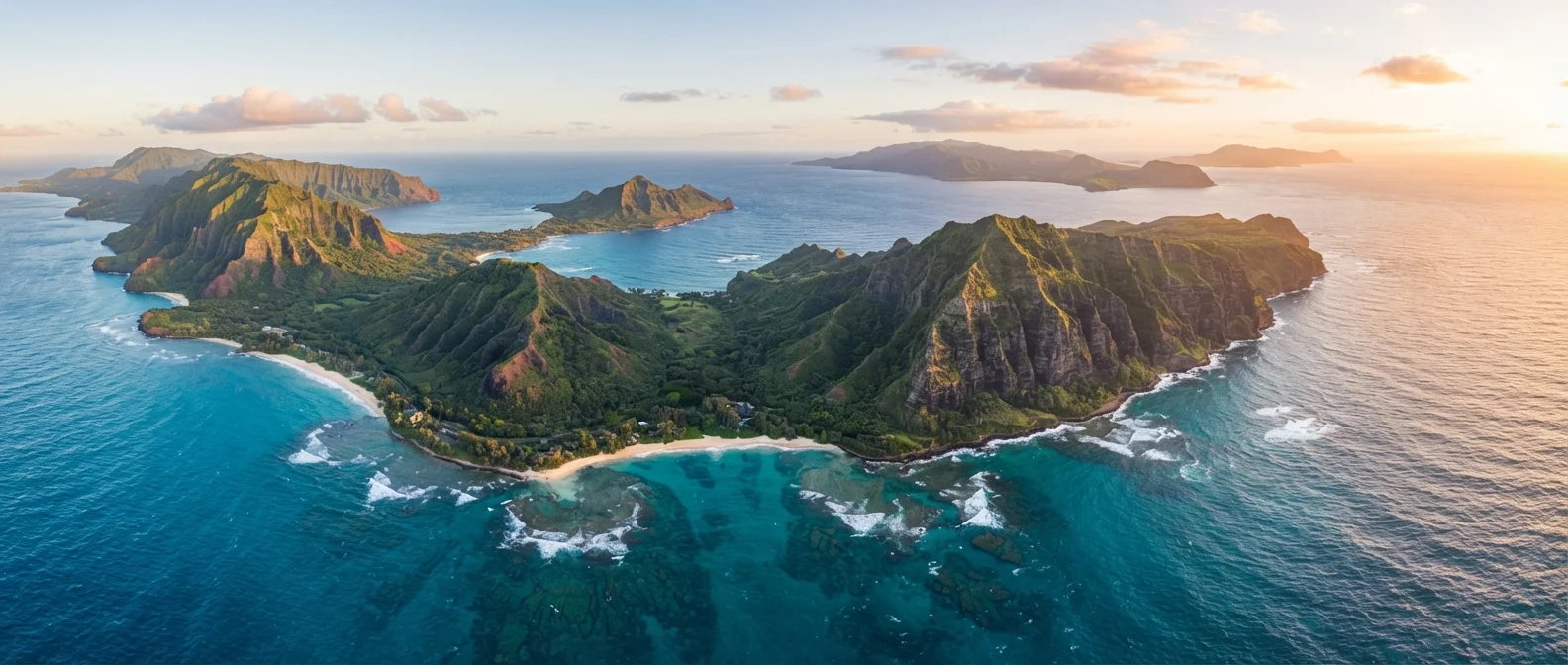
The four main visitor islands - Oahu, Maui, Kauai, and the Big Island (Hawaii Island) - each have a genuinely distinct personality. Understanding those differences upfront saves travelers from showing up expecting one experience and finding another.
| Oahu | Maui | Kauai | The Big Island | |
|---|---|---|---|---|
| Overall vibe | Urban, energetic, diverse | Polished, balanced, scenic | Wild, quiet, nature-first | Vast, geological, exploratory |
| Best for | First-timers, city lovers | Couples, families, all-rounders | Hikers, nature seekers | Curious, adventurous travelers |
| Crowd level | Highest | Moderate to high | Lowest | Moderate |
| Landscape highlights | Waikiki, North Shore, mountains | Haleakala, Road to Hana | Na Pali Coast, Waimea Canyon | Active volcanoes, snow peaks, lava fields |
| Infrastructure & amenities | Extensive | Strong | Limited | Varies widely by region |
| Nightlife & dining | Robust | Good selection | Very limited | Moderate, spread out |
| Getting around | Car or transit | Car recommended | Car essential | Car essential, long drives |
Oahu: The Island That Does Everything
Oahu is home to Honolulu, Hawaii's state capital, and handles the lion's share of visitor traffic for good reason: it offers the most infrastructure. Direct flights arrive from dozens of mainland US cities, public transit exists (though a rental car still helps), and lodging options span every price range. Waikiki's iconic beach strip places visitors steps from restaurants, shopping, and surf lessons.
Beyond the resort corridor, Oahu holds genuine depth. The North Shore draws surfers worldwide during winter swells. Pearl Harbor's memorial sites offer historically significant, sobering experiences. The Koolau mountain range provides dramatic hiking close to the city. If you're visiting Hawaii for the first time and aren't sure exactly what you want, Oahu's variety acts as a safety net. That said, it's also the most crowded island, and some travelers find Waikiki's density at odds with the peaceful escape they imagined.
Maui: The Well-Rounded Middle Ground
Maui has cultivated a reputation as Hawaii's "just right" island - developed enough for comfort, but with enough wild terrain to keep adventure seekers satisfied. The Road to Hana, a winding coastal drive through rainforest and waterfalls, is among the most celebrated scenic routes in the US. Haleakala National Park crowns the island with a dormant volcanic crater where visitors can watch sunrise above the clouds.
Resort areas like Wailea and Kaanapali offer polished amenities, while smaller towns like Paia and Makawao give a glimpse into local community life. Whale watching in the Auau Channel (typically November through May) is widely regarded as some of the finest in the Pacific. Maui suits couples, families, and anyone who wants a credible Hawaii experience without choosing between pure nature and creature comforts. It's worth thinking about whether you want to simply see Maui's highlights or genuinely embed in what makes the island tick - our piece on cultural immersion versus sightseeing explores both approaches honestly.
Consider Combining Two Islands
Inter-island flights are relatively short - often under 30 minutes - making it genuinely feasible to split a longer trip between two islands. A common pairing is Oahu for the first few days followed by Maui or Kauai, giving travelers both urban variety and natural immersion. Build in at least three to four nights on each island to avoid spending too much time in transit.
Kauai: Raw, Rugged, and Relatively Quiet
Kauai is the oldest of the main Hawaiian islands geologically, and that age shows in its landscape: deeply eroded valleys, razor-edged ridgelines, and the legendary sea cliffs of the Na Pali Coast. There are no traffic lights on much of the island. Visitor numbers are lower by design - resort development has been deliberately limited, and Kauai's communities have actively shaped land-use policy to keep it that way.
The Waimea Canyon, sometimes called the "Grand Canyon of the Pacific," delivers jaw-dropping scale in a setting most visitors don't expect from Hawaii. Hiking, kayaking, and boat tours along the coastline are the primary draws. Travelers who arrive expecting buzzing nightlife or a broad dining scene may be surprised by how early things quiet down. That restraint is precisely what its fans love. If you've found structured tours unsatisfying in the past, Kauai's open landscape rewards self-directed exploration - something our editorial on why group tours often disappoint addresses in depth.
The Big Island: Scale, Science, and Stark Contrasts
Hawaii Island - universally called the Big Island to avoid confusion - is larger than all other Hawaiian islands combined, and its diversity is staggering. Drive from the rainy Hilo side to the sunny Kohala Coast and the landscape shifts from tropical rainforest to lava fields to high desert. Snow occasionally falls on Mauna Kea's summit, while black-sand beaches line sections of the southeastern shore.
Hawaii Volcanoes National Park is the island's marquee attraction, home to Kilauea, one of the world's most continuously active volcanoes. The park's terrain changes with ongoing geological activity, so conditions and accessible areas vary - always verify current status through the National Park Service before visiting. Coffee farms in Kona, astronomy tours on Mauna Kea, manta ray night snorkeling off the coast, and historical sites like Pu'uhonua o Honaunau all add layers that reward curious, unhurried travelers. The Big Island requires more planning - distances between sights are genuinely long - but for those who embrace its scale, it consistently delivers something that feels unlike anywhere else.
4,028 sq mi
Size of the Big Island
According to the US Geological Survey, Hawaii Island is larger than all other Hawaiian islands combined.
~10 million
Annual visitors to Hawaii
Hawaii Tourism Authority data shows visitor arrivals typically reach into the tens of millions annually, with Oahu receiving the largest share.
5,243 ft
Height of Waimea Canyon, Kauai
The canyon's dramatic depth and coloring have earned it comparisons to the Grand Canyon among geographers and travel writers.
How to Actually Choose
A few honest questions cut through the noise. Do you want easy access and variety, or are you willing to plan more carefully for a quieter experience? Is beach time the priority, or are you more drawn to hiking, history, or wildlife? Will you be renting a car, and how comfortable are you navigating rural roads? How much does dining variety and nightlife matter?
There's no wrong answer - but there's definitely a wrong island for the wrong traveler. Thinking through what you want from a trip, not just where sounds appealing, is the foundation of a satisfying journey. Our guide on the real trade-offs between tourist circuits and local experiences can help you define your travel style before you commit. Explore a wider range of travel experiences and styles to sharpen what you're really after.