What Each Approach Actually Means
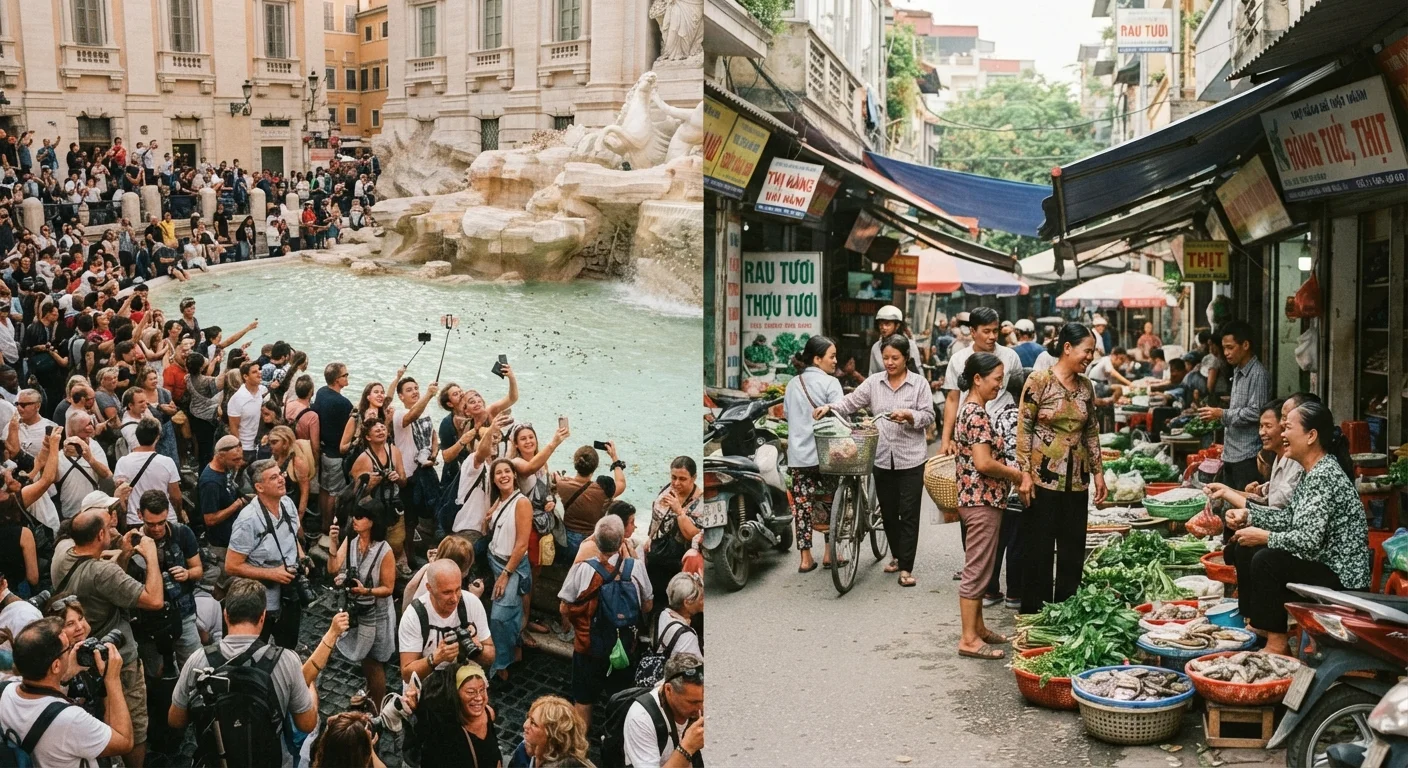
"Living like a local" is one of travel's most overused phrases, but at its core it means slowing down: staying in residential neighborhoods, cooking or eating where regulars eat, using public transit, and letting the rhythms of daily life shape your itinerary rather than a highlights list.
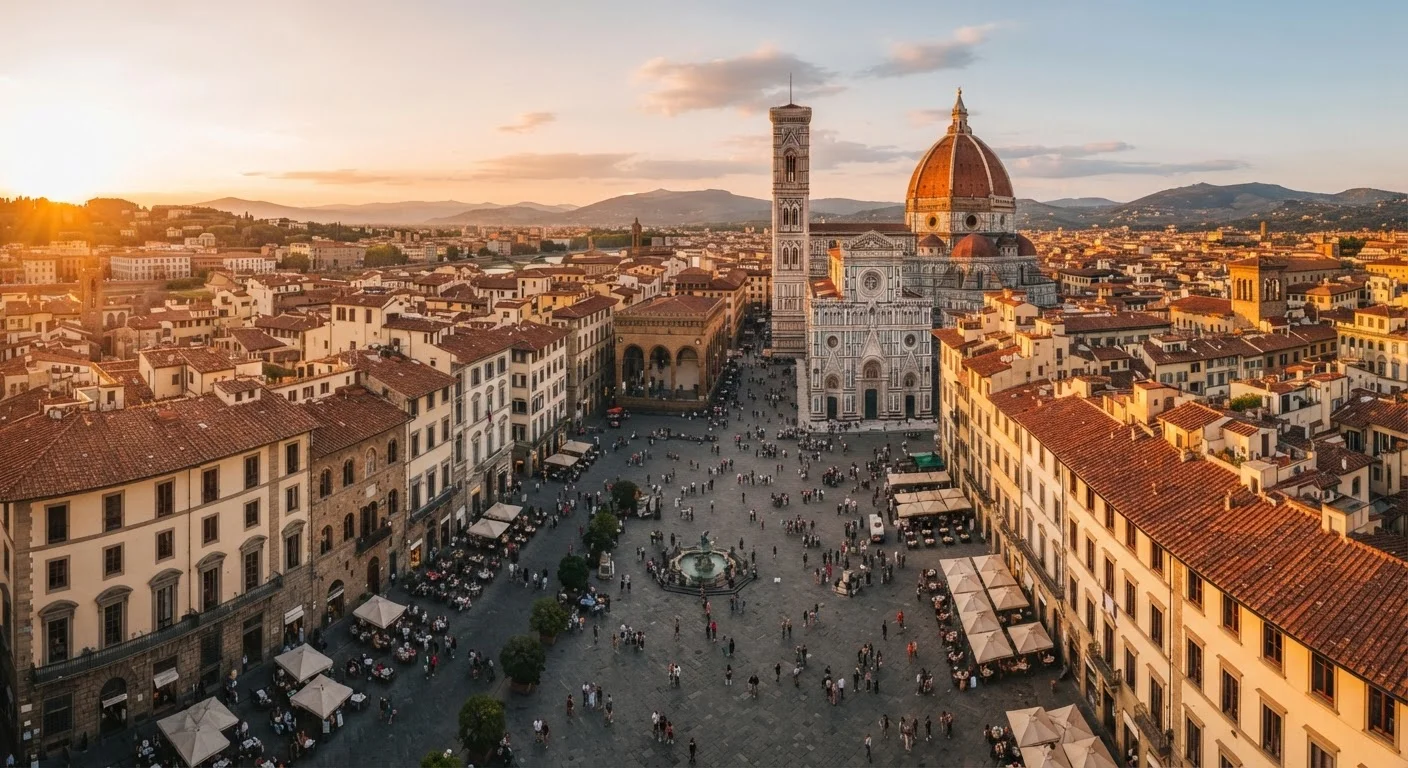
The tourist circuit, by contrast, is the structured path most destinations have built for visitors - famous landmarks, organized tours, well-reviewed restaurants, and accommodations clustered in central zones. It exists because it works. Millions of people use it every year and come home satisfied.
The real question isn't which is better in the abstract - it's which delivers what you actually want from a trip. To figure that out, it helps to look at what each genuinely offers and where each falls short. If you're still sorting out your overall travel philosophy, this breakdown of travel styles covers the spectrum clearly.
The Case for Living Like a Local
Deeper sense of a destination's real character
Staying and eating where locals do reveals everyday culture that structured tours rarely reach - neighborhood rhythms, informal social spaces, and the texture of ordinary life.
Often more cost-effective for longer stays
Local markets, transit systems, and non-tourist-zone eateries tend to cost considerably less than their circuit-facing equivalents, which can add up meaningfully over a week or more.
Fewer crowds and more spontaneity
Getting off the main circuit usually means shorter lines, quieter streets, and the freedom to follow your curiosity rather than a fixed schedule.
Can produce more memorable, personal stories
Unexpected conversations, stumbled-upon festivals, and unplanned detours tend to become the moments travelers remember longest - and they happen more often off the beaten path.
The biggest draw of local-style travel is texture. You notice things the tourist circuit doesn't show you: how a city smells in the morning, what people are actually arguing about at the corner café, which street market is genuinely for residents versus which one was styled for Instagram. That sense of real place is hard to manufacture.
Cost is another factor. Residential neighborhoods often have cheaper groceries, local transit, and informal eateries that simply don't appear on standard itineraries. Staying in a flat rather than a hotel can reduce daily expenses significantly, especially on longer trips.
There's also the question of crowds. Stepping off the main circuit often means stepping away from the queues, the noise, and the ambient performance of tourism. Slow travel proponents argue this is where the real experience begins.
The Honest Downsides of Going Local
Requires significantly more research and preparation
Finding genuinely local spots - not just off-brand tourist traps - takes time, reliable sources, and sometimes local contacts that most visitors simply don't have.
Language barriers become more limiting
Away from tourist infrastructure, English-language support drops off. This can restrict where you eat, how you navigate, and how deeply you can interact with people around you.
Risk of romanticizing what "local" actually means
A week in a trendy neighborhood apartment is still a tourist experience. True immersion is harder to achieve and requires honesty about the limits of short-term visits.
You may miss genuinely significant landmarks
Avoiding the tourist circuit entirely can mean skipping sites of real historical, cultural, or architectural importance - places that matter regardless of how crowded they are.
It takes real effort to find the off-circuit life. Research is heavier, language barriers become more significant, and without local contacts or credible local sources, you can end up in neighborhoods that are simply inconvenient rather than authentically interesting. Language barriers can limit access more than travelers expect - especially in non-English-speaking destinations.
There's also the romanticization problem. "Living like a local" can be a marketing frame as much as a reality. A tourist staying in a trendy neighborhood apartment for a week is still a tourist - with tourist money, tourist assumptions, and no real stake in the community. Genuine immersion, if it's possible at all, usually requires longer stays and meaningful relationships. For a clear-eyed look at this tension, this comparison of cultural immersion and sightseeing is worth reading before you book.
What the Tourist Circuit Does Well
Efficiency is the circuit's strongest suit. When you have five days in a city and want to come home knowing you've seen the things that define it, a well-planned tourist itinerary delivers. Iconic landmarks are iconic for a reason - they carry history, scale, and significance that no amount of neighborhood wandering can replicate.
57%
Travelers who prioritize "authentic local experiences"
According to a widely cited Booking.com traveler survey, a majority of respondents said experiencing local culture authentically was a primary travel motivation.
2-3×
Typical price premium in tourist-zone restaurants
Travel researchers and consumer price comparisons consistently find that restaurants and cafés in high-footfall tourist zones charge significantly more than equivalent spots in residential areas.
The infrastructure built around tourism - reliable transport links, multilingual staff, well-tested food options - reduces friction. For first-time visitors, families traveling with children, or anyone with accessibility requirements, that reduced friction matters enormously. Short city breaks in Europe are a good example: with limited time, the circuit approach is often the practical one, not a compromise.
Group tours and packaged excursions can also provide safety, structure, and context that independent local exploration can't always match, particularly in unfamiliar regions. When they feel shallow, the issue is often the itinerary design - not the format itself.
Where the Circuit Falls Short
The main criticism is accurate: the tourist circuit can reduce a rich, complex place to a highlight reel. When you move from landmark to landmark with a crowd of other visitors, the destination can start to feel like a theme park - curated, managed, and slightly disconnected from wherever real life is actually happening nearby.
Price is also a factor. Tourist-zone restaurants, hotels, and shops frequently charge significantly more than their local equivalents, and the quality gap isn't always proportional. All-inclusive packages take this dynamic to its logical extreme - maximum predictability, minimum spontaneity.
The "Authenticity" Question Is Complicated
Many neighborhoods marketed as "local" have themselves been shaped by tourism. Gentrification, food-tourism trends, and social media exposure mean that what looks off-the-beaten-path may have a very similar dynamic to the main circuit - just with a different aesthetic. Approaching both styles with realistic expectations tends to produce better trips than chasing an idealized version of either.
How Most Experienced Travelers Actually Handle This
In practice, the local-vs-circuit framing is a false binary. Most experienced travelers do a bit of both - deliberately. They might base themselves in a residential neighborhood to reduce costs and get a feel for daily life, while still spending a morning at the city's most significant museum or landmark because it genuinely matters.
The useful question isn't "which approach is better?" but "which parts of my trip should use which approach?" A city like Paris rewards this thinking: the neighborhoods away from the main circuit offer a completely different experience than the Eiffel Tower queues - and both are worth having. Similarly, if you're weighing destinations rather than styles, knowing how destinations differ from each other before you go shapes which approach makes sense in the first place. You might also explore less conventional travel formats as a middle path between the two extremes.