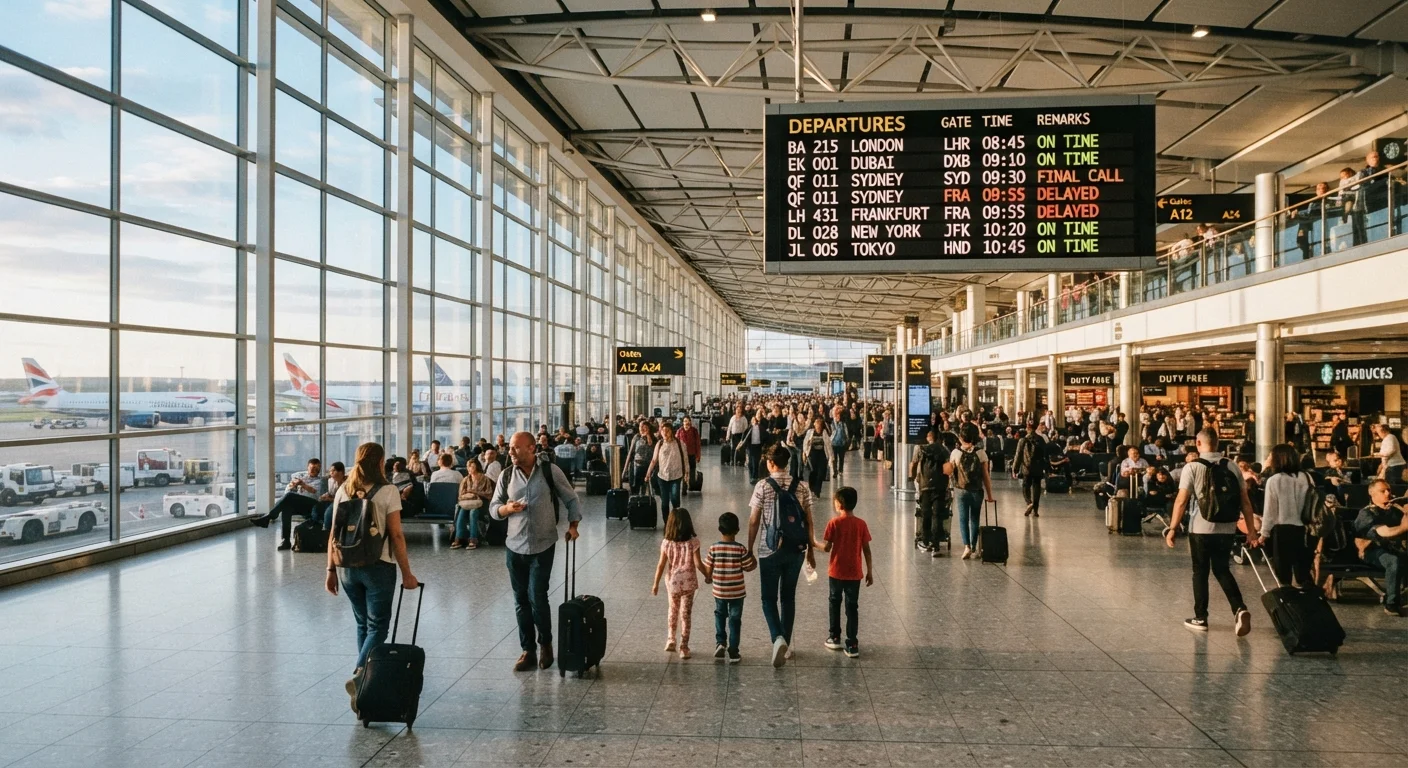
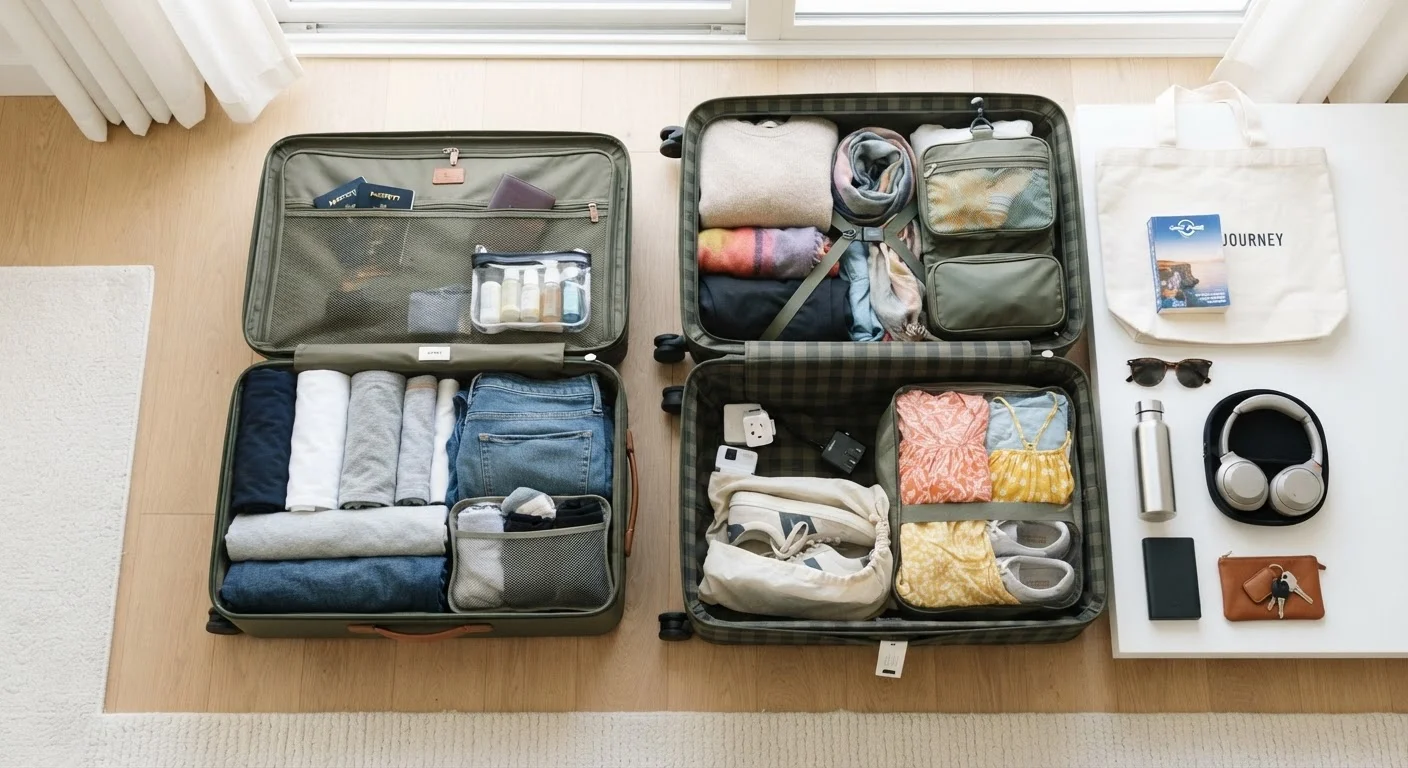
The Core Trade-Off: Speed and Cost vs. Space and Comfort
Choosing between a carry-on and a checked bag isn't just about bag size - it shapes your entire airport experience. Carry-on travelers board, deplane, and leave the terminal faster. Checked-bag travelers move through security with less to juggle and arrive at their destination with more room to breathe - wardrobe-wise, at least.
Checked baggage fees on US domestic carriers commonly range from $30 to $40 per bag each way, though policies vary by airline and fare class. Those charges add up quickly on round trips or multi-leg itineraries. Travelers who hold elite status or certain co-branded credit cards may have fees waived, but it's worth confirming that before you pack. For a deeper look at how these costs stack up alongside other travel expenses, see our guide to hidden travel costs.
On the carry-on side, the trade-off is restriction. The TSA's 3-1-1 liquids rule limits containers to 3.4 ounces, all fitting in a single quart-sized clear bag - meaning full-size toiletries stay home. Overhead bin space on crowded flights can also disappear quickly, occasionally forcing gate-checked bags even when you planned to avoid it.
| Criterion | Carry-On Bag | Checked Bag |
|---|---|---|
| Typical fee (domestic US) | Usually free (size limits apply) | $30-$40 per bag, per way |
| Size limits | Strict (approx. 22×14×9 in) | More generous (62 linear inches) |
| Weight limits | Rarely enforced domestically | 50 lbs in economy class |
| Liquid restrictions | Yes - 3-1-1 TSA rule applies | No - full-size toiletries allowed |
| Airport speed | Faster - no baggage claim wait | Slower - baggage claim required |
| Risk of loss or delay | Very low - stays with you | Small but real risk of misrouting |
| Best trip length | Up to ~5 days | One week or longer |
Airline Rules: What You Need to Know Before You Pack
Every airline sets its own carry-on size limits, and they're not always identical. A bag that fits easily in one airline's overhead bin may technically exceed another's maximum dimensions. Most US carriers allow a standard carry-on of roughly 22 x 14 x 9 inches, but budget carriers often impose stricter limits or charge separately for overhead bin bags - so reading the fine print before your flight matters.
Weight limits for carry-ons are less common on US domestic flights but appear frequently on international carriers and low-cost airlines. Checked bags typically have a 50-pound weight limit in economy class, with fees for overweight bags that can be surprisingly steep. Packing a lightweight bag itself - not just its contents - helps you stay under.
Airline Policies Change - Always Verify
Carry-on size rules, personal item allowances, and checked baggage fees are set individually by each airline and can change without much notice. Always check your specific carrier's current baggage policy when booking and again before you pack. What applied on your last flight may not apply today, especially on budget or international carriers.
One underused strategy: maximize your personal item. Most airlines allow a personal item (a backpack, tote, or small bag) in addition to your carry-on, at no extra charge. Packing your personal item thoughtfully - laptop, a change of clothes, medications - means you can gate-check your carry-on without stress if space runs out. For broader packing strategies that work across trip types, our packing principles guide covers the fundamentals well.
Which Approach Works Best for Your Trip?
Trip length is the most reliable guide. Carry-ons work comfortably for trips up to about five days when you pack efficiently - especially if your destination has laundry access. Beyond a week, most travelers find a checked bag more practical, unless they're committed to capsule wardrobes and re-wearing basics.
Destination type matters too. Beach trips often require bulky items - fins, reef shoes, coverups - that eat carry-on space fast. Ski trips are nearly impossible without checked gear. Business travel, by contrast, is a natural carry-on scenario: a few suits, polished shoes, and minimal toiletries. International travel adds another variable: some destinations have stricter carry-on rules at connecting airports, and preparing for international flights deserves its own research session.
~$7B
Annual US airline baggage fee revenue
US airlines collectively reported roughly $7 billion in baggage fee revenue in recent years, according to the Bureau of Transportation Statistics.
~1 in 170
Checked bags reported mishandled
The Bureau of Transportation Statistics has reported approximately 5-6 mishandled bags per 1,000 passengers on US carriers in recent years.
It's also worth checking common assumptions about travel planning before you commit to a strategy. Some widely held beliefs about packing efficiency and airline policies don't hold up under scrutiny - travel planning myths worth revisiting is a useful reality check. And before any trip, running through a solid pre-trip checklist helps ensure your bag choice actually fits everything you need to bring.