Start With a Packing Philosophy, Not a Packing List
Most packing mistakes happen before a single item goes into the bag. Travelers reach for a list and start ticking boxes, but without a guiding philosophy, that list quietly grows until the bag won't close. A smarter approach is to define your constraints first: how long is the trip, what's your luggage allowance, and what activities will you actually do - not just what sounds fun in planning.
Think in terms of outfits, not individual items. If you're traveling for seven days, you don't need seven shirts - you need a system where three or four pieces rotate across multiple combinations. That shift in thinking is the foundation of a capsule wardrobe approach, and it works whether you're backpacking Southeast Asia or attending a business conference in Chicago.
Understanding the trade-offs between carry-on and checked bags is also part of the philosophy stage - not an afterthought. Your bag choice shapes every decision that follows.
Build a capsule wardrobe centered on three to four neutral base colors
When every piece coordinates with every other piece, you multiply outfit options without multiplying items. Neutral tones - navy, gray, white, black, olive - work across casual and slightly dressier occasions, reducing the urge to pack "just in case" backups.
Audit your toiletries ruthlessly and switch to solid or travel-size formats
Toiletries are among the heaviest and bulkiest items most travelers pack, yet they're also the category where the most duplication happens. Full-size bottles, multiples of the same product, and items available at most destinations all add unnecessary weight.
Pack shoes last and limit yourself to two pairs maximum
Shoes are heavy, rigid, and take up disproportionate space. Most travelers wear the same one or two pairs the majority of the time anyway. Planning outfits around the shoes you'll actually wear - rather than aspirational footwear - keeps weight down and bag space available.
Leave a deliberate buffer of empty space in your bag
Arriving with a completely full bag leaves no room for items purchased or acquired during the trip - and no flexibility if you need to repack in a hurry. A bag packed to 80-85% capacity travels more comfortably and adapts better to the unexpected.
Match your packing approach to your travel style and itinerary pace
A slow travel trip with a home base requires different packing logic than a multi-city itinerary with daily hotel changes. Frequent movers benefit far more from lighter, compact bags than travelers who unpack once and settle in for a week.
Layering: The Climate-Proof Approach to Clothing
Packing for weather is one of the most anxiety-inducing parts of trip prep, especially for destinations with variable conditions. The layering system - used by hikers and frequent travelers alike - eliminates most of that uncertainty. Instead of packing a heavy jacket and a light jacket and a sweater, you pack pieces that combine strategically to cover a wide temperature range.
A base layer (moisture-wicking or thermal depending on destination), a mid layer (lightweight fleece or cardigan), and an outer layer (a packable wind- or water-resistant shell) can handle everything from a cool morning in Portugal to a chilly evening on a boat tour. All three layers together take up far less space than a single bulky coat.
The Multi-Purpose Rule for Shoes
Before packing any pair of shoes, ask whether it can serve at least two distinct purposes on the trip. A leather sneaker that works for walking and a casual dinner earns its place; a pair of heels worn for one specific event probably doesn't. Applying this filter alone can free up significant bag space and weight.
The same principle applies to footwear. Two pairs of shoes that serve multiple purposes - say, a comfortable walking shoe that passes as smart-casual, and one pair of sandals - will cover nearly every trip scenario without occupying half your bag. This approach applies across all kinds of travel experiences, from urban city breaks to nature-focused adventures.
Weight, Space, and the Rules That Matter
Even perfectly chosen clothes become a problem if they exceed airline limits. Weight allowances vary significantly by carrier, route, and fare class - what's standard on a domestic US flight may not apply on a regional European carrier, where both size and weight restrictions can be stricter. Always verify limits directly with the airline before packing, not after.
50+ lbs
Average checked bag weight limit on US domestic flights
Most major US carriers enforce a 50-pound limit on standard checked bags, with fees applying above that threshold - always verify with your specific carrier.
22 × 14 × 9 in
Common carry-on size limit on US airlines
Carry-on dimensions vary by airline and aircraft type; this is a frequently cited guideline, but confirming with your carrier before travel is essential.
Once you know your limit, weigh your empty bag. Many travelers are surprised how much a bag itself weighs before a single item goes in. Soft-sided bags generally weigh less than hard-shell options, which matters when you're working within a tight allowance.
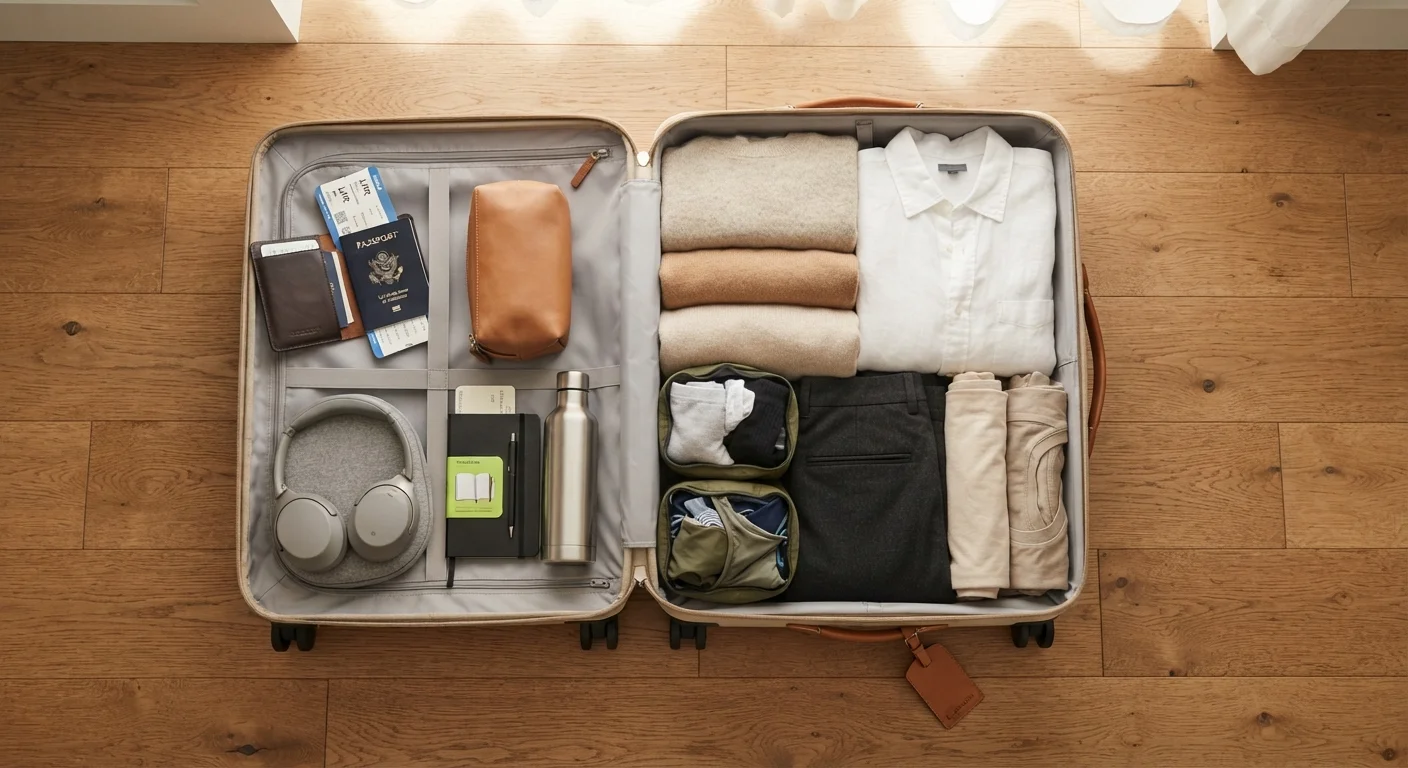
Packing cubes don't create more space, but they do help you use the space you have more intentionally. Rolled clothing typically compresses more efficiently than folded, and placing heavier items (shoes, toiletry bags) closest to the bag's wheels or back panel keeps the load balanced and easier to carry. If you're traveling with older adults or across multiple transit legs, a well-balanced, manageable bag makes a real difference - see our guidance on packing and logistics for multi-generational trips.
Quick Wins to Pack Smarter Starting Now
Smart packing is a skill that improves with practice, but a few immediate changes deliver outsized results even on your next trip. The habits below require no special gear - just a willingness to rethink the defaults.
One final mindset shift worth carrying into every trip: packing is part of the planning process, not separate from it. The travelers who pack most effectively are usually the ones who've also thought carefully about their itinerary. Overpacked bags and overpacked schedules tend to go together - both signal a fear of missing out rather than a plan to be present. For a look at how itinerary decisions connect to your overall trip experience, see what travelers most commonly overlook when building their schedule.