What the Window Sticker Actually Is
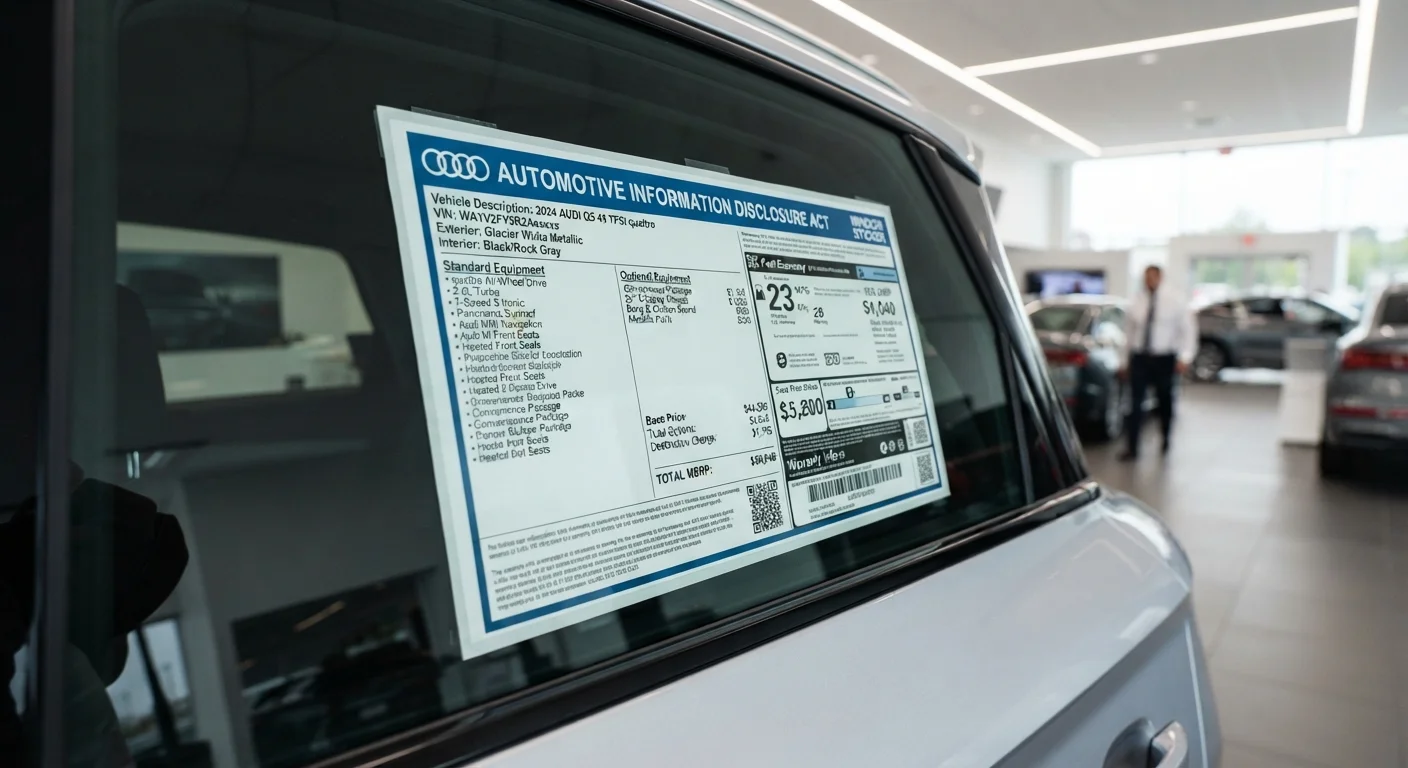
The label affixed to the window of every new car sold in the US is officially called the Monroney label, named after the senator who sponsored the 1958 Automobile Information Disclosure Act that mandated it. Federal law requires dealers to keep it on the vehicle until the point of sale - and removing it prematurely is illegal. It is not a sales document or a manufacturer advertisement; it is a standardized disclosure tool designed to help you compare vehicles objectively.
The sticker covers four broad areas: vehicle identification and trim level, manufacturer's suggested retail pricing (MSRP), fuel economy ratings, and safety or environmental data. Understanding each section before you walk onto a lot puts you in a far stronger position during any negotiation. For a broader view of how this fits into the overall purchase process, see how a car purchase unfolds from start to finish.
| Legal name of the sticker | Monroney label (Automobile Information Disclosure Act, 1958) |
| Who is required to display it | All new vehicle dealers in the US (Federal law, 15 U.S.C. § 1232) |
| Fuel economy data source | US Environmental Protection Agency (EPA) |
| Destination charge negotiability | Non-negotiable - set by the manufacturer |
| Emissions score range | 1 to 10 (higher = cleaner) (EPA SmartWay program) |
| MSRP meaning | Manufacturer's Suggested Retail Price - not a fixed sale price |
Decoding Each Section of the Label
The top portion of the sticker identifies the make, model, model year, trim level, and Vehicle Identification Number (VIN). Verify these match any purchase agreement you are given - errors here can create title complications later.
Below identification, you'll find the standard equipment list - features included at the trim's base price - followed by factory-installed options, each priced individually. These are items the manufacturer added before the vehicle left the factory. Dealer-installed accessories, however, appear in a separate section and are not factory equipment; they are negotiable and are sometimes marked up significantly. This distinction matters when you compare the sticker price with actual out-of-pocket cost, a topic covered in detail in understanding the full out-the-door price.
The MSRP breakdown near the bottom of the sticker shows:
- Base price - the starting price for that trim without options
- Options total - combined cost of all factory-added packages
- Destination and delivery charge - a fixed, non-negotiable fee set by the manufacturer for shipping the vehicle to the dealer
- Total MSRP - the sum of all of the above
Note that MSRP is a suggested retail price. Dealers may sell above or below it depending on demand and inventory conditions.
Monroney Label
The federally mandated window sticker on every new vehicle, disclosing pricing, equipment, fuel economy, and emissions data. Named after Oklahoma Senator Mike Monroney.
MSRP
Manufacturer's Suggested Retail Price - the price the automaker recommends for the vehicle. Dealers may sell above or below this figure.
Destination Charge
A fixed fee charged by the manufacturer to cover shipping the vehicle from the assembly plant to the dealership. It appears on the sticker and is the same regardless of dealer.
MPGe
Miles Per Gallon equivalent - a unit used to compare the energy efficiency of electric and plug-in hybrid vehicles with conventional gasoline vehicles.
Factory-Installed Options
Packages or features added to the vehicle at the manufacturing plant before delivery. These are distinct from dealer-added accessories and are listed separately on the sticker.
EPA Smog Rating
A 1-10 score measuring how many smog-forming pollutants a vehicle emits. A score of 10 indicates the lowest possible emissions in this category.
Fuel Economy and Environmental Ratings
The EPA fuel economy section is one of the most practically useful parts of the sticker. It displays city, highway, and combined MPG (miles per gallon) figures, or MPGe (miles per gallon equivalent) for plug-in and electric vehicles. These numbers come from standardized EPA laboratory tests - real-world mileage will vary based on driving habits, load, terrain, and weather. The sticker itself includes an annual fuel cost estimate based on a set number of miles and a national average fuel price; treat this as a rough benchmark, not a guarantee.
A fuel economy range bar compares the vehicle against similar models in its class, giving you quick context for whether this vehicle is efficient relative to its peers. The sticker also includes an emissions rating - a scale from 1 to 10 measuring smog-forming pollutants - and a greenhouse gas score on the same scale. Higher scores indicate lower emissions. These figures are set federally and can't be altered by the dealer.
Fuel and maintenance costs compound significantly over years of ownership. For a fuller picture of what you'll actually spend beyond the purchase price, see the true cost of owning a car in the US.
Sticker MPG vs. Real-World Mileage
EPA fuel economy figures are generated under controlled laboratory conditions and serve as a standardized comparison tool - not a mileage promise. Factors such as aggressive acceleration, highway speeds above 65 mph, cargo weight, and extreme temperatures can all reduce real-world efficiency below the sticker estimate. Use the figures to compare models in the same class, not as a guarantee of what you'll personally achieve.