Why Curly Hair Has Unique Needs
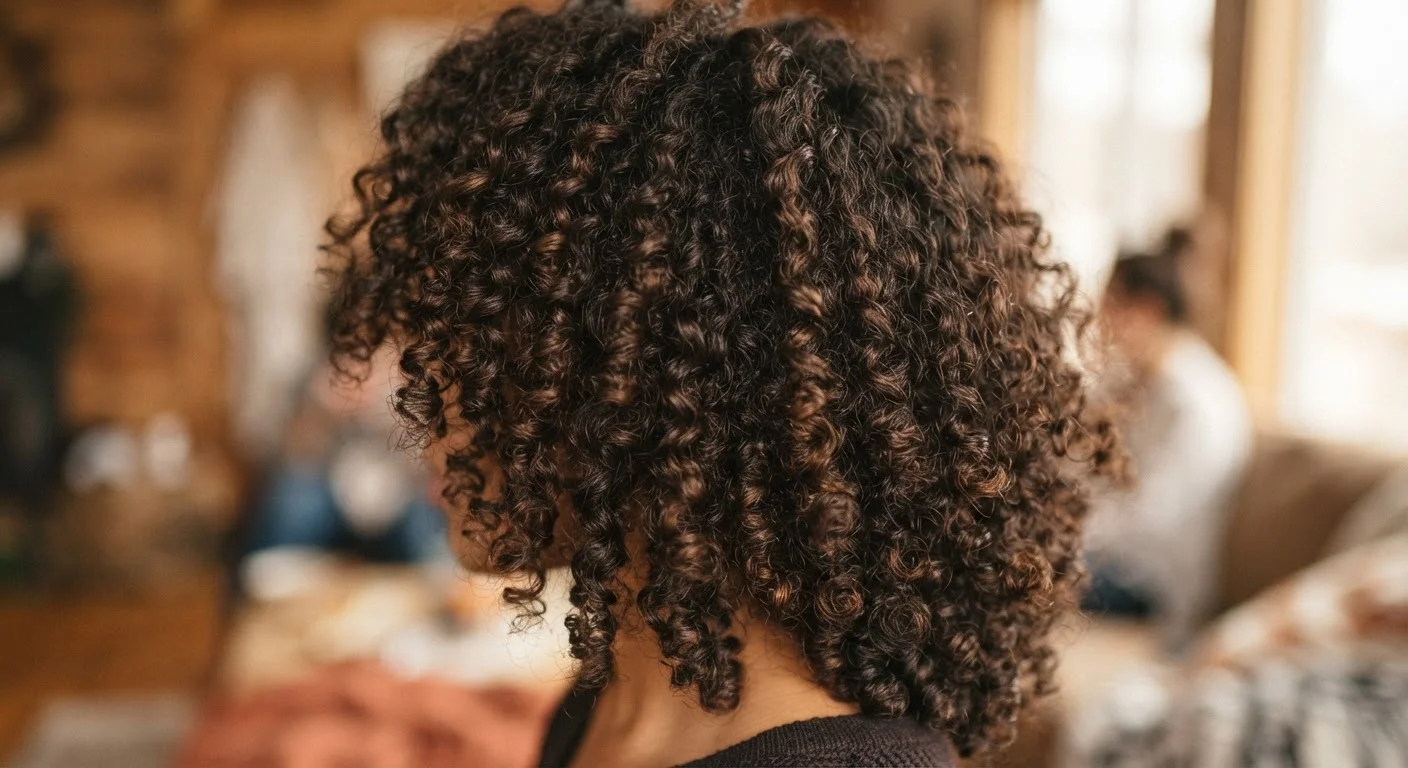
Curly hair is structurally different from straight hair in one important way: its spiral or zigzag shape makes it harder for the scalp's natural oils (sebum) to travel down the hair shaft. On a straight strand, sebum coats the length easily. On a curly strand, it gets interrupted at every bend - which is why curly hair tends toward dryness and why moisture is the central concern of any curly care routine.
This isn't a flaw; it's simply biology. Once you understand it, the logic behind curly-specific techniques - generous conditioning, gentle cleansing, minimal manipulation - starts to make practical sense rather than feeling like a trend. See how these same principles of understanding your hair's biology apply in the broader context of how hair needs shift across life stages.
Sebum
The natural oil produced by glands on your scalp. It moisturizes and protects the hair shaft, but has difficulty traveling down curly or coily strands.
Porosity
How easily your hair's outer layer (the cuticle) opens to absorb water and close to retain it. It determines which product weights and techniques work best for your hair.
Co-washing
Cleansing your hair using conditioner instead of shampoo. It removes light buildup while preserving more of the hair's natural moisture.
LOC method
A layering technique - Liquid, Oil, Cream - designed to lock moisture into the hair shaft in a sequence that maximizes retention.
Deep conditioning
Applying a rich conditioning treatment and leaving it on for an extended period (typically 15-30 minutes) to restore moisture and elasticity to the hair.
Plopping
A drying technique where wet hair is wrapped in a microfiber towel or T-shirt to absorb excess water without disturbing the natural curl pattern.
Understanding Your Curl Type and Porosity
Curl types are commonly described on a scale from wavy (Type 2) to coily (Type 4), with sub-categories like 2A, 3B, or 4C indicating tightness and density. These labels can be a useful starting point, but they are not the whole picture. Two people with the same curl type can have very different hair behavior depending on porosity.
Porosity refers to how open or closed the hair's cuticle layer is - and therefore how easily moisture enters and exits the strand. A simple at-home test: drop a few shed strands into a glass of water. If they sink quickly, your hair is likely high porosity (absorbs fast, loses fast). If they float for a while, you likely have low porosity (slower to absorb, but retains well once moisture is in).
- Low porosity: Benefits from lighter, water-based products and warmth to help moisture penetrate.
- Medium porosity: The most forgiving; responds well to a wide range of product textures.
- High porosity: Benefits from richer creams, oils, and regular deep conditioning to compensate for rapid moisture loss.
The Float Test Has Limitations
The float test is a popular DIY way to gauge porosity, but it isn't scientifically validated and can be influenced by product buildup on the hair. Use it as a rough starting point, not a definitive answer. Observing how quickly your hair dries and how long moisture seems to last is often just as informative.
The Core Routine: Cleanse, Condition, and Moisturize
A foundational curly hair routine has three non-negotiable steps: cleansing, conditioning, and moisturizing.
Cleansing
Look for sulfate-free shampoos, which clean without aggressively stripping the scalp's natural oils. Between washes, co-washing - using a rinse-out conditioner to cleanse - is a popular option for preserving moisture. How often you wash depends on your scalp type, but many curly-haired people find weekly or biweekly washing works well.
Conditioning
Conditioner is not optional for curly hair. Rinse-out conditioners applied generously after every wash help restore suppleness and ease detangling. Deep conditioning treatments, used periodically, provide more intensive moisture recovery - especially valuable for color-treated or heat-damaged hair.
Moisturizing
Moisturizing happens after washing, while hair is still wet. Many people use the LOC method (Liquid, Oil, Cream) to layer products in an order that maximizes moisture retention. Apply a leave-in conditioner to soaking-wet hair, follow with a small amount of oil to seal, then a styling cream or gel. The goal is to lock water into the strand before it can evaporate.
Apply Products to Soaking-Wet Hair
The most common moisture mistake is applying leave-in conditioner or styling products to damp hair rather than truly wet hair. Water is your primary moisturizer - products are there to seal it in. Soak hair thoroughly, apply products immediately, and avoid waiting until hair is half-dry before styling.
Detangling and Styling Without the Damage
Detangling is one of the most damage-prone steps in a curly routine. The rules are straightforward: always detangle on wet hair, always use a slippery conditioner or detangler as a buffer, and always work from the ends upward toward the roots. Pulling from the root down breaks strands.
Tools matter too. Wide-tooth combs and fingers are the gentlest options. Fine-tooth combs and paddle brushes on dry curly hair tend to cause frizz and breakage.
Styling Techniques to Know
- Plopping: Wrapping wet hair in a microfiber towel or cotton T-shirt to absorb water while preserving curl shape - regular towels create friction and frizz.
- Diffusing: Using a diffuser attachment on a low-heat, low-speed setting to dry hair without disrupting curl clumps.
- Scrunching: Gently pressing curls upward toward the scalp after applying product to encourage definition.
Avoid touching hair while it dries - this is the most reliable way to minimize frizz.
Building Habits That Stick
Curly hair care has a learning curve, and results often take weeks to appear as your hair adjusts to gentler, more moisture-focused methods. Consistency is far more important than having the perfect product lineup. Start simple: a sulfate-free cleanser, a rinse-out conditioner, and a leave-in or styling cream are enough to see real improvement.
Keep a loose log of what you try and how your hair responds - curl behavior can change with the seasons, water hardness in your area, and hormonal shifts. Approach it with curiosity rather than frustration.
You might also find it useful to think about your hair routine as part of a broader self-care practice. Our article on turning daily grooming into a mental reset explores how intentional personal care habits can support overall wellbeing. For a wider framework that includes hair, skin, and body care habits, see morning, evening, and weekly hygiene routines.
Curl Type Reference Chart
A visual classification guide covering wavy, curly, and coily hair types (2A through 4C) to help you identify your curl pattern and understand what that means for your care approach.
Porosity Self-Assessment Tool
Interactive questionnaires and float-test guidance designed to help you estimate your hair's porosity level and translate that into practical product and technique choices.
Curly Hair Community Forums
Online communities where people with all curl types share routines, troubleshoot problems, and offer peer support - a useful resource for real-world experience across a wide range of hair textures.