The Science Behind the Two-Minute Window
Your skin's outermost layer, the stratum corneum, acts as a selective barrier - it lets some water pass through while trying to hold the rest in. After a shower, this layer is temporarily saturated with water. Within two to three minutes of exiting, that water begins to evaporate rapidly, a process called transepidermal water loss (TEWL).
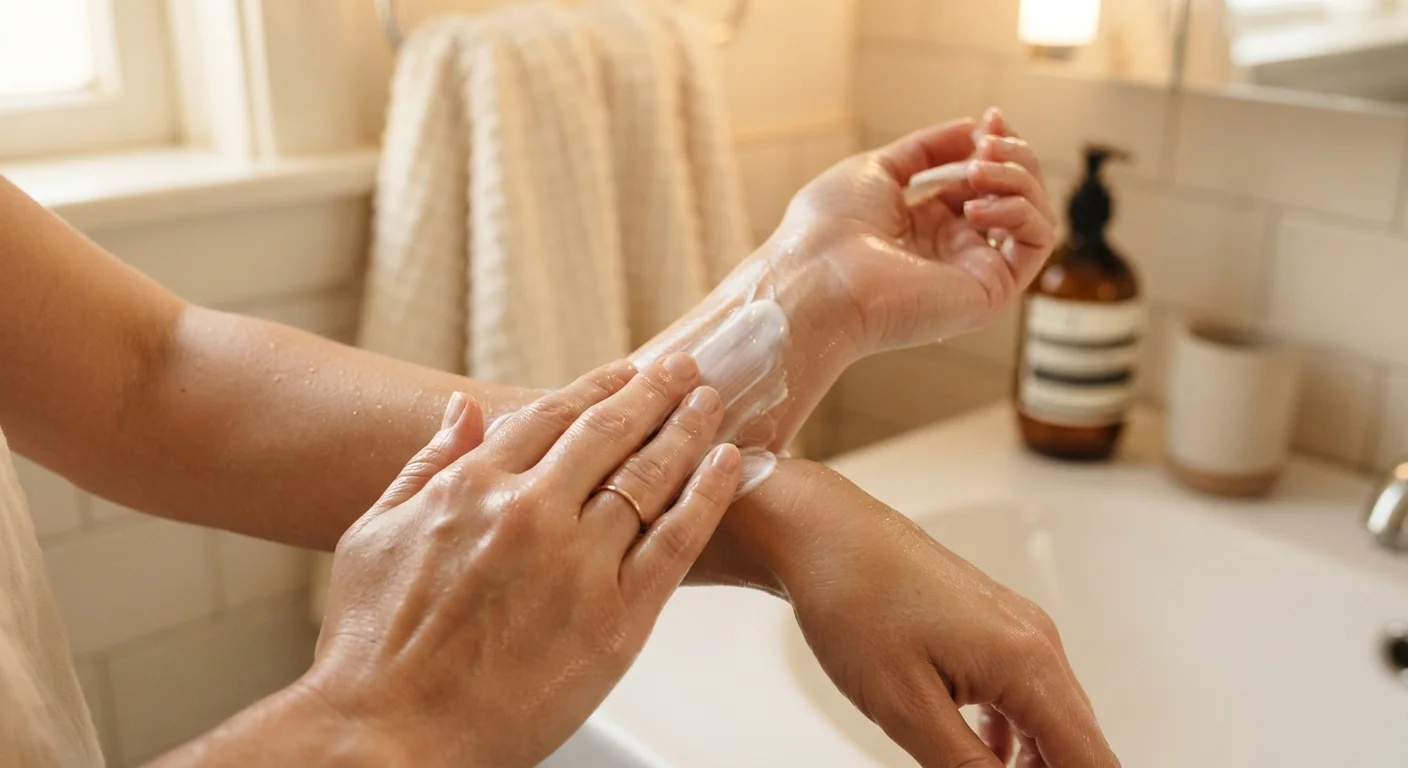
Applying a moisturiser during this narrow window gives the product something to work with. Humectant ingredients like glycerin and hyaluronic acid draw water into the skin cells, while emollient and occlusive ingredients form a physical film over the surface to slow evaporation. If you wait until your skin is fully dry, the water has already escaped - and you're moisturising a depleted surface rather than sealing in what was already there.
For a broader look at how layering skincare products affects their effectiveness, see our guide to product application order.
Damp, Not Dripping
There's an important distinction between damp skin and wet skin. Applying moisturiser to truly dripping-wet skin can dilute the product before it has a chance to absorb and may prevent emollients from adhering properly to the surface. Pat off excess water first, then apply - you want the skin to feel slightly cool and lightly moist, not visibly wet.
Why Your Shower Habits Affect the Equation
The temperature and duration of your shower directly influence how compromised your skin barrier is when you step out. Hot water and prolonged exposure dissolve the skin's natural lipid (oil) barrier more aggressively than short, lukewarm showers. This is why skin often feels tight or itchy after a long hot shower - the protective oils have been partially washed away.
Soaps and body washes compound this effect, particularly those with high pH levels or strong surfactants. The result is a temporarily more permeable skin surface - one that is more vulnerable to moisture loss but also more receptive to the ingredients in a moisturiser.
~30 min
Peak window for TEWL after bathing
Research on skin barrier function indicates that transepidermal water loss is highest in the 30 minutes immediately following bathing or showering.
2-3 min
Optimal moisturiser application window
Dermatology guidance widely supports applying an emollient within two to three minutes of exiting the shower to retain surface moisture before evaporation peaks.
The practical takeaway: if you favour hot showers, prioritise post-shower moisturising even more consistently. Cooler water temperatures reduce barrier disruption, so the urgency is somewhat lower - but timing still matters regardless. If you're frequently experiencing persistent dryness despite regular moisturising, there may be other factors at play. Our article on why moisturiser isn't fixing dry skin explores common application and formulation missteps worth reviewing.
Best Practices for Post-Shower Moisturising
Getting the timing right is the biggest factor, but technique and product choice also shape results. The following practices reflect what dermatology guidance and skin biology research generally support.
Pat skin dry with a towel - never rub - before applying moisturiser.
Rubbing removes water more aggressively and can cause micro-friction that further disrupts the skin barrier. Patting leaves a light film of surface moisture that your moisturiser can then seal in.
Apply moisturiser within two to three minutes of towelling off.
This is the window during which the skin's surface still retains post-shower hydration. Waiting longer means that moisture has already evaporated, reducing the occlusive benefit of your product.
Choose a formula matched to your skin's dryness level.
Thin lotions absorb quickly but offer less occlusive protection; creams and ointments have a higher oil content that better seals the skin surface. Using an underpowered formula on very dry skin often produces underwhelming results regardless of timing.
Lower your shower temperature to reduce barrier disruption.
Hot water accelerates the breakdown of the skin's lipid barrier, intensifying water loss after you exit. Cooler water preserves more of those protective oils, giving moisturiser a stronger foundation to work on.
Pay extra attention to high-TEWL areas like shins, elbows, and hands.
These areas have fewer sebaceous (oil-producing) glands and lose moisture more quickly than areas like the abdomen or back. They benefit most from generous, consistent application.
For those building a more comprehensive skin routine, the Skincare Basics hub offers foundational knowledge on everything from cleansing to treatment layering.
Quick Actions You Can Take Today
Adjusting your post-shower routine doesn't require new products or significant time investment. These immediate changes can produce noticeable differences in how your skin feels within a week.
Consistency over time matters more than any single application. Skin barrier function improves incrementally with repeated, well-timed moisturising - so making this a daily habit is what delivers lasting change rather than occasional effort.
This article is for general informational purposes only and does not constitute medical or dermatological advice. If you experience persistent skin conditions, irritation, or unusual dryness, consult a qualified healthcare professional.