The Cuticle Is the Key
Every strand of hair has three layers: the medulla (innermost core), the cortex (middle layer that gives hair strength and color), and the cuticle (the outer protective layer). The cuticle is made up of overlapping, scale-like cells - think of a pine cone or roof shingles. How tightly those scales lie determines your porosity.
When cuticle scales are compact and flat, very little moisture passes through in either direction. When they're raised, lifted, or unevenly spaced, water and ingredients move in and out freely. This structural difference is what separates the three porosity levels: low, medium (also called normal), and high.
Porosity Is Not the Same as Hair Texture
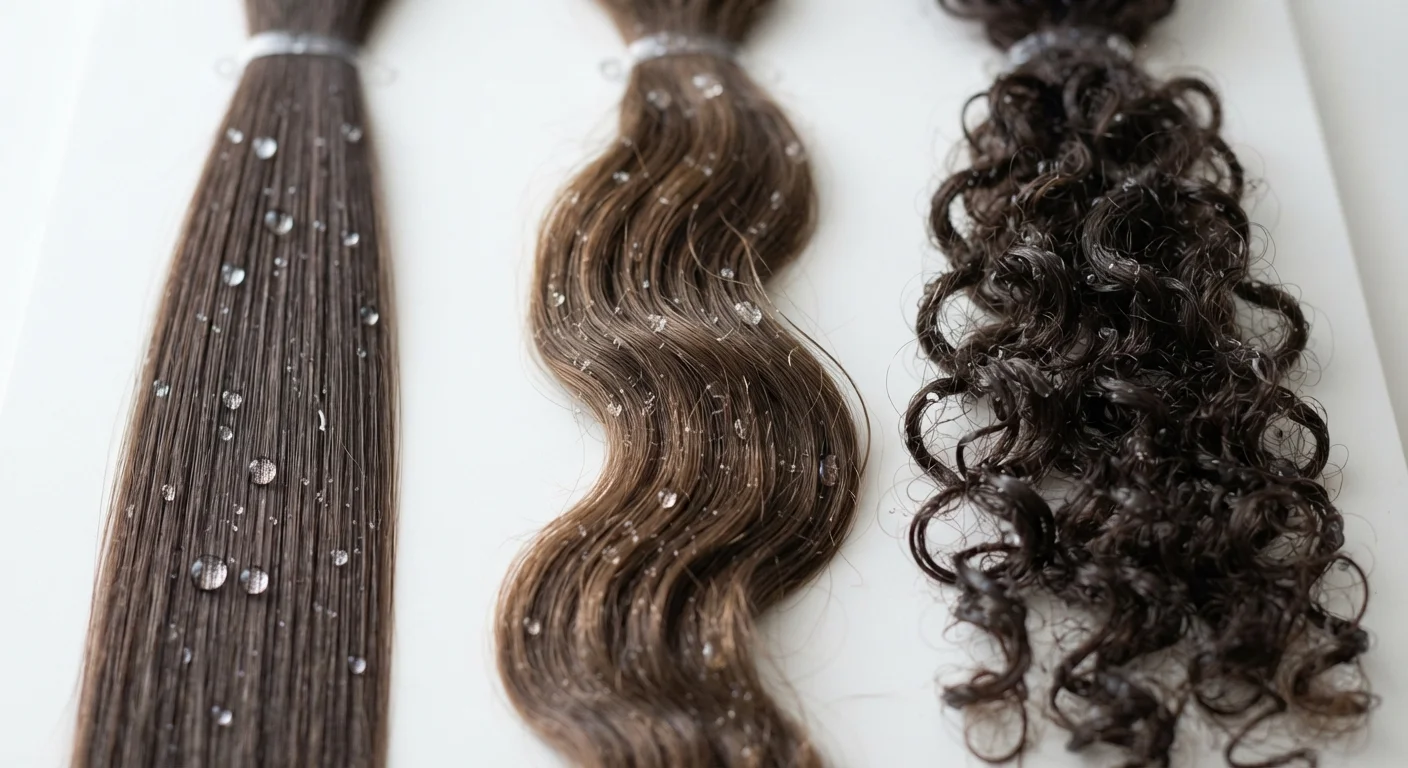
Hair texture refers to the diameter of the strand (fine, medium, coarse) and the curl pattern (straight, wavy, curly, coily). Porosity refers to the cuticle's structure and is a separate characteristic entirely. A person can have coarse, low porosity hair or fine, high porosity hair - any combination is possible. Identifying both helps you build a more targeted routine.
Low, Medium, and High Porosity: What Each Means
Low porosity hair has a tightly bound cuticle layer. Water tends to bead on the surface rather than absorb readily, and products can sit on strands instead of penetrating them. This hair type often takes a long time to get fully wet in the shower and an equally long time to dry.
Medium porosity hair has a cuticle that allows moisture in at a reasonable rate and holds it well. This is generally considered the easiest porosity to work with, as it tends to respond predictably to most conditioning routines.
High porosity hair has gaps or raised sections in the cuticle, which may be natural or caused by damage. Water enters quickly - which sounds like a good thing - but it escapes just as fast. This results in hair that feels dry or frizzy despite regular conditioning efforts.
3 Layers
Structural layers in every hair strand
The cuticle, cortex, and medulla each play a distinct role; porosity is determined exclusively by the outermost cuticle layer.
~4.5-5.5
Healthy hair's natural pH range
Hair and scalp are naturally slightly acidic; products outside this range can disrupt the cuticle and alter porosity over time, according to hair science literature.
What Raises or Lowers Porosity Over Time
Your baseline porosity is largely genetic. However, the cuticle can be altered by external stressors over a hair strand's lifespan. Key factors that tend to raise porosity include:
- Heat styling - repeated use of flat irons, curling wands, and blow dryers at high temperatures can roughen the cuticle surface
- Chemical treatments - relaxers, perms, bleaching, and coloring use chemicals that deliberately open or alter the cuticle to do their job, which can leave it permanently more open
- UV exposure - prolonged sun exposure degrades the cuticle layer similarly to how it affects skin
- Mechanical friction - aggressive towel-drying, tight styling, and brushing wet hair can chip or lift cuticle scales
On the other hand, acidic products (those with a lower pH) can help temporarily flatten the cuticle, which is why many stylists recommend finishing rinses with cooler water or pH-balanced conditioners.
Try the Spray Test at Home
Mist a small section of clean, product-free hair with water and watch what happens. If the water beads and rolls off, your hair is likely low porosity. If it absorbs almost immediately and disappears into the strand, high porosity is probable. If it absorbs at a moderate pace, you're probably in the medium range. This simple observation takes seconds and requires no tools.
Adjusting Your Routine Based on Porosity
Understanding your porosity helps you make smarter choices about product texture, application technique, and how you sequence your routine steps.
For low porosity hair, the priority is helping products actually enter the strand. Applying conditioners and treatments to hair that's already saturated with warm water gives a head start. Light heat during deep conditioning (a warm towel, a shower cap that traps body heat) can temporarily lift the cuticle enough to improve penetration. Avoid heavy butters and waxes that are more likely to coat the surface without absorbing.
For high porosity hair, the goal shifts to sealing moisture in after it's absorbed. Layering a heavier cream or oil on top of a water-based leave-in product can create a barrier that slows moisture loss - a method sometimes called the LOC method (Liquid, Oil, Cream). Protein treatments used periodically may help temporarily fill gaps in the cuticle. Our guide to conditioners, deep conditioners, and hair masks can help you decide which conditioning format fits your needs.
For medium porosity hair, standard conditioning routines tend to work well. The main goal is maintenance - protecting the cuticle from damage that could shift it toward higher porosity over time.
This article is for informational purposes only and does not constitute professional hair care or medical advice. For personalized guidance, consult a licensed cosmetologist or trichologist.